
TL;DR:
- Single estate coffee comes exclusively from one farm, offering unique flavor profiles driven by terroir. It is more expensive due to labor-intensive practices and seasonal scarcity, rewarding attentive brewing methods like pour-over. This coffee emphasizes origin clarity, traceability, and ethical sourcing while showcasing the natural variability of specific microclimates.
Single estate coffee is coffee sourced exclusively from one specific farm or estate, producing a flavor profile shaped entirely by that property’s soil, altitude, and microclimate. Unlike blends or broad single-origin coffees labeled by country or region, single estate beans carry the fingerprint of one place. That specificity is why single estate coffee commands premium prices, attracts serious enthusiasts, and sits at the center of the specialty coffee movement. Farms like Hacienda La Esmeralda in Panama have built global reputations precisely because their terroir is unrepeatable.
Why single estate coffee stands apart from blends
Single estate coffee and single-origin coffee are related but not identical. Single origin is the broader term. It describes coffee from one country or region, such as Ethiopian Yirgacheffe or Colombian Huila. Single estate narrows that further to one specific farm or property. A bag labeled “Ethiopia” could contain beans from dozens of farms. A bag labeled with an estate name tells you exactly where every bean grew.
Blends take a different approach entirely. Roasters combine beans from multiple origins to hit a consistent flavor target year after year. That consistency is genuinely useful. Blends suit espresso and milk-based drinks well because the flavor holds up when diluted with steamed milk. Single estate coffees, by contrast, highlight origin clarity and complexity, which is why they shine in filter brewing and black coffee.
The table below shows how these two categories compare across the attributes that matter most to home brewers.
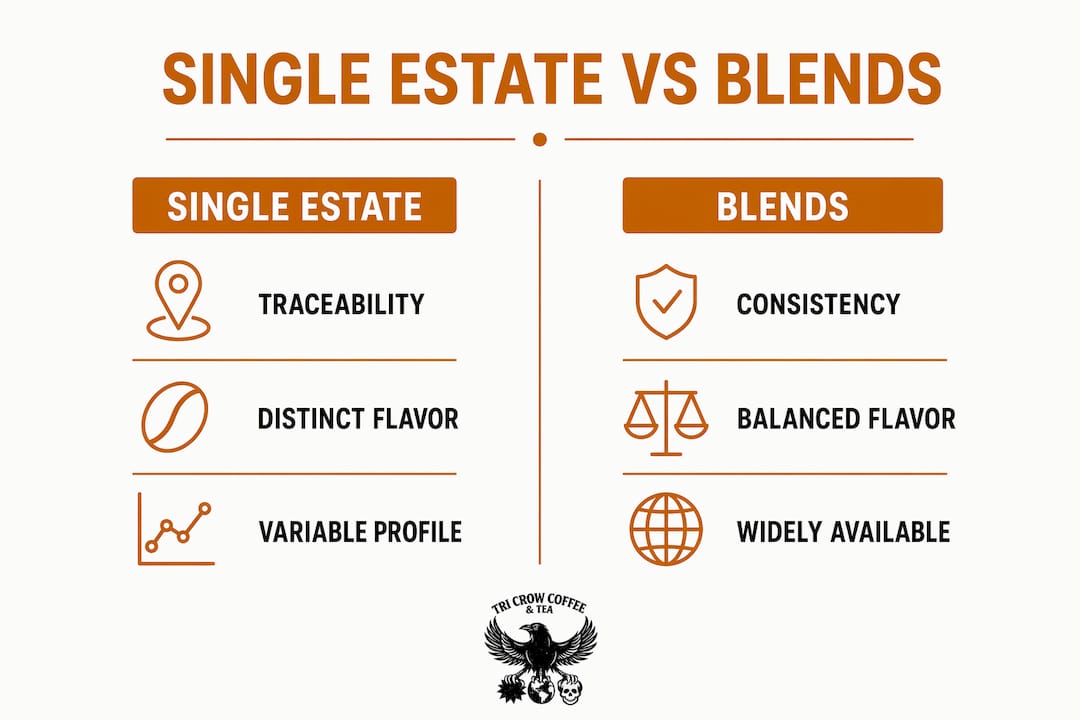
| Attribute | Single Estate Coffee | Blends |
|---|---|---|
| Flavor profile | Distinct, terroir-driven, variable by year | Consistent, balanced, designed for repeatability |
| Traceability | Farm-level, fully traceable | Multi-origin, limited traceability |
| Seasonality | Available once per year around harvest | Year-round availability |
| Best brewing method | Pour-over, Chemex, AeroPress, black coffee | Espresso, French press, milk-based drinks |
| Price point | Premium, reflects labor and scarcity | Lower to mid-range, cost-efficient |
Pro Tip: If you brew with a Hario V60 or Chemex, single estate coffee will reward you far more than a blend. The slower extraction highlights the subtle notes that blends intentionally smooth over.
How production practices shape price and quality
The premium price of single estate coffee is not arbitrary. It reflects the actual cost of how the coffee is grown and harvested. Hand-picking only ripe cherries and manual sorting across multiple passes through the same trees drives human-hour costs far above commodity mechanical harvesting. A single skilled picker may cover only a few rows per day during peak season.
Seasonality adds another layer of complexity. Single estate offerings appear only around harvest season, often for a few months at most. Once that harvest sells out, it is gone until the next crop year. This scarcity is not a marketing tactic. It is the natural rhythm of agriculture.
Weather plays a direct role in flavor. A dry year in a Guatemalan highland estate produces a different cup than a wet one. Enthusiasts who follow specific estates year to year notice these shifts the way wine drinkers track vintages. That annual variation is part of the appeal, not a flaw.
Direct trade compounds the ethical dimension. Single estate sourcing enables direct-trade models that give farmers a higher share of the retail price. That income funds sustainable farming practices, climate resilience investments, and better wages for pickers. Buying single estate coffee is a direct line between your cup and a specific farming family’s livelihood.
“Choosing single estate is about honoring the land and enabling responsible sourcing.” — WeHub Coffee
Pro Tip: When you buy a single estate coffee, note the harvest year on the bag. Comparing the same estate across two crop years is one of the most educational tasting exercises you can do as a coffee enthusiast.
What does terroir actually mean in your cup?
Terroir is a term borrowed from wine. In coffee, it refers to the combination of soil composition, altitude, rainfall patterns, and microclimate that shapes how a coffee plant develops and what flavors end up in the bean. Soil, altitude, and climate impart unique flavor signatures to single estate coffees, often producing brighter acidity, more pronounced sweetness, or unusual complexity that blends cannot replicate.
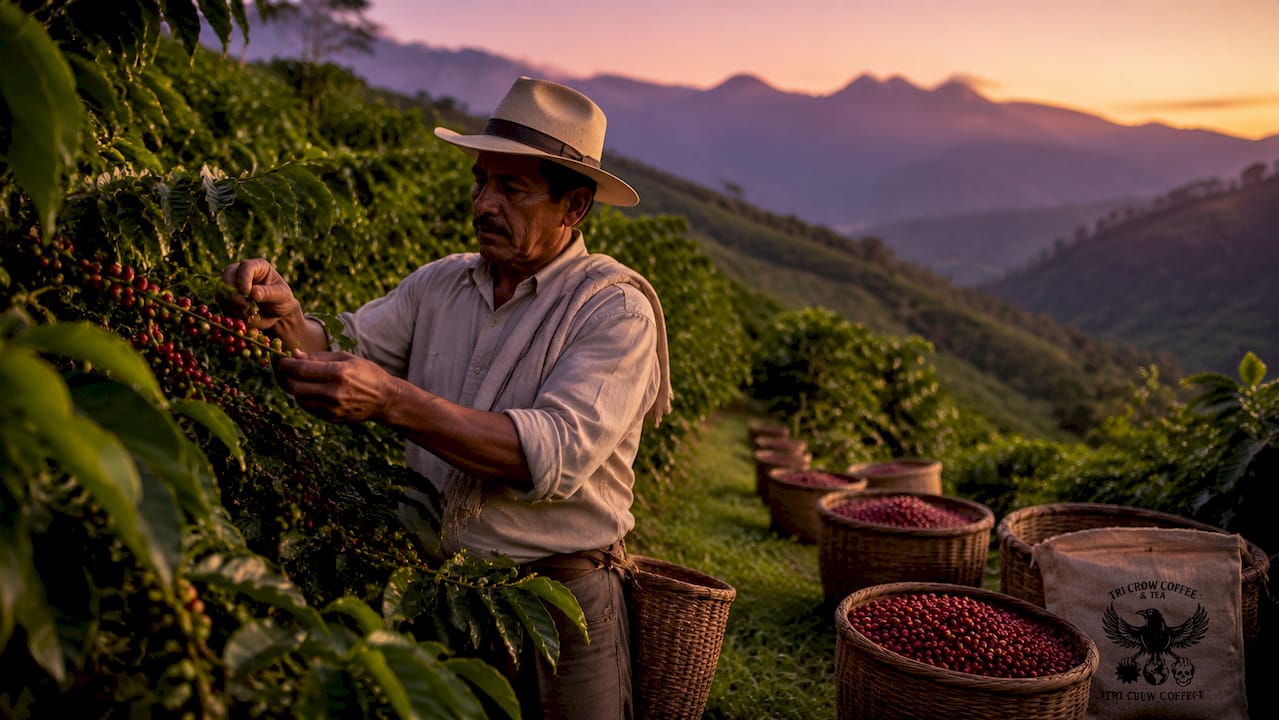
Altitude is one of the strongest predictors of cup quality. Beans grown above 1,500 meters, as at Hacienda La Esmeralda in Panama’s Boquete region, develop more slowly in cooler temperatures. That slower development concentrates sugars and aromatic compounds. The result is a cup with floral and fruit notes that feel almost impossible to achieve at lower elevations.
Processing method and varietal also shape the final flavor. A washed Gesha from one estate tastes completely different from a natural-processed Bourbon from another, even if both grow at similar altitudes. The coffee varietal acts as the genetic blueprint, while terroir and processing determine how that blueprint expresses itself.
Here is a snapshot of how terroir translates into tasting notes across a few well-known single estate origins.
| Estate / Region | Country | Altitude | Flavor Notes |
|---|---|---|---|
| Hacienda La Esmeralda | Panama | 1,600–1,800m | Jasmine, bergamot, peach, bright acidity |
| Finca El Injerto | Guatemala | 1,700m | Dark chocolate, plum, caramel, full body |
| Yirgacheffe estates | Ethiopia | 1,800–2,200m | Blueberry, lemon, floral, tea-like clarity |
| Kona estates | Hawaii | 600–900m | Macadamia nut, mild acidity, smooth body |
One important nuance: single estate designation guarantees traceability, not automatically higher quality. Quality depends on microclimate, varietal, and processing at the farm level. A “single lot” designation, which refers to a specific section of an estate processed uniformly, is the tighter quality marker. When you see both an estate name and a lot number, you are looking at the most specific and quality-controlled product available.
Who should choose single estate beans and how to brew them
Single estate coffee is the right choice for a specific kind of coffee drinker. If you drink your coffee black, brew with a pour-over or AeroPress, and find yourself curious about why two coffees taste so different, single estate is built for you. The brewing ritual itself shapes the experience. Filter methods that slow down extraction and highlight individual notes are the natural match.
Here are four practical ways to get more from single estate coffee:
- Grind fresh, grind fine for pour-over. Single estate coffees have more delicate aromatics than blends. A burr grinder set to medium-fine for a V60 or Chemex preserves those notes. Pre-ground coffee loses aromatic compounds within 15 minutes of grinding.
- Use water between 195°F and 205°F. Boiling water at 212°F scorches delicate floral and fruit notes. Pulling back a few degrees protects the brightness that makes single estate coffees worth the price.
- Try the same estate across two harvest years. Seasonal flavor shifts are real and noticeable. Buying the same Tanzanian estate coffee from two different crop years side by side is a fast education in how weather shapes flavor.
- Start with a sample pack. If you are new to single estate exploration, tasting several origins in small quantities before committing to a full bag saves money and builds your palate faster.
The ethical sourcing dimension matters here too. Every bag of single estate coffee you buy supports a specific farm’s ability to invest in better practices. That is a concrete benefit that blends, by their nature, cannot offer at the same level of specificity.
Key takeaways
Single estate coffee delivers flavor, traceability, and ethical sourcing that no blend can replicate at the farm level.
| Point | Details |
|---|---|
| Farm-level traceability | Single estate coffee traces to one specific farm, giving you full transparency about origin. |
| Terroir drives flavor | Soil, altitude, and microclimate create unique tasting notes that change year to year. |
| Labor justifies the price | Hand-picking and manual sorting add real human-hour costs that commodity coffee skips entirely. |
| Filter brewing is the best match | Pour-over and AeroPress methods highlight the clarity and complexity single estate coffees offer. |
| Direct trade supports farmers | Single estate sourcing enables higher farmer payouts and investment in sustainable practices. |
The trade-off i’ve come to appreciate
I spent years defaulting to blends. They were reliable, affordable, and easy to recommend. Then I tasted a washed Gesha from Hacienda La Esmeralda brewed on a Chemex, and the comparison felt unfair. It was like switching from a photograph to standing in the actual place.
What I’ve learned since is that single estate coffee asks something of you. You have to pay attention. You have to brew carefully. And you have to accept that the cup you loved last spring may taste slightly different this fall because the rains came late. That variability used to frustrate me. Now I find it honest.
The trade-off with blends is real. If you pull espresso every morning and add oat milk, a well-crafted blend will serve you better than most single estate options. Blends are engineered for that use case. Single estate coffee is not trying to win that contest. It is trying to tell you something specific about one place on earth.
The detail that most articles skip is the “single lot” distinction. An estate can span hundreds of acres with meaningfully different growing conditions across sections. A single lot designation means the beans come from one section, processed together, with uniform quality. That is the level of specificity worth seeking out when you want the clearest expression of terroir in your cup.
My honest recommendation: start with a Tanzania or an Ethiopian Yirgacheffe estate coffee brewed as a pour-over, black, no sugar. Give it three brews before you judge it. The first brew is orientation. The second is recognition. The third is where the flavor actually opens up.
— David
Explore single estate coffees from tri crow coffee
Tri Crow Coffee sources and roasts in small batches specifically to preserve what makes each origin distinct. Every roast is produced in limited quantities so the flavor you taste reflects the actual harvest, not a standardized average.
If you want to explore single estate and single-origin coffees without committing to a full bag, the Best Sellers Sample Pack gives you six varieties at 2oz each, a practical way to taste across different estates and regions. For a focused single-origin experience, the Tanzania medium-light roast is a strong starting point. It is bright, clean, and exactly the kind of coffee that makes the case for single estate sourcing better than any description can. Browse the full single origin coffee collection to find your next favorite estate.
FAQ
What is single estate coffee?
Single estate coffee is coffee sourced exclusively from one specific farm or estate, rather than blended from multiple farms or regions. This farm-level sourcing delivers a distinct flavor profile shaped by that property’s unique terroir.
Is single estate coffee the same as single origin coffee?
Single origin is the broader category, covering coffee from one country or region. Single estate is more specific, tracing every bean to one farm. All single estate coffees are single origin, but not all single origin coffees are single estate.
Why does single estate coffee cost more?
The premium price reflects hand-picking and manual sorting across multiple harvest passes, which adds significant labor costs compared to mechanical commodity harvesting. Seasonal scarcity also plays a role, since each estate’s harvest is available only once per year.
Does single estate mean better quality?
Single estate guarantees traceability, not automatically superior quality. Quality depends on microclimate, varietal, and processing. A “single lot” designation within an estate is the tighter quality marker.
What brewing method works best for single estate coffee?
Pour-over methods like the Hario V60 or Chemex, along with AeroPress, are the best match for single estate coffees. These filter brewing methods highlight the origin-specific clarity and complexity that single estate beans deliver.