
Most coffee lovers own exactly one brewing method, then wonder why their cup feels predictable. The truth is that different ways to brew coffee pull entirely different flavors from the same bean, turning your morning ritual into something worth repeating. Whether you crave the thick, sediment-laced body of a French press or the razor-sharp clarity of a pour-over, the brewing method you choose shapes the cup as much as the roast does. This guide breaks down the full coffee brewing methods list with practical steps, honest trade-offs, and tips grounded in real experience.
Table of Contents
- Key takeaways
- 1. Understanding the mechanics behind every brewing method
- 2. French press
- 3. AeroPress
- 4. Cold brew
- 5. Pour-over (V60, Kalita Wave, Chemex)
- 6. Espresso
- 7. Specialty and alternative methods
- My take on building a brewing practice
- Brew better with Tri Crow Coffee
- FAQ
Key takeaways
| Point | Details |
|---|---|
| Method determines flavor | Your brewing technique shapes body, clarity, and strength more than most people realize. |
| Three core mechanics | All brewing falls into immersion, percolation, or pressure extraction, each with different trade-offs. |
| Variables you control | Grind size, water temperature, and brew time are the three levers that fix or break any method. |
| Immersion is forgiving | Methods like French press and AeroPress tolerate small errors better than espresso or pour-over. |
| Match method to palate | Thick, rich flavors favor immersion; bright, clean cups favor percolation; intensity favors pressure. |
1. Understanding the mechanics behind every brewing method
Before walking through each specific technique, it helps to understand why brewing methods taste so different. All coffee extraction falls into three categories: immersion, percolation, and pressure.
With immersion, the grounds sit fully submerged in water for the entire brew. Extraction slows as the water becomes saturated with solubles, which makes immersion methods forgiving by nature. You can extend brew time slightly without catastrophic results, though pushing too far yields flat, over-extracted bitterness. Extraction slows naturally as saturation increases, so there is a ceiling to how much the water pulls from the grounds.
Percolation works differently. Fresh water continuously passes through the grounds, maintaining a constant concentration gradient that pulls solubles efficiently. That constant freshness produces brighter, more distinct flavor compounds but also makes percolation sensitive to grind size and flow rate. A clogged filter or too-fine a grind stalls the flow, leading to bitter over-extraction on one side and weak, watery coffee on the other.
Pressure extraction, the foundation of espresso, forces hot water through a compact puck of finely ground coffee at roughly 9 bars of force. This speed and pressure produce concentration and body that neither immersion nor percolation can replicate.
- Grind size controls surface area and therefore extraction speed. Finer grinds extract faster; coarser grinds extract slower.
- Water temperature affects which flavor compounds dissolve. Most methods target 195°F to 205°F (90°C to 96°C).
- Coffee-to-water ratio determines strength. A common starting point is 1:15 (coffee to water by weight).
- Brew time is the variable you adjust last, once grind and ratio are dialed.
Pro Tip: Invest in a kitchen scale before upgrading any other gear. Measuring coffee and water by weight instead of volume immediately improves consistency across every method on this list.
2. French press
The French press is the most approachable entry point into immersion brewing. Coarse-ground coffee steeps in hot water for four to six minutes, then a metal mesh plunger separates the grounds from the liquid. The result is a cup with real body, natural oils, and a texture that no paper-filtered method can replicate.
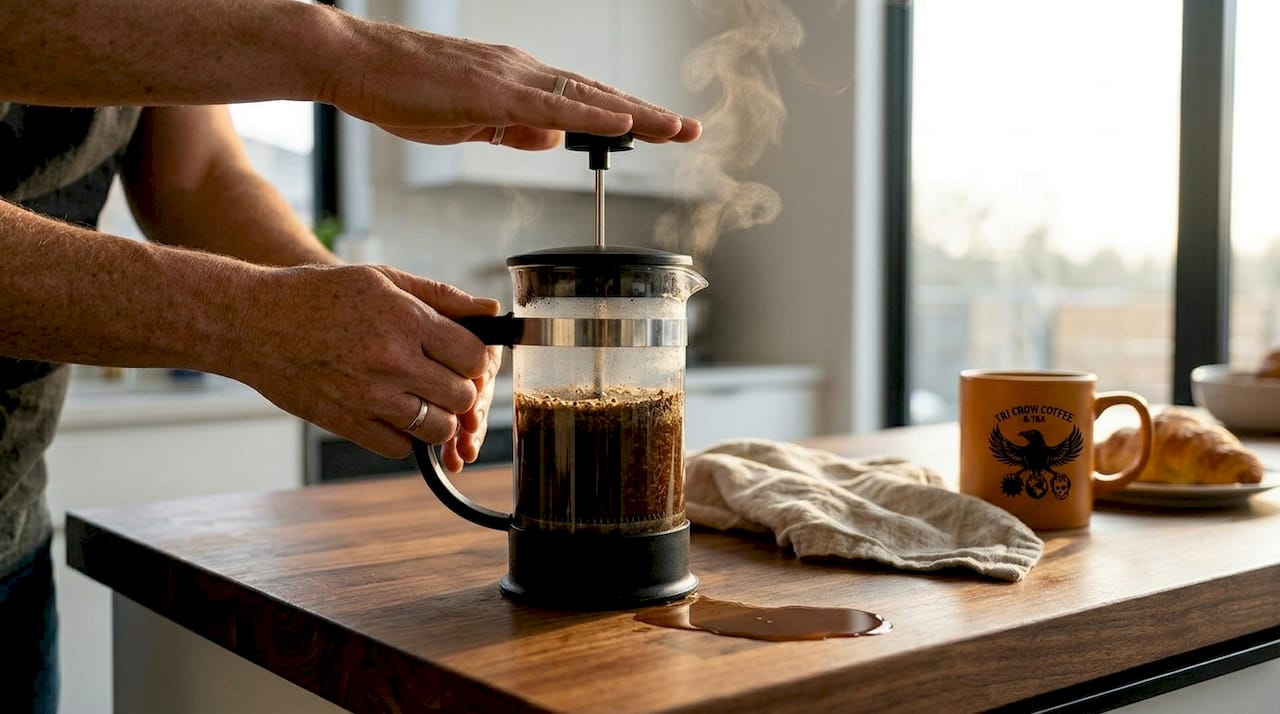
Use a coarse grind, roughly the consistency of raw sugar. Add your coffee, pour water just off the boil, and let it steep undisturbed. Press slowly at the end. The biggest mistake most people make is letting the coffee sit in the plunger after pressing. The grounds keep extracting through the metal mesh, turning a good cup bitter within ten minutes.
Pro Tip: After pressing, pour your French press coffee into a separate carafe immediately. This stops extraction and keeps the second and third cups as good as the first.
3. AeroPress
The AeroPress is the most versatile device on this list and the one most likely to change how you think about brewing. It combines immersion with a short pressure-assisted filtration step, giving you control over body, clarity, and strength that no single-variable method offers.
A classic recipe uses 18 grams of coffee, around 220 to 250 ml of water, a steep of one and a half to two minutes, then 20 to 30 seconds of steady pressing. Use a medium-fine grind for the standard orientation, or switch to the inverted method (flipping the device so the plunger faces down during steeping) for longer contact time and more body. Paper filters produce clean cups; metal filters add oil and texture. Both are worth trying.
The AeroPress World Championship exists for good reason. The device genuinely rewards experimentation. Change one variable per session, note the results, and within a week you will understand extraction better than years of drip coffee ever taught you.
4. Cold brew
Cold brew is not just iced coffee. It is a fundamentally different extraction process that produces a smooth, low-acid concentrate with almost no bitterness. Coarse-ground coffee steeps in cold or room-temperature water for 12 to 24 hours, then you filter out the grounds and dilute the concentrate to taste.
The long steep at low temperature extracts fewer acidic compounds, which is why cold brew tastes sweeter and mellower than any hot-brewed method chilled over ice. The trade-off is time and planning. Cold brew is batch preparation by nature, not a spontaneous cup.
A practical starting ratio is 1:8 coffee to water for concentrate, then dilute 1:1 with water or milk when serving. Make a large batch on Sunday and it keeps in the refrigerator for up to two weeks.
5. Pour-over (V60, Kalita Wave, Chemex)
Pour-over is where precision becomes a practice. Water pours slowly through grounds held in a filter, dripping into a cup or carafe below. Percolation methods like these reward attention to grind size and pouring technique with cups of remarkable clarity and brightness.
Here is what each popular pour-over style does differently:
- Hario V60: The conical shape and spiral ribs encourage fast flow. You control brew time almost entirely through grind size and pour speed. Brew time targets around two and a half to three minutes.
- Kalita Wave: The flat-bottom design and three small holes slow flow and promote more even extraction. It is more forgiving than the V60 for beginners.
- Chemex: A thicker paper filter removes more oils and fine particles than most other filters, producing a uniquely clean, tea-like cup. Brew time runs five to six minutes.
One step shared across all three is the bloom. Pour twice the weight of the coffee in water, wait 30 to 45 seconds, then continue pouring in slow spirals. The bloom releases trapped CO2 from fresh coffee, allowing water to contact the grounds evenly. Understanding blooming is one of the fastest ways to improve pour-over results.
6. Espresso
Espresso is coffee brewing at its most demanding and its most rewarding. Finely ground coffee is dosed into a portafilter, tamped level with firm pressure, and hot water at around 93°C (200°F) is forced through it at 9 bars of pressure. Extraction targets 25 to 30 seconds, producing a concentrated 36-gram shot from an 18-gram dose.
| Variable | Target range | What happens when off |
|---|---|---|
| Grind size | Fine (table salt texture) | Too coarse = fast, sour shot; too fine = slow, bitter shot |
| Dose | 18 g (double shot standard) | Lower dose = weak body; higher dose = channeling risk |
| Brew time | 25 to 30 seconds | Under 20 s = under-extracted; over 35 s = bitter |
| Water temperature | 92°C to 94°C | Lower = sour; higher = harsh bitterness |
| Pressure | 9 bar | Inconsistent pressure causes uneven extraction |
The grinder matters more than most beginners expect. Uneven grinding causes channeling, where water finds the path of least resistance through the puck instead of saturating it evenly. A good burr grinder is the single most impactful equipment upgrade for home espresso.
Pro Tip: When troubleshooting a bad espresso shot, change only one variable at a time. Adjust grind size first since it has the biggest impact on extraction speed before touching dose or temperature.
Espresso also forms the base for ristretto (a shorter, more concentrated pull) and lungo (a longer, more diluted one). Both reward experimentation once your baseline shot is consistent. For a deeper look at the full process, the home espresso guide at Tri Crow Coffee covers troubleshooting in detail.
7. Specialty and alternative methods
Beyond the mainstream brewing methods list sits a group of techniques that each deliver something genuinely distinct.
Moka pot brews on the stovetop by using steam pressure to push water up through a basket of medium-fine grounds into a top chamber. The result is bold, strong, and espresso-adjacent without requiring a machine. Use medium heat, do not pack the grounds tightly, and pull it off the heat the moment you hear the spluttering gurgle.
Siphon (vacuum pot) is theater and brewing combined. Water heats in a bottom chamber, vapor pressure pushes it up through a tube into the upper chamber where grounds steep, then as the heat drops, vacuum pressure pulls the brewed coffee back down through a filter. Siphon brewing uses vacuum pressure for a clean, immersive extraction that sits between French press texture and pour-over clarity.
Turkish coffee (cezve) uses an extremely fine grind, almost powder, simmered slowly in a small copper or brass pot with water and often sugar. It brews unfiltered, so grounds settle at the bottom of the small cup. The flavor is bold, thick, and aromatic in a way no other method reproduces.
Iced coffee (flash brew) is different from cold brew in both process and result. Brew hot coffee at double strength, then pour it directly over ice. The ice immediately chills and dilutes the coffee back to a normal concentration. Flash brew ratios typically use two-thirds of the total water as hot brew water and one-third as ice by weight. It produces a brighter, more vibrant iced cup than cold brew with a fraction of the wait time. One often-missed detail: ice melt continues after you pour, so drinking quickly preserves the intended strength.
| Method | Body | Brew time | Skill level |
|---|---|---|---|
| Moka pot | Bold | 5 to 7 minutes | Beginner |
| Siphon | Clean, medium | 8 to 10 minutes | Intermediate |
| Turkish coffee | Very thick | 3 to 5 minutes | Beginner |
| Flash brew iced | Bright, light | 5 to 8 minutes | Beginner |
My take on building a brewing practice
I have tried all of these methods across years of home brewing, and the one thing that changed everything for me was treating each method as a separate discipline rather than a replacement for the last one.
When I started with a French press, I learned patience and what “body” actually meant in a cup. Moving to pour-over forced me to slow down, pay attention, and realize how much grind consistency matters. Then espresso humbled me completely, because espresso variables interact closely and a single change ripples through the entire shot. Each method taught me something the others could not.
My honest advice: do not chase the “best” brewing method. Chase the one that fits your lifestyle and then learn it deeply. If you have 10 minutes and a kitchen scale, pour-over will reward you. If you want something forgiving on a busy morning, cold brew prepared Sunday night is ready all week. If you want the most from a single bean, learn espresso and accept that the learning curve is real.
The reward of knowing multiple methods is that you stop being a passive consumer of whatever the coffee shop serves and start making choices. You start thinking about which roast belongs in which method, which grind to reach for, and what you actually want from the cup in front of you. That intentionality is what separates a coffee habit from a coffee practice.
— David
Brew better with Tri Crow Coffee
The method only gets you halfway there. The coffee itself matters just as much, and that is where Tri Crow Coffee comes in.
Tri Crow Coffee roasts in small batches to order, meaning every bag arrives fresh with enough CO2 still off-gassing to bloom beautifully in a pour-over or AeroPress. Each roast is crafted with a specific flavor profile in mind, so you are not guessing which bean belongs in which method. Explore the single origin coffee beans collection for high-clarity roasts that shine in percolation brewing, or browse the flavored coffee selection for something unexpected in a cold brew concentrate. When the bean is this intentional, every brewing method becomes worth trying.
FAQ
What are the main ways to brew coffee at home?
The three main brewing families are immersion (French press, AeroPress, cold brew), percolation (pour-over, drip machine), and pressure extraction (espresso, Moka pot). Each produces a distinctly different flavor profile and body.
Which brewing method is easiest for beginners?
French press and AeroPress are the most forgiving methods for beginners because immersion brewing is less sensitive to grind and flow variations compared to pour-over or espresso.
How long does cold brew take to make?
Cold brew requires 12 to 24 hours of steeping in cold or room-temperature water. The finished concentrate keeps in the refrigerator for up to two weeks when stored in a sealed container.
What grind size should I use for espresso?
Espresso requires a fine grind, roughly the texture of table salt. Grind size is the primary variable for controlling shot time, and uneven grinding causes channeling that ruins extraction consistency.
Does the brewing method affect caffeine content?
Yes. Espresso is more concentrated per ounce but a typical shot is smaller in volume. Cold brew concentrate can be quite high in caffeine, while drip and pour-over methods fall in the middle range depending on brew ratio and steep time.