
Most coffee drinkers pour water over grounds and call it brewing. What they miss is the single step that determines whether their cup tastes alive or flat: the bloom. What is coffee blooming? It’s the controlled release of carbon dioxide from freshly roasted grounds the moment hot water makes contact, and it changes everything about how flavor extracts. Skip it and you’re fighting your own coffee. Understand it and you’ll taste the difference in the first sip. This guide covers the science, the technique, the common mistakes, and why blooming matters even more when you’re working with ethically sourced, single-origin beans.
Table of Contents
-
The impact of blooming on sustainable and ethical coffee enjoyment
-
Why mastering coffee blooming transforms your home brewing experience
-
Explore premium coffee offerings and elevate your bloom technique
Key Takeaways
| Point | Details |
|---|---|
| Coffee bloom definition | Blooming is the escape of carbon dioxide from coffee grounds after hot water is first poured, aiding flavor extraction. |
| Optimal bloom timing | Let coffee bloom for 30-45 seconds to ensure full CO₂ release and promote even extraction. |
| Adjust bloom to freshness | Fresher beans need longer bloom times due to higher carbon dioxide content. |
| Avoid common errors | Skipping or rushing bloom risks uneven extraction and undesirable flavors in your coffee. |
| Enhances sustainable coffee flavor | Proper blooming highlights unique flavors of ethically sourced and fresh single-origin coffees. |
What is coffee blooming and why does it matter?
The coffee bloom explanation starts with chemistry. During roasting, heat causes chemical reactions inside the coffee bean that produce significant amounts of carbon dioxide. That CO₂ gets trapped in the bean’s porous structure. When you grind the bean and add hot water, the gas escapes fast, creating the bubbling, foamy, swelling mass you see in the first 30 to 60 seconds of a pour-over brew.
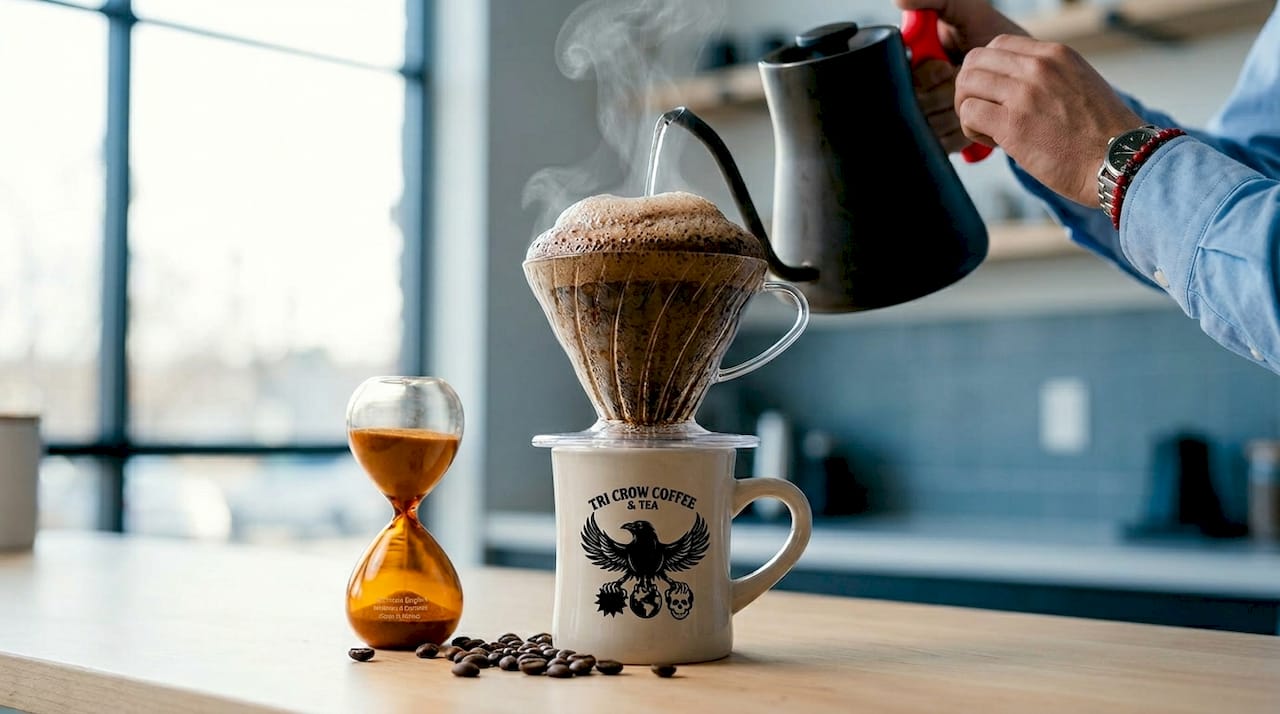
This isn’t decorative. That CO₂ acts as a physical barrier between water and the soluble compounds in the coffee. If you pour your full brew water right over grounds still loaded with gas, the water channels around the bubbles rather than saturating evenly. The result is extraction that pulls too much from some areas and too little from others, leaving your cup tasting sour, thin, or weirdly bitter all at once.
Allowing the coffee to bloom clears that gas out first, so the rest of your brew water can contact every particle of coffee evenly. The coffee processing effects that happen before a bean reaches your grinder determine how much CO₂ it carries. Natural processed beans, for example, tend to off-gas longer than washed varieties.
Here’s what proper blooming does for your cup:
-
Improves even saturation across all coffee grounds, reducing channeling
-
Releases harsh, acidic CO₂ before it can interfere with water contact
-
Unlocks aroma compounds that escape with the gas and hit you in the nose first
-
Balances acidity and sweetness by setting up clean extraction from the start
-
Preserves delicate notes in single-origin or specialty-grade coffees
“Coffee bloom is the rapid bubbling and swelling caused by carbon dioxide escaping from the coffee grounds when hot water is added.”
A weak or absent bloom usually signals stale coffee. A vigorous, domed bloom that holds its shape for 20 to 30 seconds signals freshness. That’s the bloom as a diagnostic tool, and most home brewers have never thought to use it that way.
How to bloom coffee: timing, ratios, and technique
Now that you understand the coffee blooming process, here’s how to do it right. The technique is simple but the details matter. Getting your brewing ratios and bloom timing dialed in is what separates a muddy cup from a clear one.
Step-by-step bloom process for pour-over:
-
Heat your water to 195 to 205°F. Water below 195°F under-extracts; above 205°F scorches. A thermometer is worth it.
-
Grind your coffee fresh. Pre-ground coffee loses CO₂ quickly and blooms weakly. Grind right before brewing.
-
Set your dripper over your vessel and add your coffee. Gently tap the dripper to level the bed.
-
Pour 2 to 3 times the weight of your coffee in water. For 20 grams of coffee, use 40 to 60 grams of water for the bloom.
-
Pour slowly in a gentle spiral from center outward. You’re saturating all grounds evenly, not blasting the center.
-
Wait 30 to 45 seconds. Watch the dome. When the bubbling noticeably slows, the bloom is done.
-
Continue with your full brew pour in slow, steady increments.
Per SCA-aligned brewing guidance, using 2 to 3 times the coffee weight in water and resting for 30 to 45 seconds is the standard starting framework. Treat it as a baseline, not a rigid rule.
| Coffee dose | Bloom water | Bloom time |
|---|---|---|
| 15g | 30 to 45g | 30 to 45 sec |
| 20g | 40 to 60g | 30 to 45 sec |
| 25g | 50 to 75g | 35 to 50 sec |
| 30g | 60 to 90g | 40 to 55 sec |

Pro Tip: Use a kitchen scale during bloom. Eyeballing water volume is the fastest way to create inconsistency. Forty grams of water looks different in every kettle and every cup.
Adjusting bloom for bean freshness and coffee type
The coffee blooming meaning shifts depending on what’s in your grinder. Not all beans bloom the same way, and treating every bag identically is one of the quiet reasons your coffee varies cup to cup.
Fresh beans, typically roasted within the past one to two weeks, bloom vigorously due to high CO₂ retention. You’ll see a dramatic dome that swells above the dripper rim and holds. These beans need the full 40 to 50 seconds, sometimes longer, to fully degas before your main pour.
Older beans, say three to six months post-roast, have lost most of their CO₂ through natural off-gassing. Their bloom is quiet. Low dome, minimal bubbling. These don’t need as long. Waiting 45 seconds on stale grounds adds nothing useful, and can actually cool your brew water enough to affect extraction.
The bean type and bloom adjustment also plays a role here. Lightly roasted beans typically retain more CO₂ than dark roasts because they’ve been exposed to less heat for less time. A light Ethiopian or Colombian will bloom dramatically. A dark French roast may bloom faster but less intensely.
Key signals to watch during bloom:
-
Large dome that holds: Very fresh beans, extend bloom by 5 to 10 seconds
-
Moderate bubbling, dome that settles: Coffee at peak freshness, follow standard timing
-
Flat surface with minimal activity: Beans past prime, shorten bloom or adjust dose
-
Uneven bubbling: Grounds are unevenly hydrated, adjust your pour spiral
-
Foamy crema-like top: Common with natural-processed or medium roasts, a good sign
Pro Tip: Keep a small brew journal for the first week with a new bag. Note the bloom behavior each time. By the end of the bag, you’ll have a clear picture of how that specific bean aged and how your timing should have shifted.
Common mistakes to avoid when blooming coffee
Knowing the theory only helps if your execution is consistent. Most home brewers who bloom are still making at least one of these mistakes, and each one quietly degrades your cup.
Skipping the bloom entirely. This is the most common and most costly error. Skipping bloom can cause uneven extraction where CO₂ repels water, producing sour or bitter off-notes. If you’re brewing a truly great coffee and it still tastes off, this is the first thing to check.
Rushing the bloom timing. Thirty seconds feels like a long time when you’re hungry and uncaffeinated. But stopping the bloom early means CO₂ is still releasing when your main pour starts. That gas continues to disrupt water contact all the way through your brew.
Using too little water for the bloom. If your bloom water barely touches half the grounds, the rest of the bed stays dry and compacted. The unhydrated coffee doesn’t release its CO₂ at all, carrying it into the main pour.
Pouring aggressively during bloom. A hard pour disturbs the ground bed, causes uneven saturation, and can create channels before you’ve even started brewing properly.
Here are the core pitfalls summarized:
-
Skipping bloom entirely, especially with fresh beans
-
Using bloom water that’s too cool, below 195°F
-
Not waiting for bubbling to slow before continuing
-
Ignoring visual bloom activity as a freshness signal
-
Using pre-ground coffee that’s already lost most CO₂
“Skipping or rushing the bloom can increase the risk of uneven extraction due to CO₂ creating a barrier between water and coffee grounds.”
Avoiding blooming mistakes starts with treating bloom as a non-negotiable part of your brewing sequence, not an optional warmup.
The impact of blooming on sustainable and ethical coffee enjoyment
There’s a deeper reason blooming matters beyond pure technique. When you invest in ethically sourced, small-batch coffee, you’re paying for flavor that reflects a specific place, a specific harvest, and a specific set of choices made by farmers and roasters. Blooming is how you actually taste all of that.
Proper blooming pulls out complex layers in fresh coffees, including Costa Rican varieties, preserving their origin traits and bright notes. Without it, those subtle characteristics collapse into a generic bitterness. The bloom is literally the step where terroir becomes taste.
When coffee has been sourced with intention and roasted in small batches to preserve its character, it arrives with high CO₂ retention as a sign of freshness. A vigorous bloom is the confirmation that the chain of care from farm to roaster to your kettle worked. It’s your quality check.
Blooming also encourages a slower, more deliberate brewing practice. That mindfulness isn’t incidental. It’s what separates drinking coffee from tasting it.
Consider these connections between blooming and sustainable coffee flavor:
-
Fresh, ethically sourced beans bloom more vigorously, so a strong bloom is a signal your sourcing choice paid off
-
Blooming preserves the flavor clarity that makes single-origin coffees worth their price
-
A slow bloom ritual slows you down, turning a routine into something worth paying attention to
-
Weak bloom on “specialty” coffee is a red flag worth investigating before you reorder
Why mastering coffee blooming transforms your home brewing experience
Here’s the honest, slightly uncomfortable truth: most home brewers who think they’re brewing good coffee are leaving the best part in the drain. They’ve invested in quality beans, a decent grinder, a gooseneck kettle. Then they skip the 40-second step that determines whether any of that investment pays off.
Blooming is where amateur brewing and intentional brewing actually diverge. Not in equipment. Not in bean quality. In patience and observation. A barista doesn’t bloom coffee because they were taught to. They bloom because they’ve watched enough cups to know what happens when you don’t, and it shows up clearly in the glass.
The most underrated aspect of consistent blooming is what it does to your brewing habits overall. When you commit to timing your bloom, you slow down the entire pour. You watch the bed. You notice when the grounds behave differently than last week. That attention is what builds the instinct to adjust your recipe before problems happen, not after you’ve already tasted the mistake.
There’s also a flavor element that most guides skip over. Blooming doesn’t just prevent bad extraction. It actively enhances the clarity of good extraction. Blooming for balanced flavors means that sweetness reads cleaner, acidity feels bright rather than harsh, and finish lingers longer. Those differences are real. They are not subtle once you’ve trained your palate to look for them.
Our position: bloom every time, without exception. Adapt the timing based on what you see. Let the coffee tell you when it’s ready. That’s the whole craft, compressed into 45 seconds.
Explore premium coffee offerings and elevate your bloom technique
Ready to put this into practice with coffee that actually rewards the effort?
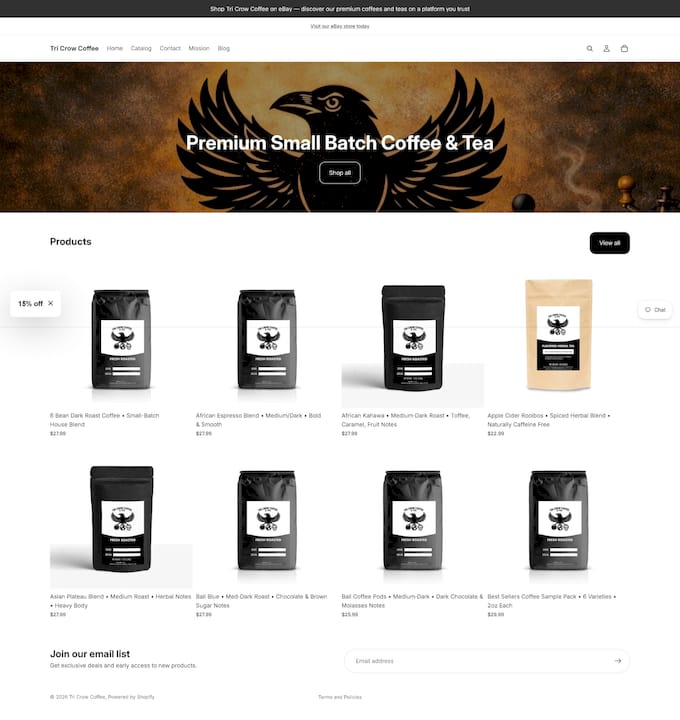
At Tri Crow Coffee, every small-batch roast is crafted with bloom in mind. Fresh roasting schedules mean you’ll see an active, domed bloom every time, which is exactly the confirmation you want. Our Mint Coffee coarse grind is built for pour-over brewing, making it a natural starting point if you’re developing your bloom technique. For something richer and more complex, the Coffee with Mushrooms medium roast blooms beautifully and rewards slow, attentive brewing. If you want to explore how different origins bloom and taste differently, the Single Origin Favorites sample pack lets you do exactly that across several distinct coffees, all ethically sourced and roasted fresh in limited batches.
Frequently asked questions
What exactly happens during coffee blooming?
Coffee blooming is when hot water first contacts ground coffee, causing trapped carbon dioxide to rapidly escape, which produces the visible bubbling and swelling that prepares grounds for even extraction.
How long should I let the coffee bloom?
Most fresh coffee needs 30 to 45 seconds to bloom fully, using water equal to 2 to 3 times the weight of your coffee dose before continuing the main pour.
Does the age of the coffee beans affect blooming?
Yes. Fresher beans bloom more aggressively and need longer bloom time, while older beans with less CO₂ produce a quieter bloom and need shorter bloom duration to avoid unnecessary cooling of your brew.
What are the risks of skipping the bloom step?
Skipping bloom leaves CO₂ trapped in the grounds during your main pour, creating a barrier that causes uneven water contact, which leads to sour, bitter, or off-balance flavors in the final cup.
Can blooming help me taste the unique flavors of sustainable or single-origin coffees?
Absolutely. Blooming clears the CO₂ that can mask delicate origin notes, allowing complex flavor layers from ethically sourced, single-origin beans to come through clearly in the cup.
Recommended
-
Discover Coffee Bean Types, Flavor Profiles, and Origins – Tri Crow Coffee
-
Coffee blends explained: Unlock balanced flavors and rituals – Tri Crow Coffee
-
Whole bean coffee: unlock flavor, freshness, and ritual – Tri Crow Coffee
-
Why coffee processing matters: flavor, ethics, and sustainability – Tri Crow Coffee