
There’s a quiet misconception running through coffee culture: blends are what you settle for when you don’t know better. Single origin gets the spotlight, the tasting notes, the enthusiast praise. But that framing misses something essential. A well-crafted coffee blend is not a compromise. It’s a composition, carefully built from multiple origins to achieve a flavor, a feeling, and a consistency that no single bean can deliver alone. For those who brew with intention, blends aren’t ordinary. They’re the foundation of a daily ritual.
Table of Contents
Key Takeaways
| Point | Details |
|---|---|
| Blends offer balance | Coffee blends combine beans for consistent, nuanced flavors suited to various brewing methods. |
| Ethical sourcing matters | Premium blends often feature transparency and sustainability, aligning with intentional lifestyles. |
| Rituals shape experience | Pairing blends with specific brewing rituals enhances connection and enjoyment. |
| Versatile brewing | Blends perform well in espresso, pour-over, and milk-based drinks, letting you match flavor to mood. |
What is a coffee blend?
A coffee blend is exactly what it sounds like: two or more types of coffee beans combined to create a unified flavor experience. But the “what” only scratches the surface. The real craft lies in the “why” and the “how.”
Roasters blend beans from different origins, processing methods, or varietals to build something greater than the sum of its parts. One bean might bring brightness and acidity. Another adds body and sweetness. A third delivers depth or a lingering finish. When balanced well, the result is a cup that feels coherent, layered, and satisfying in every sip.
Here’s what goes into a thoughtfully crafted blend:
-
Origin diversity: Beans from Ethiopia, Colombia, Sumatra, or Guatemala each carry distinct regional flavor signatures. Blending them creates complexity.
-
Processing method contrast: Washed beans tend toward clarity and acidity; natural-processed beans lean sweet and fruity. Blending both adds dimension.
-
Roast calibration: Some beans in a blend may be roasted slightly differently before combining, allowing each component to express its best qualities.
-
Consistency as a design goal: Unlike single origin coffees that shift with each harvest season, blends are engineered for a stable, repeatable profile year-round.
As daily consistency research shows, blends enhance daily consistency while allowing complexity. This is precisely why they’re the go-to choice for specialty roasters who care about delivering the same experience every morning.
Pro Tip: Blends are particularly ideal for espresso and milk-based drinks. The balance between strength and subtlety in a well-crafted blend means it won’t get lost under steamed milk, and it won’t overpower a delicate latte. Our Max Caf Blend was built with exactly this in mind.
There’s also a meditative quality to brewing a blend. Because the profile is consistent, you can focus less on managing unpredictability and more on the ritual itself. The grind, the water temperature, the pour. Each step becomes deliberate rather than reactive.
Coffee blends vs. single origin: Key differences
Understanding what sets blends apart from single origin coffees helps you make more intentional choices about what you brew and when.
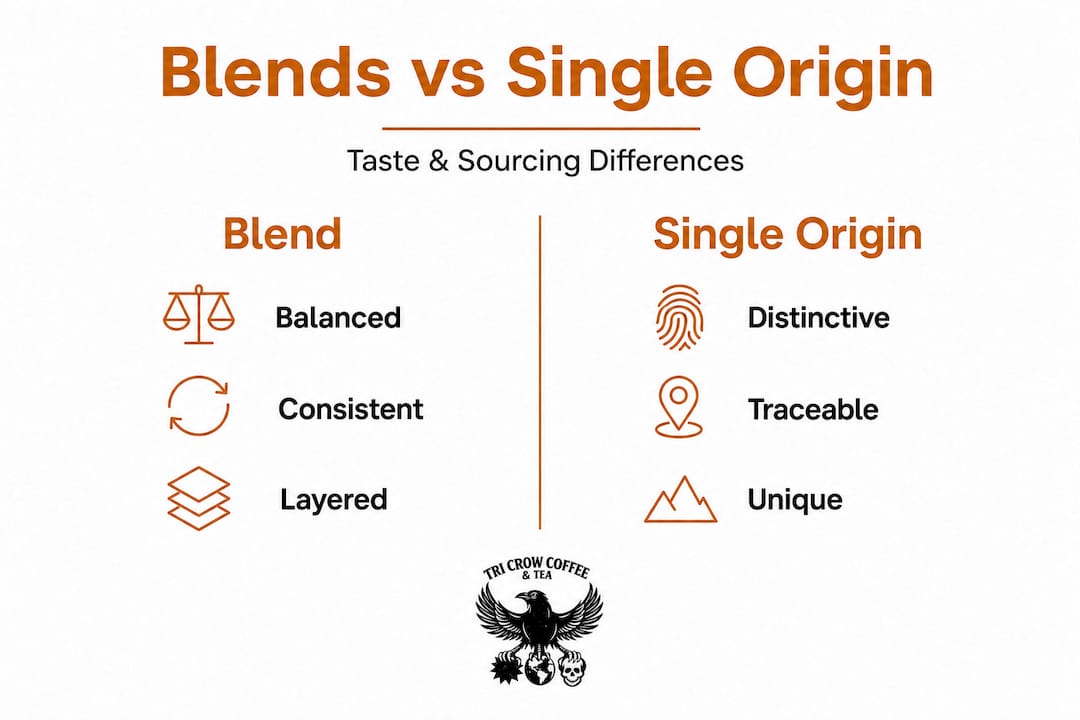
Single origin coffee comes from one specific farm, region, or cooperative. Its flavor is a direct reflection of that location’s soil, climate, altitude, and farming practices. At its best, it’s extraordinary, offering a window into a specific place and moment in time. But it can also be intense, unusual, or inconsistent from one crop cycle to the next.
Blends, by contrast, are built for balance. A roaster doesn’t just pick two beans at random. They taste dozens of combinations before landing on one that works across different brewing methods, different palates, and different moments of the day.
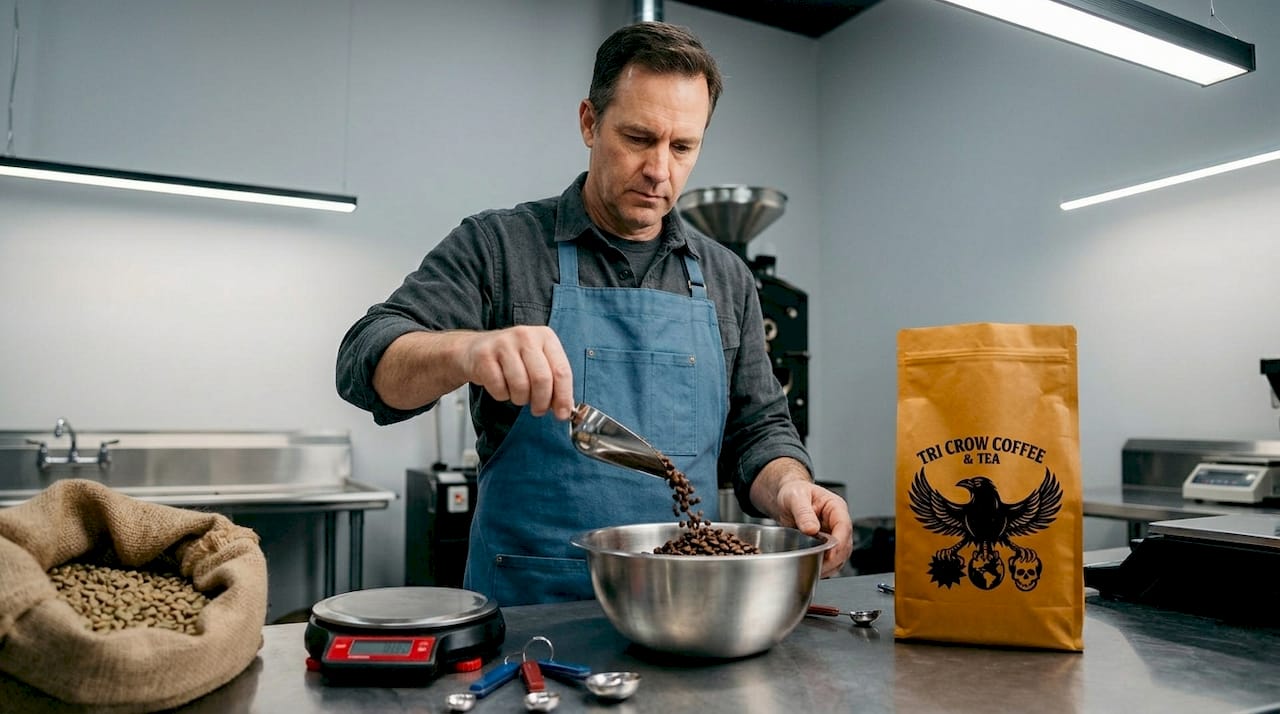
Here’s a side-by-side look at how they compare:
| Attribute | Coffee blend | Single origin |
|---|---|---|
| Flavor profile | Balanced, layered, consistent | Unique, terroir-driven, can vary |
| Brewing versatility | High (works across espresso, pour-over, drip) | Medium (often best with specific methods) |
| Seasonal consistency | Designed for year-round stability | Changes with each harvest season |
| Ethical sourcing | Possible when roaster is transparent | Often traceable to one source |
| Ritual impact | Ideal for daily grounding routines | Best for exploratory or ceremonial sips |
| Learning curve | Lower for beginners, rich for experts | Higher, rewards deep knowledge |
As sourcing practices show, blends allow complexity and pair beautifully with espresso or milk for balance, or with pour-over for layered notes. That versatility is a major reason why blends hold their place in both home kitchens and specialty cafes.
When you’re building a collection of beans to explore, understanding the full range of coffee bean types helps you appreciate what each component in a blend contributes. A Robusta’s body, an Arabica’s sweetness, a Liberica’s unusual fruity funk. These aren’t accidents. They’re decisions.
“The best blend isn’t the one with the most origins. It’s the one where every bean earns its place in the cup.”
The Max Caf Blend is a good example of this philosophy in action. Every component is chosen to serve the final flavor experience, not just to add variety.
How coffee blends elevate premium and ethical brews
Premium blends do more than taste good. They tell a story about where beans come from, how farmers are treated, and what kind of coffee culture you want to support.
Ethically sourced blends combine beans from multiple origins while maintaining transparency about each source. This means the roaster has relationships with farmers, pays fair prices, and can explain why each origin was chosen. That level of care doesn’t just make a better cup. It makes a more meaningful one.
Here’s what differentiates a premium, ethical blend from a commodity one:
| Feature | Premium ethical blend | Commodity blend |
|---|---|---|
| Origin transparency | Named farms or cooperatives | Generic region or country labels |
| Pricing model | Direct trade or fair trade certified | Commodity market pricing |
| Roast intention | Roasted to highlight each bean’s best qualities | Roasted uniformly for mass consistency |
| Flavor complexity | Layered, intentional, distinctive | Flat, predictable, forgettable |
| Environmental impact | Considers soil health and biodiversity | Prioritizes volume over sustainability |
As blend research confirms, blends build consistency and complexity, enhancing the overall coffee experience when sourced with care.
Choosing a blend that aligns with your values is a process worth taking seriously. Here’s how to approach it:
-
Read the sourcing information. A premium roaster tells you where the beans are from, not just the roast level. Look for named regions, farms, or cooperatives.
-
Check for certifications or direct relationships. Fair trade, Rainforest Alliance, or direct trade partnerships signal a higher bar for ethical practice.
-
Look at the roast date, not just the expiration date. Fresh coffee is better coffee. Small-batch roasters who list roast dates take freshness seriously.
-
Ask what the blend is designed for. A great roaster can tell you which brewing method the blend was built around and why.
-
Notice how they talk about flavor. Vague descriptors like “rich and bold” say less than specific notes like “dark chocolate finish with a hint of dried cherry.”
Understanding the full picture of ethical coffee processing helps you see how decisions made at origin shape the final cup. And if you want to go deeper, learning why coffee transparency matters puts the sourcing story in context.
Pro Tip: For rich, layered flavors at home, select blends that come with clear origin stories. If a roaster can’t tell you where their beans came from, that’s a signal worth noting. The story behind a blend is part of what makes brewing it feel like a ritual rather than a routine.
Pairing your blend to your rituals is also part of the coffee benefits experience. A morning espresso blend can ground you before the day begins. A softer afternoon pour-over blend can punctuate a break with intention.
Brewing rituals: Pairing blends for intentional living
If you drink coffee with purpose, the blend you choose and how you brew it matters more than most people realize. Matching a blend to a brewing method isn’t just about taste. It’s about creating a ritual that fits the moment.
When it comes to pairing blends with brewing methods, robust blends work beautifully with espresso or steamed milk, while softer blends shine through pour-over for layered, contemplative notes.
Here’s a practical guide to pairing by moment and method:
-
Espresso: Choose bold, full-body blends with a rich crema. Look for dark chocolate, caramel, or nutty notes. A blend with some Robusta content delivers the strength that holds up under pressure.
-
Pour-over: Lighter, more nuanced blends thrive here. The slow extraction method draws out delicate floral or fruit notes. A blend with Ethiopian or Kenyan components often shines in this format.
-
French press: Full-body blends with earthy, deep flavors suit this immersive method. The longer steep rewards beans with complexity and low acidity.
-
Cold brew: Chocolate-forward, low-acid blends make exceptional cold brew. The long, cold extraction amplifies sweetness and mutes any harshness.
-
Milk-based drinks (lattes, cappuccinos, flat whites): Choose blends with enough intensity to cut through milk. A balanced espresso blend with caramel or dark fruit notes pairs perfectly.
-
Food pairings: Breakfast blends work beautifully alongside fresh pastries, fruit, or granola. A darker, more intense blend complements chocolate, roasted nuts, or savory brunch dishes.
For new and experienced brewers alike, the process of selecting coffee beans for your home setup is its own ritual. It slows you down, makes you think about what you’re looking for, and deepens your appreciation for what ends up in the cup.
Pro Tip: Try pairing a breakfast blend with sweet pastries for a balanced morning ritual. The gentle brightness of a well-crafted breakfast blend complements buttery croissants or a lemon scone without competing for attention. If you prefer a slightly different profile, the lighter breakfast option offers a clean, smooth starting point for the day.
Intentional living doesn’t require a complicated coffee setup. It just requires showing up to the ritual with presence. The right blend makes that easier because you’re not fighting the coffee. You’re working with it.
Why blends are the soul of intentional coffee rituals
Here’s the contrarian view that rarely gets said out loud in specialty coffee circles: single origin coffee is a wonderful experience, but it’s not always the right foundation for a daily ritual.
Single origin is exploratory. It asks you to pay attention, to adjust, to wonder. Those are genuinely valuable experiences. But a daily ritual asks for something different. It asks for reliability, for a flavor that greets you the same way every morning. That’s not a limitation. That’s the whole point.
Research supports what experienced drinkers already know: blends enhance daily consistency while still offering real complexity. That combination is rare and valuable. It means you’re not sacrificing depth for predictability. You’re getting both.
There’s also something to be said about the ethics of consistency. When a roaster commits to a blend, they commit to sourcing the same beans season after season. That means longer relationships with farmers, more stable income for growing communities, and a deeper understanding of how each origin contributes to the cup. Consistency at the roastery level ripples outward in ways that matter.
Intentional living isn’t about chasing novelty. It’s about building meaningful patterns. Your morning cup, your brewing ritual, your moment of stillness before the day begins. These are the patterns that shape how you move through the world. A blend that’s built to support that practice is not ordinary coffee. It’s a daily anchor.
The depth of the coffee ritual experience goes beyond caffeine. It’s about showing up for yourself, one cup at a time. Blends make that showing up easier, richer, and more intentional.
Experience premium blends at Tri Crow Coffee
At Tri Crow Coffee, every blend begins with a question: what experience does this cup need to create? From there, we source ethically, roast in small batches, and craft each blend to support a specific ritual, mood, or moment.
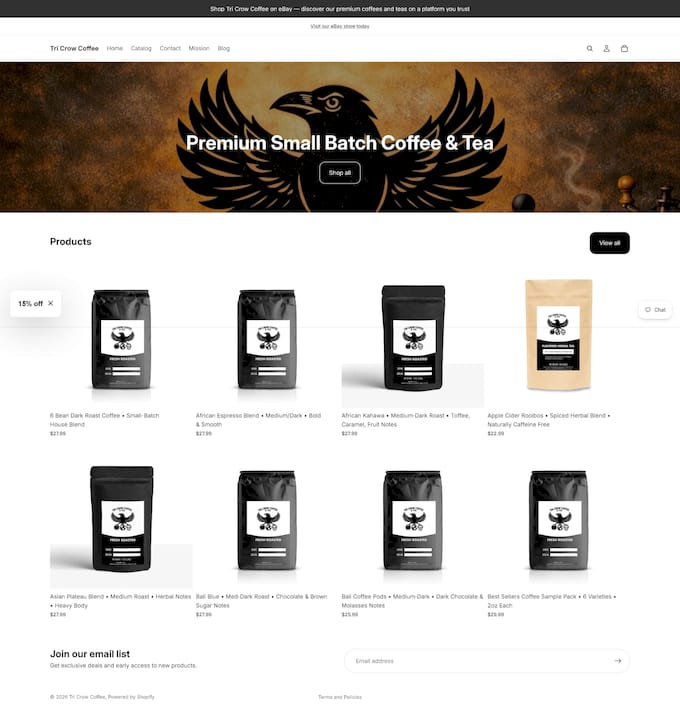
If you’re ready to explore, the best sellers sample pack is the best place to start. It lets you taste multiple blend profiles side by side so you can find the ones that resonate with your palate and your practice. For something unexpected, our medium mushroom coffee brings a functional twist to your daily ritual, combining premium coffee with the grounding qualities of mushroom adaptogens. Every product at Tri Crow Coffee is built around the same belief: your cup should mean something.
Frequently asked questions
How are coffee blends different from flavored coffee?
Coffee blends combine different types of beans for flavor complexity, while flavored coffee adds external flavorings like vanilla or hazelnut after roasting. Blends achieve their taste entirely through the beans themselves.
Are blends less ethical than single origin coffee?
Blends can be just as ethical as single origin, especially when ethically sourced from reputable roasters who maintain transparent relationships with multiple farming partners.
What brewing method is best for coffee blends?
Both espresso and pour-over work well with blends; the key is matching the blend’s body and intensity to the method, since method pairing is what draws out the best flavors.
Can I trace the origins in a coffee blend?
Many premium blends provide full origin transparency, and tracing your coffee lets you understand what each component contributes to the final flavor.
Do blends taste the same every time I brew?
Blends are designed for daily consistency by nature, though small changes in your brewing technique, water temperature, or grind size will still create subtle variations in the cup.
Recommended
-
Explore coffee drink varieties for a richer daily ritual – Tri Crow Coffee
-
Discover Coffee Bean Types, Flavor Profiles, and Origins – Tri Crow Coffee
-
Why coffee processing matters: flavor, ethics, and sustainability – Tri Crow Coffee
-
How to select coffee beans for great home brewing flavor – Tri Crow Coffee