
You brew carefully, follow every step, and still your morning cup falls flat compared to what a great café serves. The frustrating truth is that most home brewing disappointments trace back to one overlooked decision: which beans you buy. Quality, freshness, and ethical sourcing are all within your control once you know what to look for. This guide walks you through exactly how to evaluate coffee beans for flavor, sustainability, and freshness so every cup you brew at home can genuinely compete with your favorite coffee shop.
Table of Contents
Key Takeaways
| Point | Details |
|---|---|
| Focus on specialty grade | Choose Arabica beans with an SCA score of 80+ for top-tier flavor and minimal defects. |
| Look beyond labels | Sustainability certifications help, but real transparency sometimes matters more. |
| Taste by origin and roast | Sample different regions and roast levels to find your ideal profile. |
| Store beans properly | Use airtight containers in cool, dark places to maximize fresh flavor. |
| Balance ethics with enjoyment | Be informed, ask questions, and enjoy your coffee journey without perfectionism. |
What makes a coffee bean high quality?
Not all coffee beans are created equal, and the gap between commodity-grade and specialty-grade coffee is enormous. Quality shows up in four key areas: flavor clarity, minimal defects, aroma, and freshness. A high-quality bean delivers a clean, distinct taste without muddiness or off-notes. When you grind it, the aroma should hit you immediately, rich and layered rather than flat or stale.
The gold standard for measuring quality is the SCA cupping scale, which scores beans out of 100 across attributes like aroma, flavor, aftertaste, acidity, body, and balance. Beans scoring 80 or above earn the “specialty grade” designation. Anything below 80 falls into commercial or commodity territory, which is most of what fills supermarket shelves. Specialty-grade Arabica beans scoring 80 or higher consistently deliver the flavor clarity and minimal defects that make a cup memorable.
Arabica vs. Robusta: why it matters for your cup
Most specialty coffee uses Arabica beans. Arabica plants grow at higher altitudes, develop more slowly, and produce beans with greater complexity and sweetness. Robusta beans, by contrast, are hardier, higher in caffeine, and often carry a harsher, more bitter profile. You will occasionally find Robusta blended into espresso for crema, but for nuanced home brewing, Arabica is almost always the better choice.
Here is a quick comparison to keep in mind when shopping:
| Feature | Specialty grade (80+ SCA) | Commercial grade (below 80) |
|---|---|---|
| Flavor clarity | High, distinct notes | Muddy, generic |
| Defects | Minimal | Common |
| Aroma | Complex, fresh | Flat or stale |
| Origin traceability | Usually clear | Often blended, unclear |
| Price | Higher | Lower |
Roast color is another quality indicator worth understanding. The Agtron scale measures roast consistency numerically, with higher numbers indicating lighter roasts and lower numbers indicating darker ones. A roaster who monitors Agtron scores is paying attention to consistency, which is a reliable sign of overall craft and care.
If you want to explore how specialty beans taste across different origins, a best sellers sample pack is an excellent starting point. You can also try a flavored coffees sample pack if you enjoy a more expressive cup with added character.
How to choose for sustainability and ethics
Once you understand quality, the next step is ensuring your choices align with your values. Sustainability in coffee is not just a marketing buzzword. It directly affects the livelihoods of farmers, the health of ecosystems, and the long-term availability of the coffee you love.
Several certifications exist to help consumers navigate ethical sourcing. Fair Trade certification ensures farmers receive a minimum price and community development funds. Rainforest Alliance focuses on environmental and social standards across the supply chain. USDA Organic certification means no synthetic pesticides or fertilizers were used. Bird Friendly certification, issued by the Smithsonian, is one of the most rigorous, requiring organic practices and shade-grown cultivation that protects migratory bird habitats. Each label covers different ground, so understanding what each one actually guarantees helps you make smarter choices.
“Prioritize certifications like Fair Trade, Rainforest Alliance, Organic, and Bird Friendly, and also seek traceability, direct trade relationships, and evidence of living income for farmers.” Bellwether Coffee
What certifications cover (and what they miss)
| Certification | Main focus | Limitation |
|---|---|---|
| Fair Trade | Minimum price, farmer income | Doesn’t guarantee cup quality |
| Rainforest Alliance | Environmental and social standards | Allows partial certification |
| USDA Organic | No synthetic chemicals | Doesn’t address farmer wages |
| Bird Friendly | Shade-grown, organic habitat | Limited to certain regions |
| Direct Trade | Relationship, transparency | No third-party verification |
Here is something important that often gets overlooked: small farms may follow genuinely ethical, sustainable practices without holding a single certification. Certifications cost money, and many smallholder farmers simply cannot afford the application and audit fees. This is why traceability and direct trade matter so much. When a roaster can tell you the farm name, the farmer’s name, and the price paid above commodity rates, that transparency often speaks louder than a label.
Pro Tip: Ask your coffee supplier directly where their beans come from and what relationship they have with the farm. A roaster who can answer that question in detail is almost always doing things right.
When you buy from a small-batch roaster with clear sourcing stories, you are voting with your wallet for a more transparent and equitable coffee industry. That connection between your morning cup and a real farm community is something no supermarket bag can offer.
Selecting beans for your preferred taste profile
After ethics, the journey gets genuinely exciting because now you get to match beans to what you actually love in your cup. Origin, roast level, and processing method each shape the flavor in distinct ways, and understanding them turns shopping from guesswork into a confident, enjoyable process.
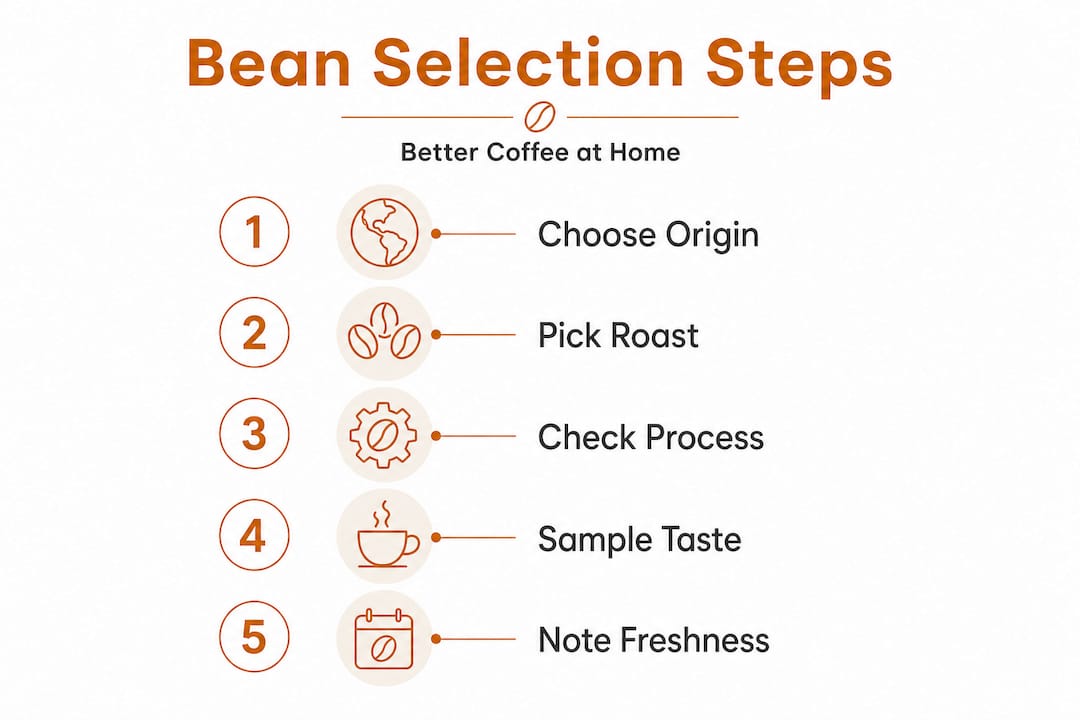
1. Start with origin
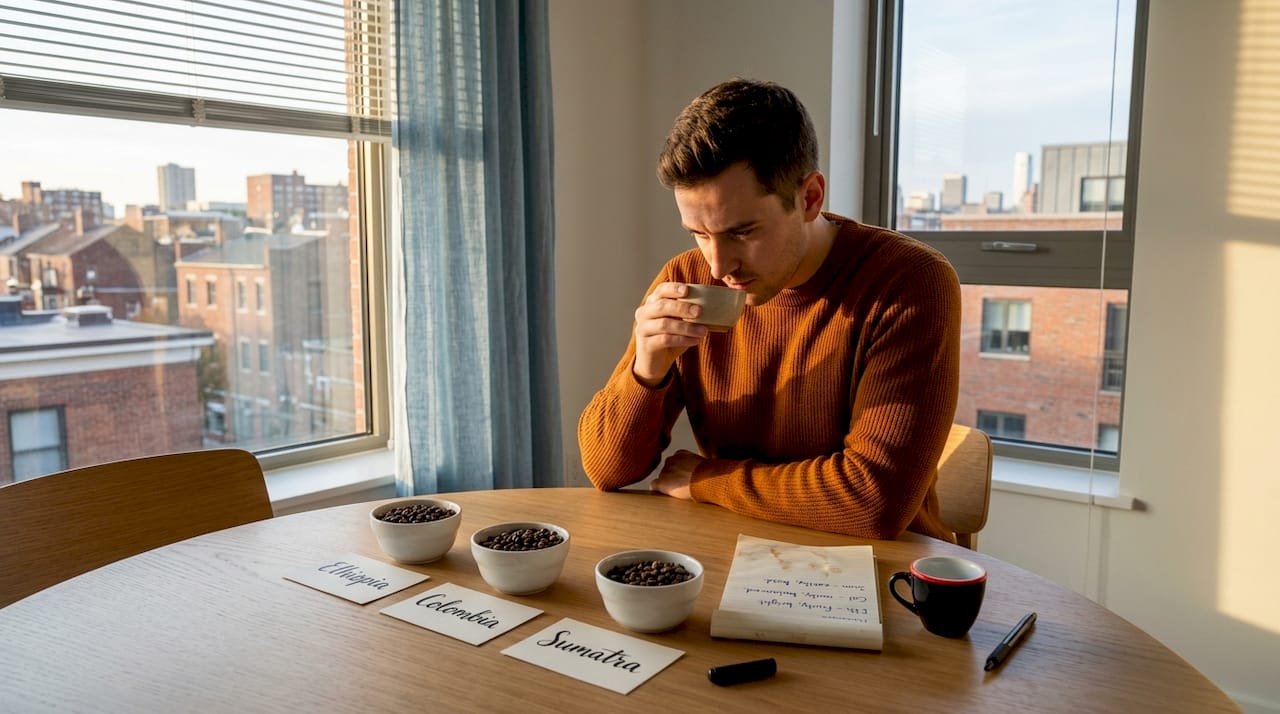
Where a coffee grows profoundly shapes its flavor. African coffees, particularly from Ethiopia and Kenya, tend toward bright, fruity, and floral notes. Ethiopian naturals often taste like blueberries or jasmine. Kenyan washed coffees deliver a sharp, wine-like acidity with blackcurrant notes. Central and South American coffees, from countries like Colombia, Peru, and Mexico, typically offer a more balanced profile with chocolate, caramel, and mild fruit. Asian coffees, especially from Indonesia and Bali, lean toward earthy, full-bodied, and sometimes spicy or herbal flavors.
2. Choose your roast level
Light roasts preserve the most origin character. You taste the terroir, the altitude, the processing. Medium roasts balance origin notes with roast-derived sweetness and body. Dark roasts emphasize roast flavors like chocolate, smoke, and bittersweet caramel, often masking origin nuance. None of these is objectively better; it depends entirely on what you enjoy. The SCA 80+ benchmark applies across all roast levels, and the Agtron scale helps roasters maintain consistency within each style.
3. Understand processing methods
Washed (or wet) processing removes the fruit before drying, producing cleaner, brighter, more transparent cups where the bean’s natural flavors shine clearly. Natural processing dries the whole cherry, letting the fruit ferment around the bean, which adds sweetness, body, and sometimes funky, complex fruit notes. Honey processing sits in between, with some fruit mucilage left on during drying for a balance of clarity and sweetness.
4. Sample before committing
Buying a large bag of unfamiliar beans is a gamble. Sampling across origins and roast levels is the fastest way to map your own palate. A best sellers sample pack covering origins like Peru, Mexico, and Bali lets you taste genuine differences side by side. If you prefer bright, complex espresso, an African espresso can be a revelation compared to the typical dark, bitter blends most people default to. For something different, a flavored coffees sample pack offers a playful way to explore flavor without committing to a full bag.
Pro Tip: Keep a simple tasting journal. Write down the origin, roast, processing method, and your honest impression after each brew. After three or four entries, patterns emerge fast and you will know exactly what to look for on a bag label.
How to store your coffee beans for freshness
Lastly, all your careful selection can go to waste without knowing how to keep your beans at their best. Coffee has four enemies: air, light, heat, and moisture. Any one of them accelerates staling. All four together can ruin a bag of excellent beans within days.
Here is a practical storage routine that actually works:
-
Transfer beans immediately. Most coffee bags have a one-way valve that releases CO2 but keeps air out. Once opened, that protection weakens fast. Move beans to an airtight, opaque container right away.
-
Store in a cool, dark, dry spot. A kitchen cabinet away from the stove or oven is ideal. Avoid the counter near a window or above appliances that generate heat.
-
Buy in small batches. Freshness peaks in the first two to three weeks after roasting. Buying a two-week supply at a time ensures you always brew at peak flavor rather than grinding through a bag that sat for two months.
-
Avoid the refrigerator. The fridge introduces moisture through condensation every time you open the container. It also absorbs odors from other foods, which will migrate into your beans.
“Store coffee in an airtight, opaque container in a cool, dark, dry place. Avoid the fridge or freezer due to moisture risk, and buy in small batches for the best flavor.” CNET
The freezer question comes up constantly. Some experts argue that freezing beans for very long-term storage (think months, not weeks) is acceptable if done in a completely airtight container with no temperature fluctuations. But for everyday home brewing, freezing creates more problems than it solves. Condensation forms on beans as they warm up, and repeated freeze-thaw cycles degrade cell structure and flavor. The better strategy is simply buying fresher beans more often.
If you enjoy dark roast coffee, keep in mind that darker roasts degas faster and can go stale more quickly than light or medium roasts. The oils that give dark roasts their richness are also more vulnerable to oxidation. Smaller, more frequent purchases matter even more here. For something unique in your rotation, mushroom coffee beans offer an interesting option worth exploring for their distinct profile and functional benefits.
The truth about coffee bean selection no one tells you
Here is the honest perspective after years of sourcing and tasting small-batch coffee: the industry has a tendency to make bean selection feel like a test you can either pass or fail. It is not. There is no single perfect bean, no certification that guarantees a transcendent cup, and no storage method that replaces simply buying fresh.
Certifications are genuinely useful tools, but they are not the whole story. As Bellwether Coffee notes, small farms often cannot afford certification fees even when their practices are exemplary. A bag without a Fair Trade seal might come from a farmer who earns more per pound than a certified competitor, simply because a roaster built a direct relationship and pays a premium voluntarily. Conversely, a certified bag does not automatically mean the farmer thrives. Certifications set floors, not ceilings.
The most reliable signal of quality and ethics is a roaster willing to talk. Ask where the beans come from. Ask what they paid. Ask when the coffee was roasted. A supplier who answers those questions with specifics, not vague marketing language, is the one worth trusting. That kind of transparency is what we prioritize at Tri Crow Coffee, and it is what we think every coffee buyer deserves.
The freezing debate is similar. Experts genuinely disagree, and the honest answer is that for most home brewers, the debate is irrelevant. If you buy fresh beans in small quantities and store them properly in an airtight container, you will never need to freeze them. The question only becomes relevant if you are buying in bulk, which usually runs counter to the goal of peak freshness anyway.
The takeaway is simple: make informed choices, ask good questions, and do not let the pursuit of perfection get in the way of enjoying great coffee. An 82-point washed Ethiopian from a transparent roaster, stored in a decent airtight container, brewed with care, will outperform a 90-point bean that sat in a clear bag on a sunny counter for six weeks every single time.
Ready to taste the difference? Try curated beans that check every box
Putting this knowledge into practice is easier when you have a curated starting point. At Tri Crow Coffee, every bean is small-batch roasted and sustainably sourced, so the work of vetting quality and ethics is already done for you.
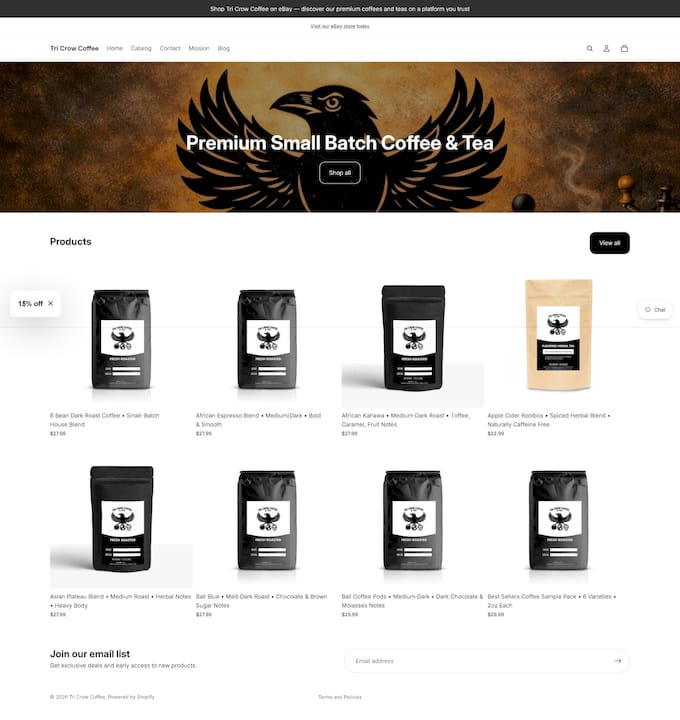
Start with a single origin favorites pack to experience how dramatically origin shapes flavor, or grab the best sellers sample pack to taste a range of profiles side by side. Each bag comes with roast date and origin information so you can apply everything from this guide with confidence. Great home brewing starts with great beans, and finding yours should be as enjoyable as drinking them.
Frequently asked questions
How can I tell if coffee beans are fresh?
Fresh beans have a strong, immediate aroma when you open the bag, a visible roast date within the past two to three weeks, and minimal surface oil if they are a light or medium roast. Proper storage in an airtight container preserves these freshness signals longer.
Is specialty-grade coffee worth the higher price?
Yes, for most enthusiasts. Specialty-grade Arabica beans scoring 80 or higher on the SCA scale deliver noticeably superior flavor, cleaner aroma, and fewer defects compared to commercial-grade coffee, making the price difference easy to justify once you taste the gap.
Are all coffee certifications equally meaningful?
No. Each certification covers a different dimension of sustainability and ethics, and none is fully comprehensive. Look for direct trade transparency alongside labels, since a roaster’s sourcing story often tells you more than any single certification can.
Does freezing coffee beans preserve freshness?
Freezing can extend shelf life for long-term storage, but most experts advise against it for everyday use because of condensation and flavor degradation. Buying smaller batches more frequently is a more reliable way to keep beans tasting their best.