
That golden, foam-like layer crowning a freshly pulled espresso shot looks like a promise. Many coffee lovers judge their entire shot by it. Thick crema? Great shot. Thin crema? Something went wrong. But that assumption leads home baristas astray more often than it guides them well. Crema is genuinely fascinating and does reveal real information about your brew, but it is one signal among many, not the final verdict. This article covers what crema actually is, how it forms, what affects it, how to improve it, and when to stop chasing it.
Table of Contents
Key Takeaways
| Point | Details |
|---|---|
| Crema explained | Crema is the foamy layer from pressurized brewing, not a guarantee of flavor quality. |
| Key factors | Bean type, freshness, grind, and pressure all impact crema production. |
| Science matters | Even extraction and correct technique are crucial for consistent crema. |
| Fixing mistakes | Simple adjustments in tamping or grind can quickly improve your results. |
| Flavor remains king | Great crema is nice but the true test is always in the taste. |
What is coffee crema?
Crema is the tan, reddish-brown frothy layer that sits on top of a freshly pulled espresso shot. It looks delicate, almost like a thin foam, and it disappears within a few minutes if left undisturbed. Most people recognize it visually, but far fewer understand what it is made of or what it actually signals.
At its core, crema is a frothy layer composed of emulsified coffee oils, fine gas bubbles (primarily carbon dioxide), and pigment compounds extracted from roasted coffee. High-pressure water during espresso brewing forces dissolved CO2 out of the coffee grounds. Those gases combine with oils and liquid to form a stable, bubbly emulsion that floats on the surface of the shot. The result is crema.
The color of your crema tells a story. A rich hazel or reddish-brown crema usually signals a well-extracted shot from freshly roasted beans. A very pale, thin crema often suggests under-extraction, old beans, or pressure issues. An overly dark, almost burned-looking crema may mean the shot was over-extracted or the roast is too dark and oily. Neither extreme is ideal.
Here is what crema can and cannot tell you about your espresso:
-
It tells you: The beans are relatively fresh (CO2 is still off-gassing from recent roasting)
-
It tells you: Extraction pressure and grind are roughly within range
-
It tells you: Your espresso machine is generating adequate pressure (typically 9 bars)
-
It does NOT tell you: Whether the shot tastes good
-
It does NOT tell you: Whether the beans are specialty grade or ethically sourced
-
It does NOT tell you: Whether your extraction ratio or time was actually correct
“Crema forms when high-pressure water releases carbon dioxide from the coffee bed, trapping gases within emulsified oils to create a foam-like surface layer.” — Physics World
Crema can look perfect on a shot that tastes bitter, flat, or hollow. Recognizing crema as one indicator, not a guarantee of quality, is the first step to becoming a more confident and informed home barista.
How crema forms: The science explained
Understanding what crema is, let’s get into the science and technique that actually produces it.
Crema formation is a pressure-driven process. When an espresso machine pushes hot water through a tightly packed puck of ground coffee at around 9 bars of pressure, it forces dissolved CO2 out of the beans rapidly. That CO2 combines with the coffee’s natural oils and liquid to form the emulsified foam we call crema. The moment that pressure drops, as the shot exits the portafilter and fills the cup, the CO2 tries to escape. Some bubbles burst immediately; others stabilize into the crema layer.
Here is the basic sequence of crema formation during a shot pull:
-
Tamp the ground coffee evenly into the portafilter basket to create a uniform, compact puck
-
Lock the portafilter into the group head so the machine can pressurize the water path
-
Pre-infusion begins as low-pressure water saturates the grounds before full pressure applies
-
Full pressure kicks in (9 bars) and hot water is forced through the compacted grounds
-
CO2 releases from the grounds under pressure and binds with coffee oils in the liquid
-
Crema emerges as the first dark, viscous drops hit the cup and the emulsified layer forms at the surface
-
The shot pulls over 25 to 35 seconds total, and crema builds with consistent flow
Any mismatch in pressure or flow such as channeling or poor puck preparation can reduce crema significantly by disrupting the even extraction that makes crema possible. Channeling happens when water finds a shortcut path through the coffee puck rather than flowing evenly through every grain. The result is a blotchy, uneven crema with pale channels cutting through it.
Variables that impact crema quality:
| Variable | Too low / off | Ideal range | Too high / off |
|---|---|---|---|
| Pressure | Thin, watery crema | 8.5 to 9.5 bars | Dark, burned crema |
| Water temperature | Pale, underdeveloped crema | 195°F to 205°F | Bitter, dark crema |
| Grind size | Fast pull, no crema body | Fine, consistent grind | Slow pull, over-extracted |
| Bean freshness | No crema, flat shot | 7 to 21 days post-roast | Crema can vary widely |
A small shift of just one bar of pressure can noticeably change the thickness, color, and longevity of your crema. This is why machine calibration matters more than most home baristas realize at first.
Pro Tip: Before pulling a shot, always distribute your grounds evenly in the portafilter basket and tamp with level, consistent pressure (roughly 30 lbs of force). Uneven distribution is the number one cause of channeling, which ruins both crema and flavor in one go.
When selecting coffee beans for espresso, consider that freshness directly controls how much CO2 is available in the grounds. Beans roasted within the last two to three weeks typically produce the most vibrant crema.
Factors that influence crema quality
Having looked at the science, now let’s outline what factors play the biggest role in the appearance and longevity of crema.
Crema quality is not the result of one single decision. It depends on pressure, flow, and careful coffee bed preparation working together as a system. Change one variable and you shift the entire outcome.
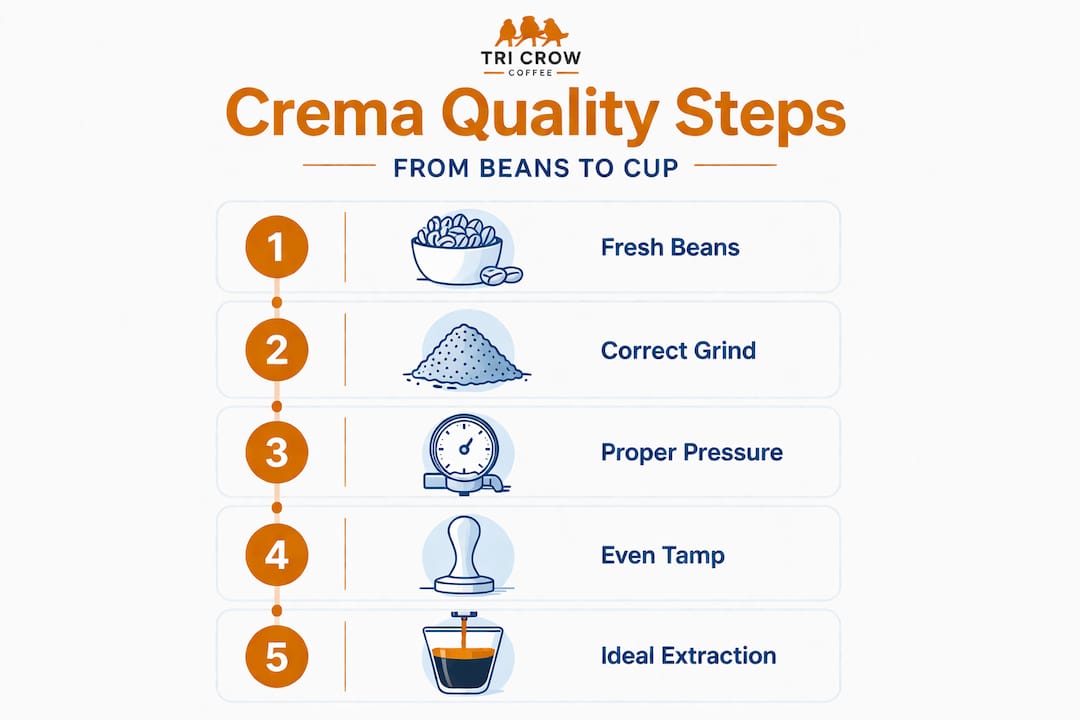
Bean type matters a lot. Robusta beans naturally produce more crema than Arabica because they contain more CO2 and different oil structures. Many espresso blends include a small percentage of Robusta specifically for this reason, to add body and crema volume. Pure single-origin Arabica shots are often more nuanced in flavor but may produce thinner crema, and that is completely fine.
Roast level also plays a direct role. Medium to medium-dark roasts tend to produce the most balanced crema. Lighter roasts, while often prized for their flavor complexity, produce less crema because the roasting process has not opened the bean’s cellular structure as aggressively, leaving less space for CO2 to accumulate. Very dark roasts can generate thick but short-lived crema because the oils are so abundant they destabilize quickly.
| Cause | Effect on crema |
|---|---|
| Fresh beans (7 to 21 days post-roast) | Rich, persistent, hazel-colored crema |
| Old beans (30+ days post-roast) | Thin, pale, disappears quickly |
| Light roast | Minimal crema, often pale gold |
| Medium-dark roast | Thick, reddish-brown, holds well |
| Dark/French roast | Dense but breaks apart quickly |
| High-pressure machine (9 bars) | Well-formed, textured crema |
| Moka pot or AeroPress | Minimal to no true crema |
Signs of genuinely great crema include:
-
Color: A rich hazel or reddish-brown tone, sometimes with a tiger striping pattern
-
Thickness: Covers the full surface of the shot without gaps or pale channels
-
Persistence: Holds for at least 60 to 90 seconds before breaking down
-
Texture: Fine-bubbled and smooth looking, not coarse or foamy
-
Taste: Slightly sweet and aromatic when tasted on its own, not bitter
For readers exploring bean options and wanting to understand how those choices connect to crema, our bean selection tips and the broader coffee varieties guide are strong starting points.
Pro Tip: For the best balance between crema and flavor, use beans that are between 10 and 21 days post-roast. Too fresh (under 7 days) and the excess CO2 actually destabilizes the shot; too old and there is not enough gas left to form proper crema.
Common crema mistakes (and how to fix them)
Now that you know the theory and variables, here’s how to spot and fix the most common crema problems when brewing at home.
Most crema problems are fixable within one or two brew sessions once you know what to look for. The mistakes usually trace back to a small number of root causes: uneven tamping, stale beans, wrong grind size, or poor pressure control.
-
Uneven tamp: If you tamp at an angle, water finds the path of least resistance and channels through. Fix: Use a leveling tool or practice tamping on a flat surface while checking the horizon line of the puck.
-
Old beans: Beans past their peak off-gassing window have little CO2 left. Fix: Always check roast dates; use beans within 7 to 21 days post-roast for espresso.
-
Grind too coarse: Water flows too fast, pressure drops, and crema never develops properly. Fix: Adjust your grinder one step finer and re-pull the shot.
-
Grind too fine: The shot runs slow or barely drips, causing over-extraction and a dark, bitter crema. Fix: Open the grind by one step and re-pull.
-
Wrong machine pressure: Entry-level machines sometimes run below 9 bars. Fix: Check your machine specs; consider a pressure gauge if your machine allows it.
-
Poor coffee bed distribution: Clumps or gaps in the puck break even extraction. Fix: Use a distribution tool or gently tap the portafilter before tamping.
“Channeling and poor puck preparation can disrupt crema dramatically by breaking the even pressure distribution required for proper espresso extraction.” — Physics World
Channeling and poor puck preparation do not just reduce crema visually. They cause uneven extraction across the entire puck, meaning part of your shot is under-extracted (sour) and part is over-extracted (bitter) at the same time. The result is a complex, unpleasant flavor that no amount of crema can hide.
For specific advice on freshness and grind advice that directly affects your crema results, it is worth revisiting the fundamentals of bean sourcing and storage regularly.
Pro Tip: Before changing multiple variables at once, make one adjustment at a time. Change your grind by one step, pull a shot, evaluate, then adjust again if needed. Changing grind, tamp, and dose all at once makes it impossible to know which fix actually worked.
Why crema can be overrated (but still matters)
Here is something most espresso content will not tell you plainly: chasing perfect crema can actually make you a worse barista.
When you obsess over the visual layer, you stop paying attention to what the shot actually tastes like. We have tasted thick, gorgeous crema on shots that were hollow, bitter, and completely out of balance. We have also tasted incredibly rich, complex shots pulled from light-roasted single origins that produced almost no crema at all. The flavor won, every time.
Not all crema indicates quality; it is affected by physics and variables, not purely by bean quality or roast craftsmanship. A robusta-heavy blend will almost always produce more crema than a delicate Ethiopian natural Arabica. That does not make the blend superior.
There are real situations where minimal crema is completely acceptable:
-
Light roast single origins: Lower CO2 content, higher flavor complexity
-
High-altitude Arabicas: Dense beans that extract beautifully but produce lighter crema
-
Certain brewing styles: Lungo shots or ristretto pulls change the crema profile naturally
-
Properly rested beans: Beans rested 14 to 21 days post-roast often produce denser but thinner crema that holds longer
Think of crema the way a seasoned cook thinks about the color of a sear on meat. It gives you information. It tells you roughly where you are in the process. But the real test is always how it tastes.
The most empowering shift a home barista can make is to use crema as a diagnostic tool, one signal among several, and then taste the shot with full attention. Does it taste balanced, sweet, and complex? Then you are doing well, crema or not. Explore coffee rituals that bring more intentionality to how you evaluate every brew, not just how it looks.
Find coffee that elevates your brew
Inspired to perfect your crema? The foundation of great crema starts with freshly roasted, carefully sourced beans. Without that, no amount of technique adjustment will get you there.
At Tri Crow Coffee, every blend is roasted in small batches specifically to preserve the freshness and CO2 content that makes crema possible. Whether you prefer a balanced medium roast coffee that pulls a rich, hazel crema with ease, or you want the bold depth of our French Roast for a visually striking shot, our range is built for home baristas who brew with intention. If convenience matters without compromising quality, our instant coffee options bring that same roasting care into a faster format. Every bag ships fresh so your crema has everything it needs.
Frequently asked questions
Does more crema mean better espresso?
Not always. Crema signals freshness and technique, but flavor balance remains the most reliable indicator of shot quality.
Why do some espresso shots have little or no crema?
This typically happens when beans are past their prime off-gassing window, the grind is too coarse, or pressure disruptions from channeling prevent even extraction.
Can you get crema with other brewing methods besides espresso?
True crema requires high pressure to release CO2 from grounds during extraction, which drip, French press, and pour-over methods cannot replicate at the same level.
Is thick crema more desirable than thin crema?
Thick crema looks impressive but balance and flavor come first. Some of the best-tasting espresso styles naturally produce thinner crema without any compromise to quality.