
Most people assume the coffee they buy pre-ground is basically the same as grinding it fresh. It isn’t. The moment a bean is ground, it begins losing the volatile oils and aromatic compounds that give great coffee its character. Grinding exposes far more surface area to oxygen, which means oxidation starts eating away at flavor before you’ve even boiled your water. This guide breaks down exactly what that means for your cup, how to store whole beans properly, and why the ritual of grinding fresh is about far more than taste alone.
Table of Contents
Key Takeaways
| Point | Details |
|---|---|
| Superior freshness | Whole bean coffee keeps volatile aroma and flavor compounds locked in until grinding, for a fresher cup. |
| Enhanced flavor experience | Grinding just before brewing results in noticeable improvements in taste, aroma, and complexity. |
| Ritual and mindfulness | Using whole beans elevates coffee making into a more mindful daily ritual. |
| Proper storage matters | Even whole beans can lose quality if not stored in airtight, opaque containers away from heat and moisture. |
What happens to coffee after grinding?
Grinding seems like a simple mechanical step, but chemically it’s a turning point. When a roasted bean is intact, its cellular structure acts as a natural vault, locking in hundreds of aromatic compounds and essential oils. The moment you grind it, you shatter that vault open. Every exposed particle starts reacting with oxygen immediately.
Oxidation accelerates the loss of aroma and volatile oils, and the numbers are striking. Most of coffee’s key aroma compounds begin to dissipate within just 15 minutes after grinding. By the time a bag of pre-ground coffee reaches your shelf, many of those compounds are already a memory. The coffee might smell like coffee in a general sense, but the nuance is gone.
Here’s a side-by-side look at how freshness degrades over time:
| Time after grinding | Whole bean | Pre-ground |
|---|---|---|
| 0 to 15 minutes | Peak aroma, full oils intact | N/A (already ground) |
| 1 hour | Minimal change | Noticeable aroma loss begins |
| 24 hours | Still very fresh if sealed | Significant flavor degradation |
| 1 week | Slight decline, still excellent | Flat, stale, oils largely gone |
| 1 month | Acceptable if stored correctly | Largely tasteless or bitter |
The contrast becomes undeniable once you experience it. A cup brewed from freshly chosen coffee beans carries layers of flavor that pre-ground coffee simply cannot offer.
Key chemical and sensory differences pre- and post-grinding:
-
Volatile aromatics: Responsible for the floral, fruity, and caramel notes in specialty coffee. They escape rapidly once grinding exposes the bean’s interior.
-
Carbon dioxide (CO2) off-gassing: Fresh-ground beans release CO2 during the bloom phase of brewing, which pushes water evenly through the grounds and enhances extraction. Pre-ground beans have already off-gassed by the time you brew.
-
Essential oils: These carry body and mouthfeel. Oxygen breaks them down into compounds that taste flat or even rancid over time.
-
Moisture absorption: Ground coffee absorbs ambient humidity faster than whole beans, which softens flavor even before you brew.
-
Bitter compound exposure: As fresher compounds degrade, the more stubborn bitter and astringent compounds become more prominent relative to the overall flavor profile.
consistently found that whole beans deliver better flavor clarity and a more vibrant sensory experience than pre-ground alternatives. That’s not a preference. It’s chemistry expressing itself in every sip.
Freshness and flavor: the taster’s advantage
Understanding the science is one thing. Feeling it in your cup is another. The sensory gap between whole bean coffee and pre-ground is not subtle once you know what to look for. It shows up as brightness, complexity, and that satisfying aromatic hit the moment hot water contacts freshly ground coffee.
“Whole-bean coffee will taste much fresher than ground coffee, with more pronounced flavor notes.” — Epicurious’ Taste Panel
Here’s how that difference plays out across the key tasting dimensions:
| Tasting dimension | Whole bean (freshly ground) | Pre-ground |
|---|---|---|
| Aroma | Rich, layered, immediately present | Faint, one-dimensional |
| Flavor clarity | Distinct origin notes, clear finish | Muddled, harder to distinguish |
| Body | Full, silky, oil-rich | Thin, watery, or flat |
| Sweetness | Natural sugars more perceptible | Less detectable sweetness |
| Aftertaste | Clean and pleasant | Often bitter or hollow |
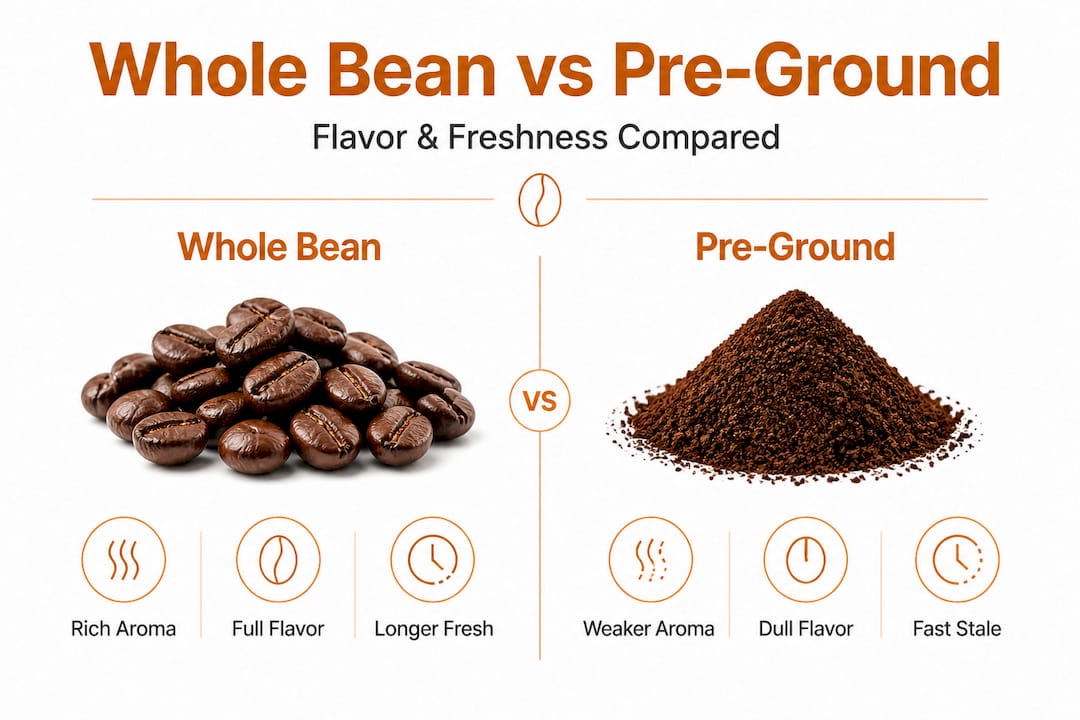
The aroma difference alone changes the entire experience. Smell is responsible for a large portion of what we perceive as taste. When you grind fresh, that first cloud of aroma rising from your grinder is essentially flavor you’re about to drink. Pre-ground coffee has already released most of that into a bag or into the air at the production facility.
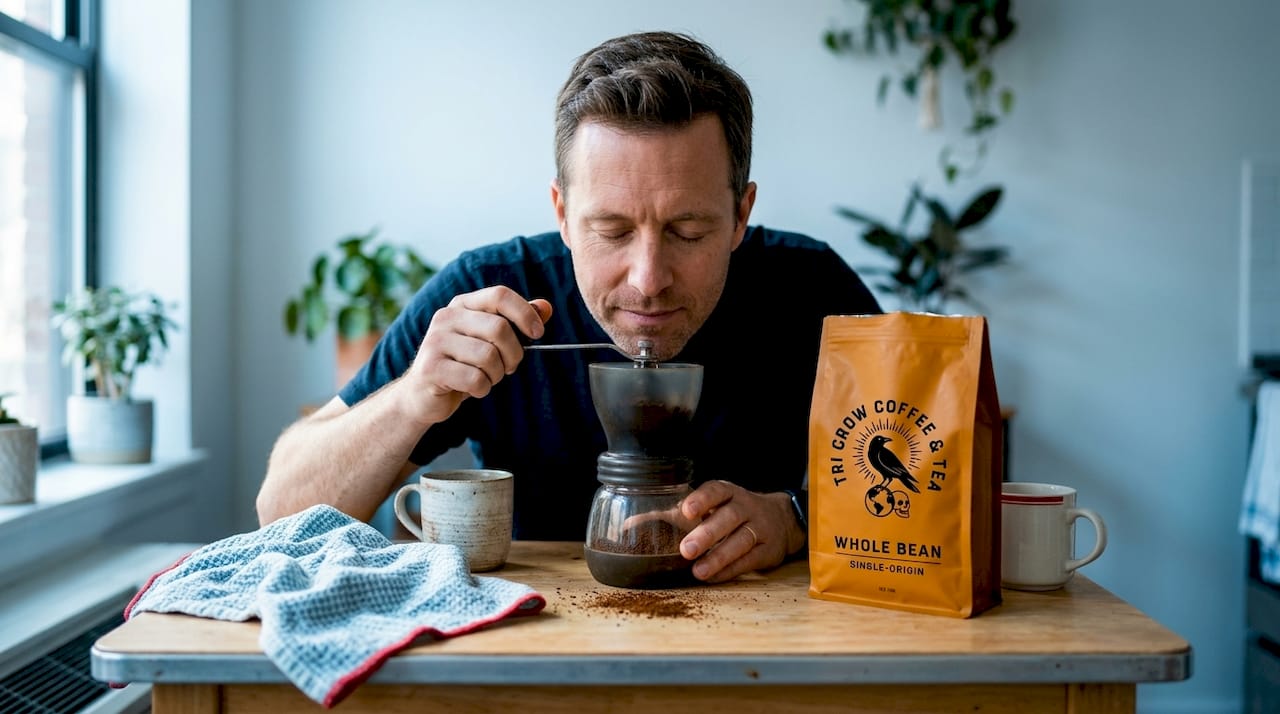
Pro Tip: Right after grinding, hold the open grinder over your cup and inhale slowly. That concentrated burst of fragrance is the best preview of what your brew will taste like. If the aroma is faint when grinding pre-ground coffee, your cup will follow suit.
Incorporating whole beans into your daily coffee rituals means every morning becomes an opportunity to notice something new. A single-origin Ethiopian might reveal blackcurrant one week and bergamot the next, depending on water temperature or grind size. Pre-ground coffee collapses that range of expression into something flat and predictable. For enthusiasts who want to actually taste their coffee, whole beans are not optional.
Ritual and mindfulness: brewing as a daily practice
Beyond taste, coffee rituals shape how we start our day. There is something grounding about the physical presence of whole beans, the weight of them in your hand, the audible crack as the grinder works, and the way the smell changes as you adjust your grind coarseness. None of that happens when you scoop powder from a pre-ground bag.
Whole beans deliver a more vibrant sensory experience not just in the cup but throughout the entire process. Handling whole beans forces a kind of presence. You measure, you grind, you smell, you observe. That sequence is not inefficiency. It’s attention.
The benefits of a mindful whole-bean brewing practice extend well beyond flavor:
-
Slowing down intentionally: The extra two to three minutes you spend grinding becomes a natural pause before the demands of the day begin.
-
Heightened sensory awareness: Regularly noticing aroma, texture, and visual bloom trains your palate and your attention in ways that carry into other areas of life.
-
Connecting with origin: Handling beans from a specific region, seeing their size and color, and reading about their growing conditions deepens your relationship with what you’re drinking.
-
Reducing decision fatigue: A consistent morning ritual anchors your routine, which research consistently links to lower stress and better mood throughout the day.
-
Building anticipation: The bloom, the pour, the wait. These steps create a sensory build-up that makes the first sip feel genuinely earned.
Pro Tip: Build a multi-sensory routine around your beans. Before grinding, hold a few beans and notice their surface texture and color variation. After grinding, pause before brewing to inhale the bloom rising from the grounds when hot water first hits. These small acts of attention compound over weeks into a genuinely rich coffee brewing ritual that starts your day with purpose.
At Tri Crow Coffee, we believe coffee isn’t a product to consume. It’s a moment to inhabit. Whole beans are the starting point for that kind of intentional practice.
Storage and handling: how to get the most from your beans
To unlock these sensory benefits, proper storage makes all the difference. Choosing whole beans over pre-ground is only the first step. If you store them incorrectly, the advantages disappear fast.
The most common mistakes coffee enthusiasts make are leaving beans in the original bag after opening, storing them on a sunny countertop, or keeping them in a glass jar near the stove. Each of these exposes beans to the four enemies of coffee freshness: oxygen, light, heat, and moisture.
“Oxygen exposure and improper storage can ruin whole bean freshness, and grinding timing after roasting directly affects taste.” — CNET’s guide to coffee storage
Here’s a practical storage protocol to protect your investment in quality beans:
-
Transfer to an airtight, opaque container immediately after opening. Ceramic or metal containers with rubber-sealed lids are ideal. Avoid clear glass, which lets in light and accelerates staling.
-
Keep the container in a cool, dark cupboard. Room temperature is fine as long as it’s stable. Fluctuating temperatures near an oven or window cause condensation inside the container, which damages beans faster than almost anything else.
-
Buy in quantities you’ll use within two to three weeks. Whole beans are freshest in the first few weeks after roast. Buying in bulk feels economical but often means drinking stale coffee for the last half of the bag.
-
Never freeze beans you’re actively using. Freezing is a controversial topic in coffee, but the consensus is clear: if you freeze, do it once, in a fully sealed airtight bag, and don’t refreeze. Repeated temperature changes create moisture, which ruins flavor. For your daily supply, room temperature in a sealed container is best.
These steps apply especially to single-origin and small-batch roasts, which tend to have more delicate flavor profiles that are the first to suffer from poor storage. Our medium roast offerings are crafted with this in mind, roasted in limited batches so you’re never buying beans that have been sitting in a warehouse for months.
One more detail worth noting: the timing between roasting and grinding matters too. Beans need a short rest period after roasting, typically 48 hours to about two weeks, to allow CO2 to stabilize. Grinding immediately after roasting produces an uneven extraction because too much gas interferes with water contact. Fresh doesn’t mean “roasted today and brewed in an hour.” There’s a sweet spot, and good roasters will note the roast date on the bag so you can track it.
Why the whole bean hype often misses the real story
Here’s where we step back from the enthusiasm for a moment. The coffee world loves to treat whole bean coffee as if choosing it is automatically the finish line. Buy the good beans, problem solved. But that framing misses the more interesting truth.
Whole beans are a necessary starting point, not a guarantee. We’ve seen plenty of coffee lovers invest in premium whole beans, then grind them a week in advance, store them in a open mason jar on a sunny windowsill, and wonder why their cup still tastes flat. The bean can’t save you from the process. Tracing your coffee’s origin and understanding how it was grown and processed is part of what makes a cup truly extraordinary, but that knowledge only pays off when the handling is right.
The real shift happens when you stop treating coffee as a product and start treating it as a practice. Whole beans are the ritual’s raw material. The grind, the timing, the temperature, the storage, the attention you bring to each step: these are what actually shape the cup. Choosing whole beans is meaningful precisely because it demands more of you. It asks you to be present, to care about process, and to engage with something simple in a way that most people don’t.
That’s the perspective we bring to every roast at Tri Crow Coffee. Our blends are designed for people who want the full experience, not a shortcut to caffeine. The hype around whole beans is justified, but only when the entire chain of decisions around them is made with equal intention.
Experience whole bean coffee at its best
If this article has sparked a desire to rethink your morning cup, you’re in the right place. At Tri Crow Coffee, every roast is crafted in small batches to reach you at peak freshness, with a roast date on every bag so you know exactly where you are in the flavor window.
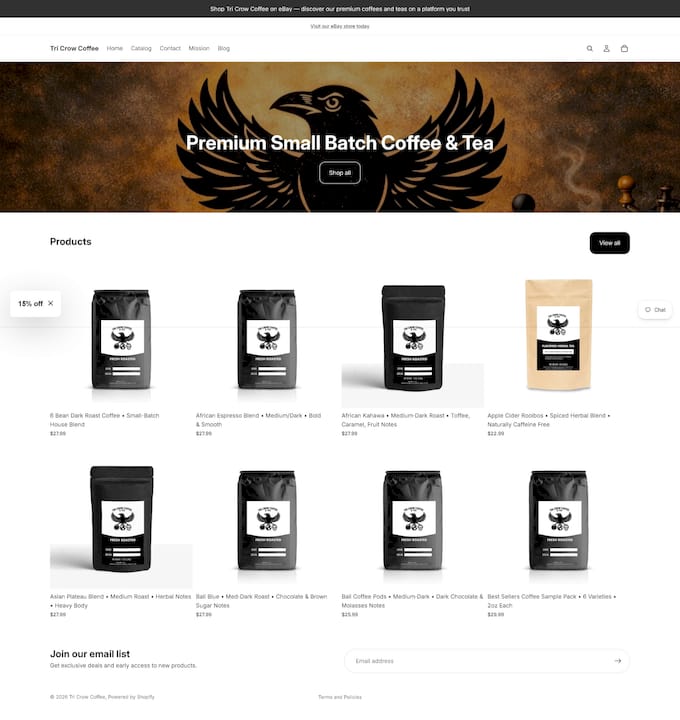
Start your ritual with our Coffee with Mushrooms Medium Roast, a grounding daily blend that rewards mindful brewing with deep, earthy complexity. If you want to explore what different origins taste like freshly ground, our Single Origin Favorites Sample Pack is built exactly for that kind of curious, sensory-driven discovery. Browse the full Tri Crow Coffee selection and find the blend that fits your ritual, whether you’re building a daily practice or searching for something to share on a special occasion.
Frequently asked questions
Does whole bean coffee stay fresh longer than ground coffee?
Yes, whole bean coffee retains its freshness and aroma longer because less surface area is exposed to oxygen. Grinding exposes far more surface area, which immediately accelerates oxidation and oil loss.
Is it worth investing in a grinder for home use?
A good grinder is the single most impactful upgrade most home brewers can make, because it lets you control grind size and grind only what you need for each brew, preserving everything whole beans have to offer.
What’s the best way to store whole bean coffee at home?
Store whole beans in an airtight, opaque container kept away from heat, light, and moisture, and buy only what you’ll use within two to three weeks. Oxygen exposure and improper storage can erase the freshness advantage entirely, even with premium beans.
Will I actually notice a difference in taste using whole beans?
Most coffee drinkers notice a clear difference immediately, with brighter aromas, more distinct flavor notes, and a fuller body. Whole beans give better flavor clarity and a more vibrant experience than pre-ground alternatives, especially when brewed within minutes of grinding.
Recommended
-
How to select coffee beans for great home brewing flavor – Tri Crow Coffee
-
Explore coffee drink varieties for a richer daily ritual – Tri Crow Coffee
-
Maximize your energy: proven coffee benefits and smart rituals – Tri Crow Coffee
-
Why trace your coffee? The real benefits of transparency – Tri Crow Coffee
-
Roasted Organic Whole Coffee Beans - 1kg - RAWGORILLA – Granavitalis