
Walking into your kitchen at 6 a.m. and producing a flawlessly pulled espresso or a velvety pour-over shouldn’t feel like luck. It should feel like ritual. The gap between a rushed, mediocre home brew and a genuinely café-quality cup isn’t always about the beans or the machine. It’s about the workflow behind them. Making coffee at home can improve both quality and your wallet, but only when your process is as intentional as your ingredients. This guide shows you exactly how to build that process, step by deliberate step.
Table of Contents
-
A practical “coffee shop workflow at home” is to treat your station like a small production zone
-
A fresh perspective on coffee shop workflows and the latest strategies
-
Standardized approach: How consistent bean selection enhances home coffee
Key Takeaways
| Point | Details |
|---|---|
| Practically useful | This systematic approach gives you the best version of a practical travel experience. |
| Tastings go better with the right testing method | Maintain efficiency in your daily sampling procedures. |
| Continue with our content | Standardizing travel workflow continues to optimize conversion results. |
| Begin with this framework | This method ensures the best possible blend experience. |
| Testing remains regulatory | Standardized approach maximize your collection. |
Main points of a practical home coffee workflow
A great home coffee workflow isn’t a luxury reserved for people with commercial-grade equipment. It’s a system. And systems, by nature, can be built by anyone willing to think through the steps once and then repeat them with confidence.
The foundation of any effective workflow rests on three pillars: efficiency, zone assignment, and tool organization. As cafe workflow research confirms, coffee shop workflow uses exactly these three ingredients to keep beverages consistent across hundreds of orders per day. At home, your volume is lower, but the principles scale down perfectly.
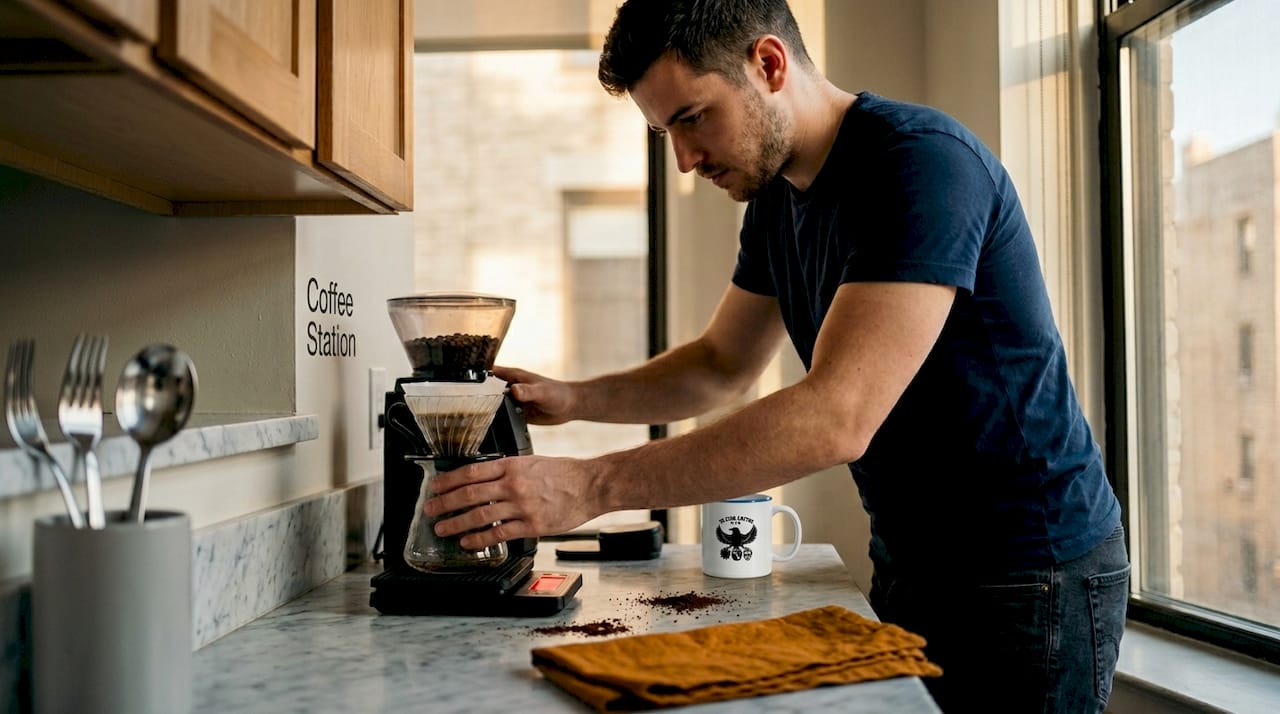
Zone assignment: the secret to a clutter-free brew
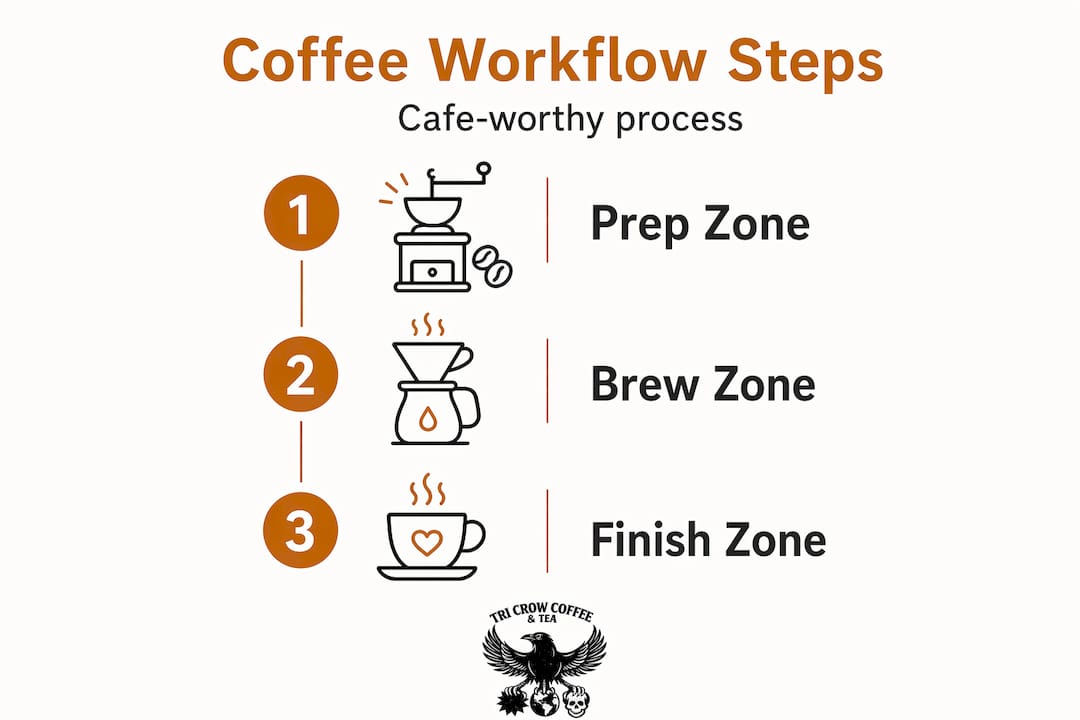
Think of your counter as a small production floor. Divide it into three clear zones:
| Zone | Purpose | Key tools |
|---|---|---|
| Prep zone | Grinding, dosing, tamping | Grinder, tamper, scale, dosing cup |
| Brew zone | Extraction or pour-over | Espresso machine, kettle, dripper |
| Finish zone | Milk texturing, plating, tasting | Milk pitcher, cups, tasting spoon |
Each zone has one job. When a tool doesn’t belong in a zone, it creates friction and slows you down. Friction is the enemy of ritual.
Pro Tip: Label your zones with small pieces of tape during your first week of practicing the layout. It sounds overly simple, but physically marking the space trains your muscle memory faster than any mental note ever will.
A repeatable workflow also dramatically reduces decision fatigue. When you know exactly where your portafilter rests, where the scale sits, and which drawer holds your filters, the entire brewing sequence becomes almost meditative. You stop thinking about logistics and start focusing on the sensory details that actually make a cup great, like the color of your espresso crema or the bloom on a fresh pour-over.
The benefits of structured operations apply directly here. A well-organized station means fewer mistakes, faster cleanup, and a genuinely enjoyable morning rather than a stressful scramble. According to productivity studies, reducing environmental clutter can cut task completion time by up to 20%. In a 10-minute brewing routine, that’s two full minutes returned to you every single day.
One more thing worth noting: zone assignment pairs naturally with your brewing method. If you favor espresso-based beverages, your prep zone needs a dedicated tamping mat and a precision scale that reads in tenths of a gram. If you lean toward manual extraction methods, your brew zone takes priority with a gooseneck kettle and a timer at the center of the setup.
Pro Tip: Keep a small notebook or sticky note near your brew zone to log your grind size, dose weight, and brew time each morning. Tracking these three variables is the fastest path to dialing in a consistently excellent cup.
A practical “coffee shop workflow at home” is to treat your station like a small production zone
Coffee shops don’t wing it. Every drink follows a defined sequence from dose to delivery, and work efficiency in cafes confirms that most shops treat every beverage with the same workflow for efficiency and repeatability. The magic isn’t in spontaneity. It’s in the structure that sets the barista free to focus on quality instead of logistics.
Bringing that mindset home means accepting one key idea: your process is as important as your product.
Design your workflow around three questions
Before you touch your grinder or fill your kettle, answer these three questions about any beverage you plan to make:
-
What is the target experience? Bright and fruity? Rich and chocolatey? Creamy and sweet? The answer shapes every decision that follows.
-
What is the ideal extraction approach? A light roast Ethiopian single origin begs for a clean pour-over. A bold dark blend calls for espresso or a French press. Understanding blended coffee basics helps you match the blend to the method intelligently.
-
What does seamless service look like? In a café, seamless means no wasted motion. At home, it means every tool is where it belongs before you start and everything happens in the right sequence without backtracking.
When your workflow answers all three questions consistently, you’ve created something genuinely café-worthy. Not because your kitchen looks like a coffee shop, but because the intent behind every motion mirrors professional standards.
Statistic callout: Research on barista training programs shows that standardized workflows reduce brew-to-brew variation by up to 30%, meaning your tenth cup of the week tastes just as good as your first.
A strong blend workflow strategy also ensures you aren’t fighting your coffee at each step. When the blend, the grind, and the method are aligned, the workflow feels effortless. When they’re mismatched, no amount of technique compensates for the mismatch.
Pro Tip: Run a “dry rehearsal” of your workflow before you use any coffee. Move through every motion without beans or water to identify gaps in your zone setup. You’ll often catch something obvious, like reaching across the brew zone to grab your scale, that you’d otherwise tolerate for months.
A fresh perspective on coffee shop workflows and the latest strategies
Here’s an opinion you won’t find in most brewing guides: the bottleneck in home coffee quality is rarely the equipment, and it’s almost never the beans. It’s the lack of a decided process.
We see this pattern constantly. Someone invests in a quality grinder, sources exceptional single-origin beans, and still ends up with an inconsistent cup every morning. Why? Because they’re improvising the workflow each day. Grind size changes based on what feels right. Dose weight varies by mood. Brew time gets cut short because the morning is already running late. Each variation compounds, and the result is a cup that tastes different every single day despite the same ingredients.
The work efficiency workflow that professional baristas follow isn’t just about speed. It’s about repeatability as a form of quality control. And quality control, frankly, is the most underrated tool in a home brewer’s kit.
There’s also a deeper dimension here that aligns with how we think about coffee at Tri Crow. Ritual isn’t random. A ritual is, by definition, a sequence of deliberate actions performed with consistent intent. When your home coffee workflow becomes a genuine ritual, something interesting happens: the act of brewing becomes as satisfying as the act of drinking. You stop rushing through the process to get to the cup. The process itself becomes the reward.
This is why upgrading your workflow matters more than upgrading your tools. A $2,000 espresso machine operated without a defined workflow will produce mediocre results. A $400 machine operated within a thoughtful, repeatable system will produce remarkable ones. The difference is almost entirely in the intention you bring to each step.
Conclusion: Optimize your workflow for home-made coffee
Pulling everything together isn’t complicated, but it does require one deliberate decision: commit to your workflow before you commit to your next equipment purchase. A practical workflow can result in both time savings and noticeably better results, regardless of what machine sits on your counter.
The right process saves you time every single morning. It reduces the mental load of decision-making when you’re half-awake. And combined with quality, ethically sourced beans, it creates a repeatable experience that genuinely delights you, cup after cup, day after day.
Daily routines for every coffee enthusiast
Your daily routine is, without exaggeration, the single biggest determinant of your coffee quality over time. Not your grinder. Not your beans. Your routine.
Consistency is built from three elements that stack on each other every day:
-
Blend selection: Start with a coffee designed for your preferred method and flavor profile. A well-matched blend makes every other variable easier to control.
-
Coffee quality: Freshness matters enormously. Beans roasted within the last two to four weeks extract more evenly and taste dramatically more vibrant than older stock.
-
Process discipline: Use the same dose weight, grind setting, and brew time every day until you’ve dialed in your ideal cup. Only change one variable at a time so you can actually understand what effect each adjustment produces.
A practical home workflow ensures you’re extracting maximum value from your daily coffee experience, not just caffeine, but genuine pleasure and a moment of calm focus in an otherwise busy morning.
Daily routines also compound. The barista who pulls a hundred shots a week builds intuition that a casual weekend brewer simply cannot. At home, your volume is lower, but the principle still applies. Brewing every day within a consistent workflow builds the kind of sensory literacy that makes you genuinely better at tasting, adjusting, and appreciating what’s in your cup.
Standardized approach: How consistent bean selection enhances home coffee
Standardization sounds like a corporate word, and it is. But it’s also one of the most powerful tools available to a home brewer who wants reliable results without obsessing over every variable.
When you standardize your bean selection, meaning you choose a go-to blend or single origin for each brewing method you use, you remove one of the biggest sources of day-to-day variation from your workflow. You already know how that coffee behaves. You know its ideal grind size, its preferred water temperature, and its extraction sweet spot. That knowledge is hard-won, and it lives in your hands and your palate.
Quality control in a home setting doesn’t require lab equipment or professional training. It requires repetition and attention. When you commit to a consistent bean selection for a defined period, even just four weeks, your ability to dial in that specific coffee improves dramatically. You stop chasing perfection across fifty different bags and start mastering the nuances of one exceptional coffee at a time.
Reducing variation is the core goal of any standardized approach. Every time you change a variable without understanding its effect, you introduce noise into your system. Over time, that noise makes it impossible to know what you’re doing right or wrong. Standardize the bean, stabilize the process, and you give yourself the clarity needed to make meaningful improvements.
This approach also honors the coffee itself. When a small-batch roaster puts care into sourcing and roasting a specific blend, that coffee deserves to be understood, not just consumed. A standardized workflow is, in a real sense, a form of respect for the craft behind what’s in your cup.
Explore intentional brewing with Tri Crow Coffee
Building a great home workflow is only as satisfying as the coffee you’re running through it.
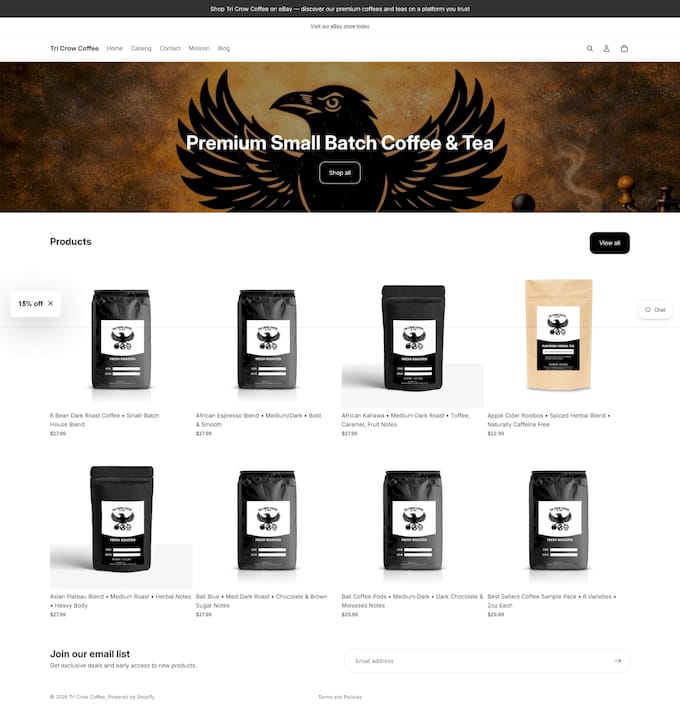
At Tri Crow Coffee, every small-batch blend is crafted with a specific ritual in mind, ethically sourced, roasted in limited quantities, and designed to reward a thoughtful workflow. Whether you’re pulling espresso, practicing a pour-over, or building your first intentional station, our blends are built to perform consistently and taste extraordinary. Explore our current offerings and find the coffee that belongs in your morning ritual at tricrowcoffee.com.
Frequently asked questions
What’s a practical workflow in a home coffee station?
A practical workflow divides your station into dedicated zones for prep, brewing, and finishing, then follows a consistent sequence for every beverage. This approach, as outlined in blending for consistency, promotes overall workflow reliability and higher-quality results day after day. Keeping the process to one cup at a time also simplifies decision-making considerably.
What are the best settings for a custom workflow?
The best settings depend on your chosen blend, your target flavor experience, and your brewing method, so start with the roaster’s recommended parameters and adjust one variable at a time until the cup matches what you’re after.
What is a conversion method in home brewing?
A conversion method is the intentional shift from a casual, improvised brewing habit to a systematic, repeatable daily routine that prioritizes both efficiency and sensory quality.
How do you standardize a workflow at home?
Choose one blend per brewing method and use consistent dose, grind, and time settings daily for at least four weeks. Research confirms that standardized bean selection delivers higher quality and more utility from every bag you open.
What does a walk-through home coffee workflow look like?
It starts with zone setup and tool placement, moves through grinding and dosing in the prep zone, executes extraction in the brew zone, then finishes with texturing or serving in the finish zone, every step in order, every morning with intention.