
Most coffee drinkers assume their morning cup is equally fresh year-round. It isn’t. What is seasonal coffee, exactly? It’s coffee tied directly to agricultural harvest cycles, meaning the beans in your cup were picked, processed, and shipped during a specific window that changes with each origin and each year. Understanding this changes how you shop, what you taste, and how much you actually get out of every brew. Think of it less like buying groceries and more like choosing produce at a farmers market. Timing is everything.
Table of Contents
- Key Takeaways
- What is seasonal coffee: harvest cycles and freshness explained
- Seasonal coffee flavors throughout the year
- How roasters plan around seasonal coffee availability
- When to drink seasonal coffee for the best experience
- My take on why seasonality changed how I drink coffee
- Explore seasonal coffee at Tri Crow Coffee
- FAQ
Key Takeaways
| Point | Details |
|---|---|
| Seasonality is agricultural | Coffee freshness depends on harvest timing, not retail shelf dates or packaging design. |
| Flavor shifts with the season | Different origins arrive at peak freshness at different times, bringing distinct flavor profiles throughout the year. |
| Roasters plan around harvests | Specialty roasters rotate single-origin offerings to match harvest windows and avoid stale past-crop beans. |
| Freshness windows are narrow | Coffee retains its best qualities within the first few months after processing, making timing a real factor in cup quality. |
| You can drink smarter | Knowing when seasonal coffees arrive lets you buy at peak freshness without any new gear or special skills. |
What is seasonal coffee: harvest cycles and freshness explained
At its core, seasonal coffee is a concept rooted in agriculture, not marketing. The term refers to coffee that is sourced, roasted, and offered during the period when it is genuinely freshest, based on when and where the beans were harvested. The proper industry term you’ll hear among roasters and green coffee buyers is “crop year coffee,” though “seasonal coffee” has become the more accessible shorthand that most enthusiasts use.
Coffee plants flower and fruit in response to climate triggers. Near the equator, where temperature and rainfall patterns overlap, plants can produce multiple harvests per year. Farther from the equator, where seasons are more distinct, most regions yield one primary harvest window per year. This is why Colombia can offer two crops annually while Ethiopia produces one concentrated harvest between October and February.
Here is a quick look at how harvest timing breaks down across some of the most popular origins:
- Ethiopia: Harvested October through February, with washed varieties typically arriving in US warehouses between April and June. Natural processed coffees arrive a few months later.
- Colombia: Two main harvest periods, with the main crop running October through February and the mitaca crop from April through June.
- Central America (Guatemala, Honduras): Primary harvest runs November through March, with arrivals landing in Northern Hemisphere markets by spring.
- Brazil: Harvest from May through September, making Brazilian coffees among the freshest available during fall in the US.
- Kenya: October through December harvest, with arrivals typically hitting roasters between January and March.
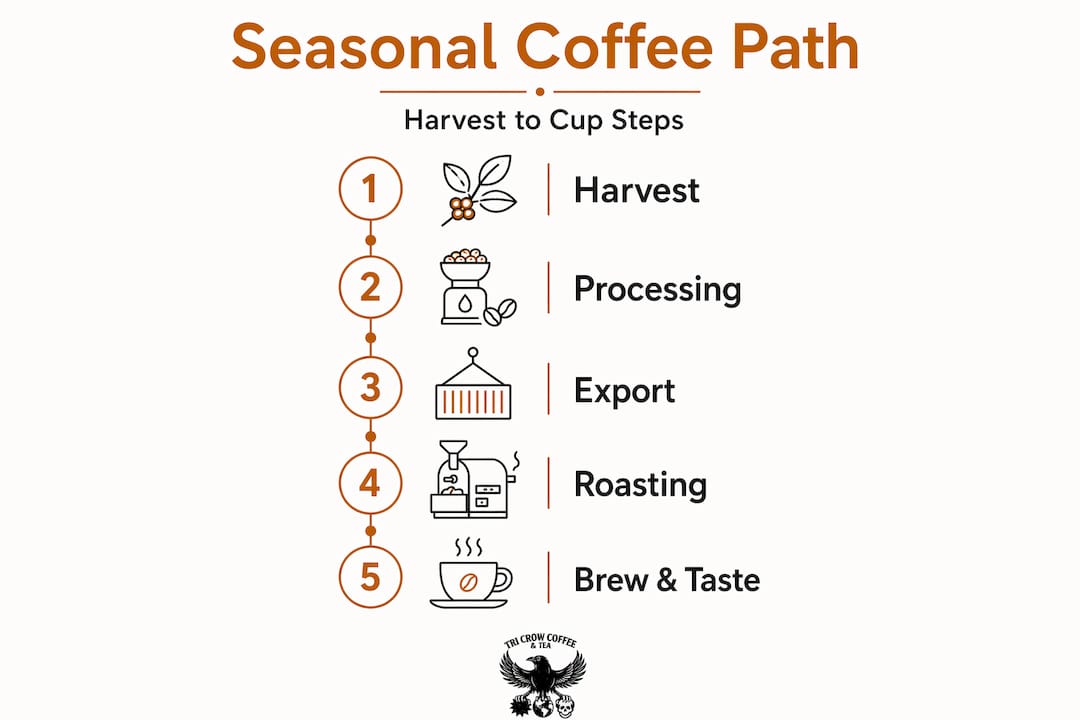
Once harvested, coffee doesn’t land on your doorstep instantly. After processing and export preparation, beans typically take three to five months to reach destination warehouses. That transit lag is why roasters who specialize in freshness plan their purchasing calendars many months in advance.
Pro Tip: Check the “crop year” or “harvest date” printed on specialty coffee bags. If a bag lists last year’s crop with no roast date context, you may already be past the peak freshness window for that origin.
Seasonal coffee flavors throughout the year
Once you understand the agricultural side, the flavor side becomes much more interesting. The connection between origin and flavor is direct: where a coffee comes from, when it was picked, and how it was processed all shape what you taste in the cup.
Ethiopian washed coffees, arriving in late spring, tend to carry bright floral notes, lemon zest, and delicate jasmine. Those flavors exist because of the variety, altitude, and processing method. They are not added. A Colombian mitaca crop might arrive in late summer, expressing milk chocolate and stone fruit. A Kenyan arrival in winter might hit with bold blackcurrant and tomato acidity that feels almost electric. The coffee processing method amplifies or softens these characteristics depending on whether beans were washed, naturally dried, or honey-processed.

Here is how harvest-driven flavor trends typically map to the calendar year:
| Season | Typical origin arrivals | Common flavor notes |
|---|---|---|
| Spring | Ethiopia (washed), Yemen | Floral, jasmine, lemon, bergamot |
| Summer | Colombia mitaca, Peru | Stone fruit, brown sugar, milk chocolate |
| Fall | Brazil, Bolivia | Nutty, caramel, dried fruit, walnut |
| Winter | Kenya, Burundi, Rwanda | Blackcurrant, hibiscus, bright citrus acidity |
This is where things get interesting for coffee shop menus. Many shops layer a second meaning of “seasonal” on top of this harvest-driven one: limited-time flavored drinks designed to match the mood of the calendar. Pumpkin spice lattes and peppermint mochas are seasonal in a consumer-trend sense, not an agricultural one. They create buzz and tap into flavor associations tied to holidays, but they are not connected to coffee freshness in any meaningful way.
The distinction matters. Harvest-driven seasonality delivers actual quality differences in the cup. Trend-driven seasonality delivers familiarity and nostalgia. Both have their place, but knowing which you are experiencing helps you appreciate each on its own terms.
How roasters plan around seasonal coffee availability
Good roasters treat their purchasing calendar the way serious chefs treat their ingredient sourcing. They know when each origin peaks, they commit to green coffee contracts months in advance, and they rotate their menus to reflect what is genuinely fresh rather than what is simply available.
Seasonal rotation among specialty roasters follows a practical four-step rhythm:
- Monitor harvest reports. Green coffee importers and cooperatives publish updates as harvest progresses. Roasters track this to anticipate when lots will be ready to ship.
- Commit to purchasing contracts early. The best lots sell out before they arrive. Roasters who wait until coffee lands in a warehouse often miss the highest-quality selections.
- Plan inventory across quarters. Ethiopia’s single harvest window means roasters must plan ahead to maintain stock through the year or rotate to other African origins when Ethiopian coffee runs out.
- Rotate menus as new crops arrive. When a new Brazilian crop lands in fall, a well-run roastery replaces last season’s Brazilian offering rather than continuing to sell aging past-crop beans.
The challenge is logistics. Planning around harvest seasons requires capital, relationships with importers, and storage. Small-batch roasters often navigate this better than large commodity operations because they buy smaller volumes from specific farms and move through inventory faster.
For the consumer, this means the bag sitting on a grocery store shelf may have been roasted months ago from a crop that is now a year old. Buying from a specialty roaster with transparent sourcing gives you a real chance of drinking coffee at or near its peak. The seasonal coffee varieties available from a roastery at any given time reflect genuine freshness, not just clever marketing copy.
Pro Tip: When you find a single-origin coffee you love, ask the roaster or check their website for the expected next-crop arrival. You can often time a repurchase to land right when fresh beans of the same origin hit the shelves again.
When to drink seasonal coffee for the best experience
Getting the most out of seasonal coffee comes down to timing and a little awareness. Coffee retains its most vibrant qualities within the first few months after processing. Once that window passes, acidity and nuanced flavor notes begin to fade, and even excellent beans start tasting flat.
Here is how to put that knowledge to work:
- Look for a roast date, not just a “best by” date. For most single-origin coffees, drinking within two to four weeks of the roast date delivers the clearest flavor expression. After that, the coffee is still good. It just starts losing the brightness that made it worth buying.
- Track seasonal arrivals from your roaster. Most specialty roasters mention new crop arrivals in their newsletters or on product pages. Following these announcements is the lowest-effort way to always be drinking fresh coffee.
- Store coffee in an airtight container away from light and heat. Proper storage preserves what the harvest already built into the bean. An airtight bag or canister on a cool, dark shelf makes a measurable difference.
- Match preparation methods to flavor profiles. Light, floral Ethiopian coffees shine in pour-over or Chemex brewing. Heavier, chocolatey Brazilian coffees work beautifully as espresso or in a French press. Choosing your coffee beans with the brew method in mind amplifies everything the season already gave you.
- Pair seasonal flavors with seasonal foods. A bright spring Ethiopian coffee pairs naturally with citrus pastries or light yogurt. A fall Brazilian or Bolivian bean complements warm spiced bread or dark chocolate. These pairings are not precious or fussy. They just make sense.
The benefits of seasonal coffee are real and available to anyone willing to pay a little attention. You don’t need expensive equipment. You need to know when to buy.
My take on why seasonality changed how I drink coffee
I’ll be honest: I spent years buying coffee based on which bag looked interesting or which roast sounded good. The idea that timing could matter as much as origin or variety didn’t register until I tasted the same Ethiopian natural processed coffee from the same farm across two consecutive crop years. One was transcendent. Blueberry, dark honey, a finish that lasted a full minute. The other was fine. Pleasant. Forgettable. The difference wasn’t the farm or the roaster. It was that the second bag was nine months into its shelf life when I opened it.
That experience reframed everything. I started thinking of coffee the way I think about strawberries: genuinely seasonal, genuinely perishable at the level of nuance, worth planning around. The idea that seasonality is agricultural truth rather than a marketing hook stopped feeling abstract.
What I’ve found is that most casual drinkers underestimate how much they’re leaving on the table by ignoring freshness windows. You can improve your coffee experience dramatically without changing your equipment, your grind, or your technique. Just buy fresh, buy seasonally, and pay attention to what’s arriving. The coffee will do the rest.
The ritual of rotating through origins as they come into season also adds something harder to quantify: anticipation. Knowing that Kenyan coffees are arriving in January and that bright, electric cup is something to look forward to makes the whole practice feel intentional. That intention, I’d argue, is the real benefit.
— David
Explore seasonal coffee at Tri Crow Coffee
If this article made you want to taste what seasonal sourcing actually means in the cup, Tri Crow Coffee is worth exploring. Every batch is roasted in small quantities from ethically sourced origins, with offerings rotated to reflect real harvest cycles rather than static year-round catalogs.
Right now, the single-origin collection features carefully selected lots chosen at peak freshness. Whether you’re drawn to the floral brightness of a spring arrival or the deep richness of a winter roast, each product page includes sourcing details so you actually know what you’re drinking. For something more unexpected, the Mint Coffee is a nod to winter seasonal flavor trends with real craft behind it. Tri Crow Coffee also stays current on 2026 coffee trends in ritual and sustainability, so the selections always reflect both freshness and purpose.
FAQ
What is seasonal coffee in simple terms?
Seasonal coffee refers to coffee sourced and sold during the specific period when it is freshest, based on when and where the beans were harvested. Because different coffee-growing regions harvest at different times of year, the freshest available coffee shifts throughout the calendar.
How do seasonal coffee flavors differ by time of year?
Flavor profiles shift because different origins arrive in peak condition at different times. Spring typically brings floral and citrus-forward coffees from Ethiopia, while fall features nutty and caramel-rich offerings from Brazil. Winter arrivals from Kenya and Rwanda tend to express bold berry and bright acidity.
How long does seasonal coffee stay fresh after roasting?
Most specialty coffee is at its best within two to four weeks of the roast date. After that, nuanced flavors like florals and fruit notes begin to fade. Acidity softens and the coffee becomes less expressive, even if it still tastes acceptable.
How do I find and buy seasonal coffee?
Look for specialty roasters who publish roast dates, crop years, and harvest arrival updates. Subscribing to a roaster’s newsletter is the most reliable way to know when new seasonal lots arrive. Avoid bags without roast dates, as freshness cannot be verified.
Is seasonal coffee different from seasonal flavored coffee drinks?
Yes, these are two different things. Harvest-based seasonal coffee reflects genuine agricultural freshness tied to when beans were picked and processed. Seasonal flavored drinks like pumpkin spice lattes are trend-driven products tied to holidays and consumer preferences, with no direct connection to coffee freshness or crop cycles.
Recommended
- Why coffee processing matters: flavor, ethics, and sustainability – Tri Crow Coffee
- Why coffee origin matters: flavor, ethics, and sustainability – Tri Crow Coffee
- What is coffee cupping and why it matters for your palate – Tri Crow Coffee
- What is coffee blooming? A guide for coffee enthusiasts – Tri Crow Coffee