
Most coffee drinkers glance at the origin printed on a bag and move on, treating it like a postcode rather than a story. But that single line, “Ethiopia Yirgacheffe” or “Colombian Huila,” carries an enormous amount of information about what you’re tasting, who grew it, and what your purchase supports. Coffee origin is not a marketing label. It connects your morning ritual to a specific landscape, a farming community, a set of labor practices, and an environmental footprint. Understanding it makes you a smarter buyer, a more perceptive taster, and a more responsible consumer all at once.
Table of Contents
Key Takeaways
| Point | Details |
|---|---|
| Origin impacts more than taste | Where coffee is grown shapes flavor, ethical sourcing, and sustainability practices. |
| Processing can override origin | Modern processing techniques can mask or enhance origin differences in your cup. |
| Certifications reveal true practices | Labels like Fair Trade and Rainforest Alliance matter more than vague origin claims for ethics and sustainability. |
| Blends vs single-origin | Single-origin coffees showcase terroir, while blends provide consistent flavor by mixing beans. |
| Taste intentionally and explore | Comparing coffees with constant brewing variables lets you discover how much origin really matters for you. |
What does “coffee origin” really mean?
When most people hear “origin,” they think geography. Country of origin, sure. But in specialty coffee, origin is layered. It starts with the country, then narrows to a region, then a specific farm or cooperative, and finally threads into the culture and agricultural tradition of the people who grew the beans. Each layer adds meaning.
Think of it like this: saying a coffee is from Brazil tells you very little. Saying it’s from a small cooperative in the Cerrado Mineiro region, grown at 1,100 meters, processed using a natural method by a multi-generation farming family, tells you everything.
Here is what “origin” actually encompasses:
-
Country: Broad flavor tendencies and climate zones
-
Region: Specific microclimates, elevation ranges, and farming traditions
-
Farm or cooperative: Individual producer choices, practices, and quality controls
-
Processing site: Where and how the cherry is processed after picking
-
Cultural context: Indigenous knowledge, generational techniques, labor structures
The difference between single-origin and blended coffee matters here. Single-origin coffees come from one place, sometimes one farm or one lot, allowing origin characteristics to come through clearly. Blends combine beans from multiple origins for balance and consistency. Neither is better. They serve different purposes, which we will get into shortly.
Origin also matters for sustainability and ethics because choices about sourcing influence farmer livelihoods, labor conditions, and environmental outcomes at every step of the supply chain. When you understand coffee bean types and origins, you start to see your purchase as something with reach far beyond your cup.
“Origin is not a description. It’s a chain of decisions, relationships, and consequences that begins in a field and ends in your hands.”
How origin shapes coffee taste
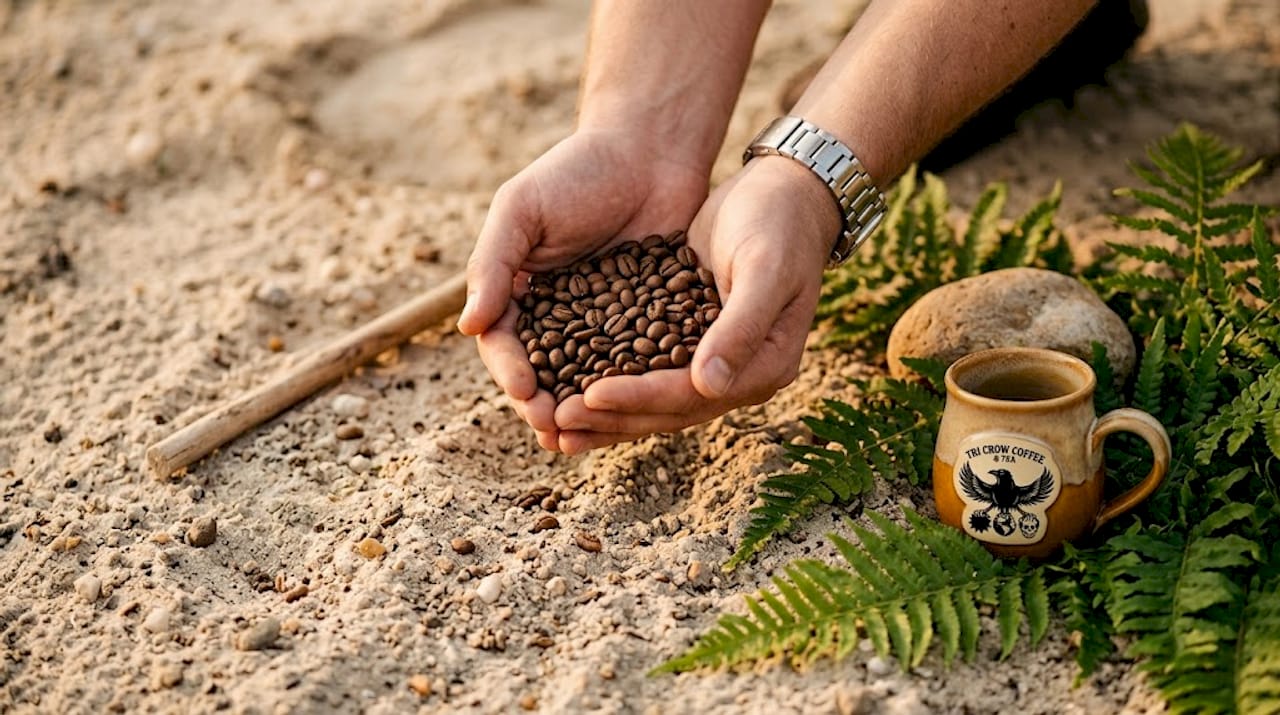
This is where things get exciting for the curious drinker. Coffee flavor is not random. It follows patterns based on where and how the beans were grown. The combination of climate, soil composition, altitude, rainfall patterns, and plant variety produces what wine drinkers call “terroir,” which is the specific environmental fingerprint of a place.
Altitude is one of the biggest drivers. High-altitude beans, typically grown above 1,500 meters, develop more slowly because of cooler temperatures. That slower development builds complexity. You get brighter acidity, more nuanced fruit notes, and greater aromatic depth. Lower-altitude beans ripen faster and tend toward heavier, earthier, more chocolatey profiles.
Soil plays its own role. Volcanic soils in places like Guatemala or Sumatra add mineral complexity. The nitrogen-rich forest soils in parts of Ethiopia support wild-growing varieties that carry a distinctive floral and blueberry character you will not find elsewhere.
Here is a side-by-side look at how major coffee-growing regions differ in the cup:
| Region | Elevation range | Typical flavor notes | Acidity level |
|---|---|---|---|
| Ethiopia (Yirgacheffe) | 1,700 to 2,200m | Jasmine, bergamot, blueberry, lemon | High, bright |
| Colombia (Huila) | 1,500 to 2,000m | Red cherry, caramel, brown sugar, citrus | Medium-high |
| Brazil (Cerrado) | 800 to 1,200m | Chocolate, hazelnut, low fruit, smooth | Low |
| Sumatra (Mandheling) | 1,000 to 1,500m | Earth, cedar, dark fruit, tobacco | Low, heavy body |
| Guatemala (Antigua) | 1,500 to 1,700m | Dark chocolate, smoky, dried cherry | Medium |
| Kenya (Nyeri) | 1,700 to 2,100m | Black currant, tomato, wine, citrus | Very high |
Tasting these differences at home is genuinely satisfying. Here is a simple experiment you can run:
-
Buy a single-origin Ethiopian and a single-origin Brazilian from the same roaster, both medium roast.
-
Brew both using the same method, same grind size, same water temperature, same ratio.
-
Taste them side by side without milk or sugar.
-
Notice what hits first: acidity, sweetness, body, aroma.
-
Take notes using flavor categories: fruit, chocolate, floral, earthy, nutty, spice.
The contrast is often striking, even for people who consider themselves beginners. When selecting beans by origin, this kind of direct comparison accelerates your palate development faster than any book.
As for the single-origin versus blends question, single-origin vs. blends is best framed as a choice between taste exploration and consistency. Single-origins shine when you want to understand a specific place. Blends are engineered for reliability across seasons and batches. Both have real value depending on what you are chasing that morning.
Origin, ethics, and sustainability: more than taste
Understanding where your coffee comes from is not just about flavor. It is about who grew it and what it cost them. Coffee farming is notoriously hard work with thin margins. Most of the world’s coffee is grown by smallholder farmers on plots under five acres, operating in countries where infrastructure, climate volatility, and market fluctuations create constant financial pressure.
The origin on your bag connects to real human decisions. A traceable, certified origin tells you that standards were applied, monitored, and verified. Here is how the most common certifications stack up:
| Certification | Core focus | What it guarantees | Verified by |
|---|---|---|---|
| Fair Trade | Economic equity | Minimum price floor, community premiums | FLO/Fair Trade USA |
| Rainforest Alliance | Environmental + social | Biodiversity, farmer training, labor rights | Rainforest Alliance |
| Organic (USDA) | Farming inputs | No synthetic pesticides or fertilizers | USDA-accredited certifier |
| Direct Trade | Relationship-based | Transparent pricing, farm visits | Roaster itself (no third party) |
Third-party certification and traceability programs can link “origin” to measurable sustainability monitoring rather than relying only on brand claims. That distinction matters enormously when you are trying to make an informed purchase.
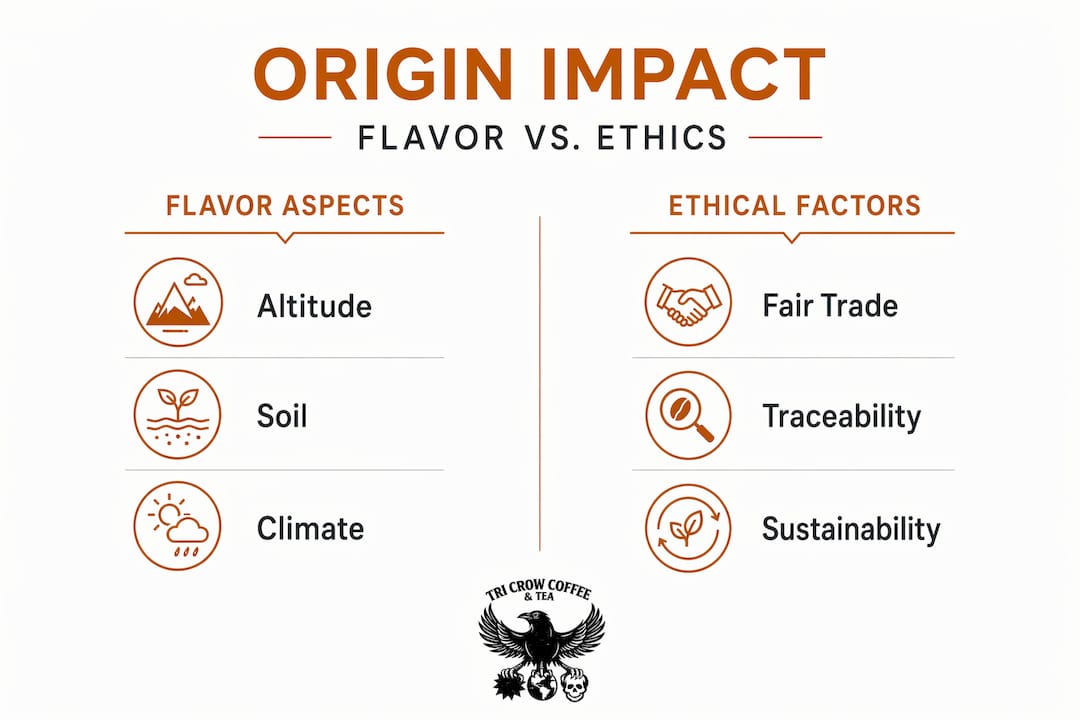
Regenerative agriculture is the next step forward in this space. The GCP’s RegenCoffee workstream is converting “origin” into outcome-focused farm practices with standardized principles and KPIs, rather than treating sustainability as a marketing attribute. This means origin traceability is increasingly being tied to soil health scores, carbon sequestration data, and water usage metrics. Your cup could eventually carry that full footprint.
Pro Tip: When buying coffee, do not just look at the country of origin. Look for a specific certification logo on the bag. “Ethically sourced” without a third-party mark is a claim, not a verification. Fair Trade or Rainforest Alliance seals indicate that an external body has checked the supply chain.
The coffee traceability conversation is accelerating in specialty coffee. Roasters who publish farm names, GPS coordinates, and payment prices are setting a new standard, one that rewards farmers for quality and holds buyers accountable.
How processing and traceability interact with origin
Here is where origin gets complicated, in a fascinating way. Even if you know exactly where a coffee was grown, the processing method applied to it after harvest can radically change what ends up in your cup. Sometimes to the point where two different origins processed the same way taste more similar than two coffees from the same farm processed differently.
Processing increasingly serves as the dominant flavor cue for consumers, which can make different origins taste more alike than you would expect. That is not inherently a bad thing, but it is important to understand.
Here are the four main processing methods and how they interact with origin character:
-
Washed (wet processed): Fruit pulp is removed before drying. Produces clean, bright, terroir-forward cups. If you want to taste origin, this is your clearest window.
-
Natural (dry processed): Whole cherries are dried with fruit intact. Produces fruity, wine-like, sometimes funky flavors that can overshadow origin character.
-
Honey processed: Partial fruit removal before drying. A middle ground, with body and sweetness that can either highlight or soften origin notes depending on execution.
-
Experimental processing: Includes anaerobic fermentation, carbonic maceration, and lactic fermentation. These methods dramatically amplify or transform flavor and can make origin almost unrecognizable.
Traceability becomes essential when processing styles are involved. If you want to understand what a specific region tastes like, you need to know the processing method alongside the origin. A natural-processed Ethiopian can taste like a tropical punch. A washed Ethiopian from the same farm tastes like delicate florals and lemon. Same origin, completely different experience.
The coffee processing and origin relationship shapes not just taste but also the environmental footprint of production. Washed processing requires significant water. Natural processing requires dry climate and careful monitoring to prevent defects. Each choice at the farm level ripples forward into what you taste and what you value.
Pro Tip: When you want to taste where a coffee is actually from, choose washed-process beans. They offer the clearest expression of origin character with less interference from fermentation or fruit contact.
A coffee enthusiast’s perspective: what most guides miss about origin
Most origin guides present a clean, confident story: know the region, predict the flavor. Ethiopia means florals. Brazil means chocolate. Colombia means balance. It is a useful starting point, but it glosses over something more interesting.
After years of roasting, sourcing, and tasting, the perspective at Tri Crow is this: origin is not the final word. It is the beginning of a conversation. What happens after the harvest, and who made the decisions at each step, often matters more than the coordinates on a map.
A mediocre farmer in Yirgacheffe will produce a mediocre cup no matter how famous that region is. An exceptional producer in a less-celebrated region, applying rigorous processing and careful harvesting, can produce something that astonishes. The origin flavor profiles you read about are averages, not guarantees.
This is actually liberating. It means coffee rewards curiosity over dogma. The drinker who tries a Colombian processed via anaerobic fermentation for the first time and finds it tastes more like passionfruit than anything “Colombian” is not confused. They are learning how the whole system works: origin plus producer intent plus processing equals what is in your cup.
The label “single-origin” has also taken on a kind of prestige that is not always deserved. Origin alone does not equal quality. Craft at every stage is what elevates a bean. We think the most honest approach is to look at the full story, origin, producer, processing method, certifications, and then taste with open expectations. Let the cup surprise you.
The uncomfortable truth is that some of the most impressive coffees available right now come from regions that do not appear on fashionable origin lists. Rwanda, Honduras, and parts of China are producing extraordinary lots that most origin-centric buyers overlook because the geography does not match their mental map of “great coffee.” Expand your map. The rewards are real.
Explore distinctive coffees with a focus on origin
At Tri Crow Coffee, every bean we roast carries a traceable story. We do not source by reputation alone. We look for producers who bring both intentional farming and ethical supply chains to their beans, and we roast in small batches so each origin gets the attention it deserves.
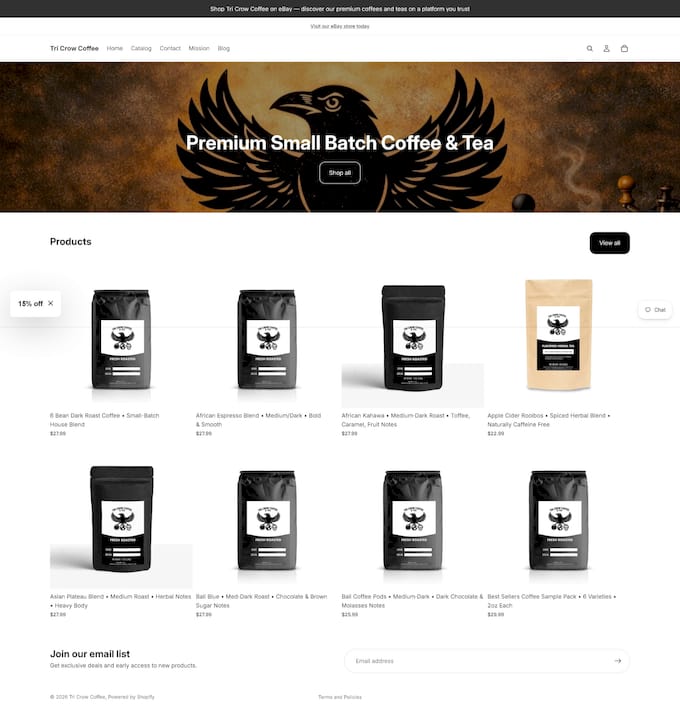
Whether you are drawn to the bold, smoke-touched depth of our French Roast or curious about the grounding, earthy complexity of our Coffee with Mushrooms Medium Roast, each cup is built around origin integrity and craft roasting. We believe your morning ritual deserves more than a generic blend. It deserves a story you can taste. Explore our current offerings and let origin take you somewhere worth going.
Frequently asked questions
Does coffee origin affect caffeine content?
Origin primarily influences flavor, but caffeine content is more affected by bean type (Arabica vs. Robusta) and roast level. A darker roast from any origin will generally have slightly less caffeine per gram than a lighter roast.
Can two coffees from the same region taste completely different?
Absolutely. Processing and roast level are powerful variables. Processing serves as the dominant flavor cue, meaning a natural-processed coffee and a washed coffee from the same region can taste like entirely different beverages.
How can I check if my coffee’s origin is ethical?
Look for certified third-party seals on the bag. Third-party certification and traceability programs link origin to measurable sustainability standards rather than unverified brand claims. Fair Trade and Rainforest Alliance are the most reliable indicators.
Do blends or single-origin coffees taste better?
Neither is objectively better. Single-origin vs. blends is a choice between nuanced exploration and consistent balance. Single-origins reward attention and curiosity; blends deliver reliability across seasons.
Recommended
-
Why coffee processing matters: flavor, ethics, and sustainability – Tri Crow Coffee
-
Why trace your coffee? The real benefits of transparency – Tri Crow Coffee
-
How to select coffee beans for great home brewing flavor – Tri Crow Coffee
-
Discover Coffee Bean Types, Flavor Profiles, and Origins – Tri Crow Coffee