
Most people pour their morning cup, take a sip, and think: good or bad, strong or weak. That’s about it. But coffee holds dozens of distinct flavor compounds, layered aromas, and textural qualities that casual tasting almost never catches. Coffee cupping is the practice that changes everything. It’s a structured, repeatable method of sensory evaluation used by farmers, roasters, and tasters worldwide to reveal what’s truly inside a cup. This guide walks you through the full cupping process, the science behind each step, how scores work, and how you can start cupping at home today.
Table of Contents
-
Step-by-step guide: SCA protocol and how to taste like a pro
-
Scoring, attributes, and troubleshooting: Making sense of the results
Key Takeaways
| Point | Details |
|---|---|
| Standardized tasting method | Coffee cupping is a globally recognized, systematic way to evaluate coffee aromas and flavors. |
| SCA protocol essentials | Precision in ratio, temperature, and timing sets the baseline for accurate coffee comparison. |
| Sensory skills development | Cupping builds your palate, vocabulary, and appreciation for subtle differences between coffees. |
| Specialty grading insights | Understanding scores and defects helps identify truly exceptional coffees. |
| Accessible at home | Anyone can perform a cupping-style tasting at home with a few basic tools. |
The fundamentals: What is coffee cupping?
Coffee cupping is a controlled sensory evaluation method. Unlike brewing a cup to enjoy it, cupping is designed to isolate and examine every sensory attribute of a coffee, from its dry fragrance before water touches the grounds, all the way through its lingering aftertaste as it cools. It removes variables like brewing method and equipment preferences so you can compare coffees side by side on equal terms.
Cupping has roots in the 19th century commodity trade, where merchants needed a fast, neutral way to assess coffee quality before purchasing large shipments. Over time, it evolved into a highly standardized discipline. Today, the Specialty Coffee Association (SCA) sets the global benchmark for how cupping should be conducted, and SCA cupping protocol is used from Ethiopian co-ops to Scandinavian roasting labs.
Who uses cupping and why? Practically everyone in the supply chain:
-
Farmers and exporters cup their lots to assess harvest quality before sale
-
Green coffee buyers cup to verify consistency with sample descriptions
-
Roasters cup to dial in roast profiles and catch defects before a batch ships
-
Baristas and educators cup to train their palates and build flavor vocabulary
-
Enthusiasts cup to discover preferences and understand what they’re actually tasting
What separates cupping from casual tasting is standardization. The standard SCA protocol uses 8.25g of medium-coarse ground coffee per 150ml of water at 93°C, steeping for 4 minutes. Every detail, from grind size to cup shape, is controlled so results are repeatable and comparable. This matters enormously when you’re comparing a washed Ethiopian Yirgacheffe to a natural-process Brazilian, or trying to understand what coffee crema reveals about extraction quality.
Cupping also connects you to the story behind your beans. Understanding the sensory profile of a coffee from a specific farm brings the benefits of coffee traceability to life in a way that reading a label simply cannot. You taste the terroir. You taste the processing decision. You taste the roaster’s intentions.

Step-by-step guide: SCA protocol and how to taste like a pro
With an understanding of why cupping matters, here’s exactly how you can perform a cupping session, whether at home or in a professional lab.
The SCA cupping steps are sequenced to capture each stage of sensory development as the coffee goes from dry grounds to a cooled cup:
-
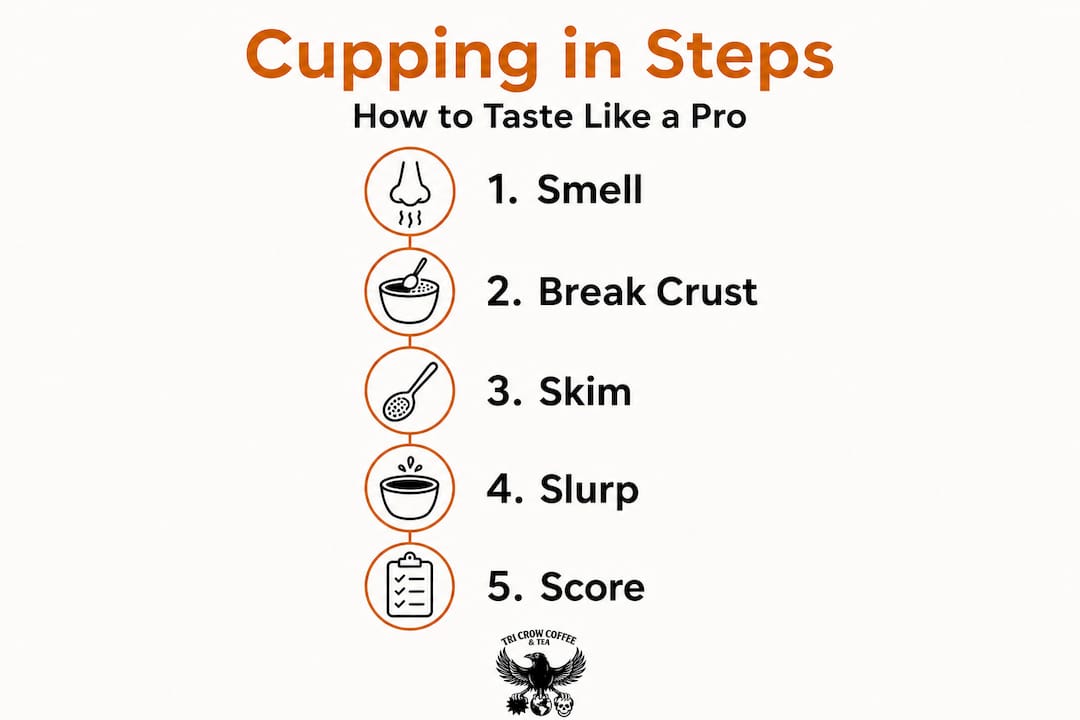
Grind your coffee fresh and measure 8.25g per 150ml of water. Use a medium-coarse grind.
-
Assess the dry fragrance. Smell the grounds directly. Notice floral, fruity, or earthy notes before any water is added.
-
Pour water at 93°C evenly over the grounds, filling to your target volume. Immediately assess the wet aroma as steam rises.
-
Let the crust form and steep for 4 minutes. Do not disturb the cup.
-
Break the crust. Stir three times through the surface, pressing the grounds gently. Nose directly into the cup. This is the aroma peak.
-
Skim off foam and floating grounds from the surface using two spoons.
-
Begin tasting at around 8 to 10 minutes, when the coffee is hot but no longer burning. Slurp loudly and repeatedly.
-
Continue tasting as the coffee cools. Flavors evolve significantly at warm, tepid, and nearly cool temperatures.
| Stage | Temperature | What to assess |
|---|---|---|
| Dry fragrance | Room temp | Floral, fruit, roast notes in grounds |
| Wet aroma | 90-93°C | First impression, volatile aromatics |
| Break crust | ~88°C | Peak aroma burst |
| First taste | ~70°C | Body, initial flavor, brightness |
| Warm taste | ~55°C | Acidity clarity, sweetness development |
| Cool taste | ~35-40°C | Aftertaste, balance, any off-notes |
Consistency is everything. Use the same cup shape (typically 207-266ml ceramic), the same spoon size, and the same number of cups per sample. Small changes in variables create noise in your results.
“Breaking the crust releases peak aromas; slurp loudly for full palate coverage and access to flavor wheel descriptors.” — SCA cupping protocol step-by-step
Pro Tip: Tasting multiple temperatures isn’t just good practice, it’s where the real story unfolds. A coffee that tastes flat and generic at 70°C might reveal stunning jasmine florals and tangerine brightness as it approaches 45°C. Don’t rush the session. The cool cup often holds the best surprises.
Knowing your coffee flavor profiles before you cup helps you build context. When you know that washed Kenyan coffees typically show black currant and grapefruit, you have a reference point for whether what you’re tasting aligns or diverges, and that contrast is how tasters develop nuanced palates. Also consider selecting beans for tasting intentionally. Using freshly roasted whole bean coffee matters here. Pre-ground coffee loses volatile aromatics rapidly, and dry fragrance is often the richest data point in the entire session.
Scoring, attributes, and troubleshooting: Making sense of the results
Once you have tasted multiple coffees, scoring them allows for meaningful comparison and quality control. Let’s break down how this is done and what each term means.
The SCA cupping form evaluates 10 sensory attributes. The SCA scoring system assigns each attribute a score from 6 to 10, with a maximum total of 100 points before any defect deductions:
-
Fragrance/Aroma: Dry and wet aroma intensity and quality
-
Flavor: The central taste impression, sweet, sour, salty, bitter, and savory in combination
-
Aftertaste: How long and pleasant the finish lingers after swallowing
-
Acidity: The brightness and liveliness of the cup, not sourness
-
Body: The physical weight and texture of the coffee on your palate
-
Balance: How well all attributes integrate without one dominating
-
Uniformity: Consistency across all five cups in the sample (each cup scored separately)
-
Clean cup: Absence of off-flavors, taints, or distracting notes
-
Sweetness: The perceived natural sweetness, scored per cup
-
Overall: The taster’s holistic impression and personal appreciation
Specialty grade benchmarks require a minimum score of 80 points, with 80 to 84.99 considered “very good” specialty. Scores from 85 to 89.99 are “excellent,” and 90 and above are considered “outstanding,” a rare designation. Uniformity across five cups is critical, because a coffee that scores brilliantly in one cup but tastes different in another signals processing inconsistency or storage problems.
Defects deserve special attention. The SCA system distinguishes between taints and faults. Taints are mild off-flavors that are noticeable but don’t overwhelm the cup. They carry a penalty of 2 points per cup affected. Faults are severe off-flavor defects that significantly impair the cup and subtract 4 points each. Primary green defects, such as black beans or sour fermented beans, are disqualifying for specialty classification entirely.
| Attribute | Specialty coffee | Commercial coffee |
|---|---|---|
| Score range | 80-100 points | Below 80 points |
| Flavor complexity | High (multiple distinct notes) | Low to moderate |
| Uniformity | Required across 5 cups | Not evaluated |
| Defects allowed | None (or minor taints only) | Often present |
| Traceability | Farm or lot level | Blend/country level |
Recognizing common defects helps you improve your tasting accuracy quickly. Musty or earthy notes can signal improper storage. Fermented or vinegary flavors indicate processing errors. A rubbery or phenolic character is often a sign of contamination during drying. Once you can name these flavors, you stop confusing a defect with a “complex” note. You can also explore bean types and origins to understand which flavor notes are inherent to the variety versus which are the result of processing or roasting choices.
Cupping today: Debates, updates, and expert practices
With a solid grasp on scoring and defect detection, it’s worth considering how the field is evolving and the debates that are shaping today’s cupping landscape.
The SCA introduced a new form called the Coffee Value Assessment (CVA), which expands beyond traditional sensory attributes to include extrinsic factors like the coffee’s intended context and consumer preferences. The intent is to create a more holistic evaluation. However, the CVA has drawn criticism from many in the specialty industry who see it as overly complex and driven from the top down rather than from the practical needs of tasters and buyers. The traditional form, many argue, does its job beautifully and adding layers of subjectivity undermines the standardization that made cupping trustworthy.
Q-graders, professionals certified by the Coffee Quality Institute, calibrate their palates rigorously to ensure their scores are consistent and comparable with other certified tasters worldwide. They use five cups per sample when evaluating for uniformity and quality, and they taste at multiple temperatures because flavor attributes change dramatically as a coffee cools. Acidity often reads as harsh at high temperatures but becomes bright and pleasant at 50°C. Body can feel heavier or lighter depending on temperature perception.
Pro Tip: The loud slurp is not rudeness. It’s a technique. Slurping aerates the coffee and forces it across the entire palate, including retronasal pathways that carry aromatic compounds back to your olfactory receptors. This gives you access to flavor descriptors you simply cannot reach by sipping quietly.
Here’s how experienced tasters typically structure a home cupping session:
-
Set up a minimum of two coffees side by side (three or more is better for comparison)
-
Grind fresh, immediately before the session
-
Smell grounds from several inches away, then directly, noting any changes
-
Pour water in a slow, controlled spiral to saturate all grounds evenly
-
Take written notes at every stage, even if the notes seem vague at first
-
Use the SCA flavor wheel as a visual reference to anchor your descriptions
-
Return to each cup at 10, 15, and 20 minutes to catch flavor evolution
Understanding coffee transparency and the impact of processing on flavor gives your cupping notes much richer context. When you know a coffee was honey-processed, you expect a certain sweetness and body going in, which sharpens your ability to notice when the cup delivers or surprises you.
How to try coffee cupping at home
Whether you’re inspired to join the industry conversation or just want to enrich your morning ritual, you can start cupping right in your kitchen. Here’s how.
What you need:
-
Two or more similar-sized ceramic mugs or bowls (150-200ml capacity)
-
A kitchen scale (accurate to 0.1g)
-
A kettle with temperature control, or a thermometer
-
A timer
-
Two spoons (for breaking the crust and tasting)
-
Freshly roasted whole bean coffee (roasted within the last two weeks)
-
A grinder set to medium-coarse
-
A notepad or a tasting app
Simplified home cupping protocol:
-
Weigh out 8.25g of whole beans per cup and grind fresh.
-
Smell the dry grounds immediately. Write down the first three words that come to mind.
-
Heat water to approximately 93°C (just off the boil by 30 seconds).
-
Pour water slowly and evenly over the grounds. Start your timer.
-
At 4 minutes, break the crust by stirring three times with your spoon. Smell deeply.
-
Skim the foam and floating grounds from the surface.
-
At 8 to 10 minutes, use a clean spoon to slurp a mouthful. Let it coat your tongue fully.
-
Taste again every five minutes as it cools. Note anything that changes.
According to the full SCA cupping steps, each of these stages serves a specific sensory purpose, and following the sequence ensures you don’t miss a layer. The dry fragrance stage, for instance, captures top notes that evaporate quickly once water is added. Don’t skip it.
To build your sensory skills faster, consider starting a small tasting group. Even two people cupping together will catch notes the other misses. Compare your written descriptions. Disagreement is valuable. You’ll learn more from a contested descriptor than from easy consensus.
Why most coffee lovers miss the point of cupping
Here’s the uncomfortable truth: most people approach cupping as a test they might fail. They worry they can’t identify the “right” flavors, or that their notes won’t match the bag description. That anxiety misses what cupping is actually for.
Cupping is a tool for building your flavor memory. Every session deposits a new sensory reference point. The first time you taste a clean, natural-process Ethiopian and recognize a strawberry jam quality, that note is yours forever. Next time you encounter it, you’ll catch it in three seconds. Your palate is being trained whether you name the flavor perfectly or not.
The real gap for most enthusiasts is practice volume. One cupping session a month won’t move the needle much. Three sessions a week, even with simple coffees, builds rapid improvement. You don’t need rare lots or expensive equipment. You need repetition and honest note-taking.
We also believe, as a brand, that cupping doesn’t need to be clinical to be meaningful. The coffee rituals you build around tasting intentionally, whether that’s a quiet Saturday morning session or a shared table with friends, create a relationship with coffee that casual consumption never allows. Imperfect cupping still sharpens perception. A curious slurp from a mismatched mug at your kitchen table is still infinitely more revealing than a distracted gulp on your commute.
The goal isn’t a perfect score. The goal is a richer experience of something you already love.
Ready to experience more from every cup?
Cupping is only as good as the coffee in your bowl. If you’re ready to taste the difference between origins, processing methods, and roast profiles, the best first move is to set up a side-by-side session with beans that were sourced and roasted with intention.
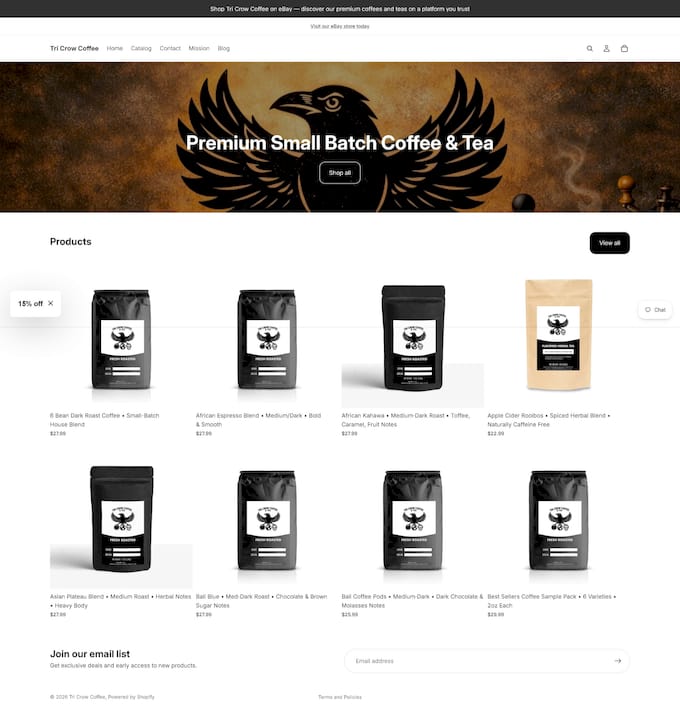
At Tri Crow Coffee, every small-batch lot is selected with traceability and sensory quality in mind, which makes our coffees ideal for home cupping. Our single-origin sample pack gives you multiple distinct origins to cup side by side, which is exactly how you develop a nuanced palate fastest. Fresh, ethically sourced, roasted in limited runs. Put them in the bowl. Break the crust. And start tasting with purpose.
Frequently asked questions
What is the main goal of coffee cupping?
The main goal is to objectively evaluate coffee’s aroma and taste to identify quality, defects, and unique flavor notes. It’s a controlled sensory method used across the entire supply chain to standardize quality assessment.
How is coffee cupping different from regular tasting?
Cupping uses a standardized process to compare coffees side by side and objectively score their attributes, unlike informal tasting. The SCA protocol details every variable, from grind to water temperature, to ensure repeatability.
Can you cup coffee at home without special tools?
Yes, you can mimic the cupping process with basic cups, a spoon, fresh beans, and consistent water temperature. Following the home cupping steps closely will give you meaningful results even with everyday kitchen equipment.
What does a high cupping score mean?
A high score means the coffee is free from defects and exhibits strong, pleasant flavors. An 80-plus score is the threshold for specialty grade, with 80 to 84.99 rated “very good specialty” by SCA standards.
Is loud slurping actually recommended during cupping?
Yes. Slurping aerates the coffee and spreads it across the full palate, activating retronasal aroma pathways that quiet sipping cannot reach. It’s a trained technique, not bad manners.