
Coffee in 2026 is no longer just about what’s in your cup. It’s about where those beans came from, who grew them, how they were processed, and whether the entire chain from farm to roaster held up under increasing scrutiny. Global price swings, landmark deforestation regulations, and a quiet revolution in how people buy their coffee are all converging at once. For enthusiasts who care about both the taste and the story, understanding these forces isn’t optional. It’s the foundation of a more intentional brew.
Table of Contents
-
Raising the bar: Sustainability, quality standards, and brewing protocols
-
Retail revolution: Coffee’s new formats, subscriptions, and convenience in 2026
-
Our take: What most trend roundups miss about coffee in 2026
Key Takeaways
| Point | Details |
|---|---|
| Regulatory change shapes choices | New EU deforestation rules and price volatility influence what coffee types are available and affordable in 2026. |
| Quality is measurable | Enthusiasts now use more precise tools and standards to brew the best coffee at home and beyond. |
| Sustainability impacts your cup | Supply chain transparency and updated benchmarks are making ethical choices more mainstream for all drinkers. |
| Retail models are evolving | Subscriptions, D2C models, and convenient formats change how people discover and enjoy coffee. |
| Ritual is the new luxury | Intentional brewing and exploration now define the premium experience, connecting taste, quality, and values. |
How global forces are impacting coffee in 2026
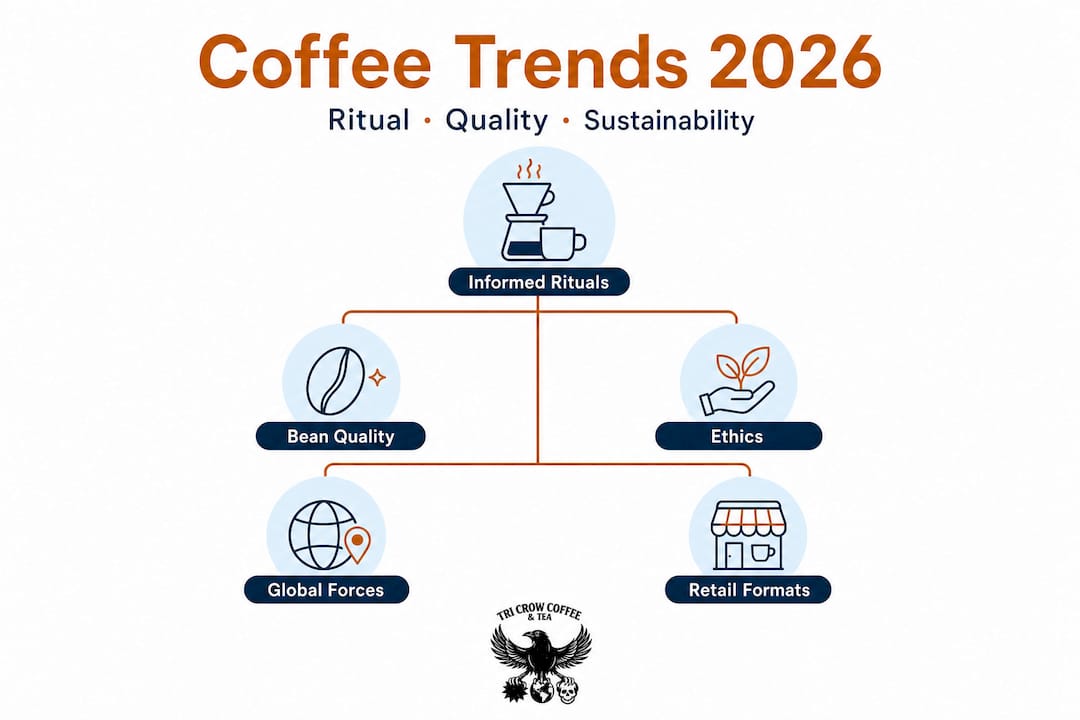
To make sense of these changes, let’s first examine the big-picture forces influencing your cup in 2026.
The numbers don’t lie. Coffee markets entered 2026 under significant pressure, and those pressures are showing up in ways that go far beyond the shelf price at your local shop. The International Coffee Organization’s Composite Indicator Price showed sharp volatility in January 2026, with export volumes rising even as prices remained unpredictable. This kind of movement signals deeper structural tension in global supply, not just a temporary blip.
What drives this volatility? Several compounding forces:
-
Climate disruptions in key growing regions like Brazil and Vietnam continue to affect yield unpredictably from season to season
-
Currency fluctuations in producing countries create inconsistent export pricing
-
Speculative trading in commodity markets amplifies short-term swings
-
Logistics bottlenecks that emerged post-pandemic have never fully resolved
-
Regulatory compliance costs being absorbed across the supply chain
That last point connects directly to what may be the most consequential regulatory shift in coffee’s recent history: the EU Deforestation Regulation (EUDR). The EUDR amendments for coffee require that any coffee entering the EU market must be verifiably free from land associated with deforestation after 2020. This means detailed geolocation data, supply chain documentation, and third-party verification are no longer optional for producers and exporters who want EU market access.
The downstream impact for consumers is real and underappreciated. When compliance costs rise, smaller farms may exit the formal supply chain entirely, reducing the diversity of origins available. Importers focus on large, documentable estates rather than small family plots. Certain regional micro-lots that enthusiasts have come to love may simply become harder to source.
| Factor | Pre-2025 impact | 2026 impact |
|---|---|---|
| ICO price volatility | Moderate | High |
| EUDR documentation requirements | Emerging | Fully enforced |
| Small-farm supply availability | Stable | Declining in some origins |
| Traceability expectations | Optional for most | Standard for EU market |
| Consumer price sensitivity | Moderate | Elevated |
Understanding the benefits of coffee transparency has never been more important. Transparency isn’t just a marketing talking point. It’s becoming the mechanism through which coffee gets to you at all. Roasters and importers who invested early in traceability infrastructure are now far better positioned than those scrambling to document retroactively.
For enthusiasts, this translates into a practical reality: the coffee bean origins and flavor connection is becoming inseparable from the supply chain story. Knowing that your Ethiopian natural process came from a specific cooperative in Yirgacheffe isn’t just interesting trivia. It’s proof that the coffee survived regulatory scrutiny and reached you through a legitimate, ethical path.
Raising the bar: Sustainability, quality standards, and brewing protocols
With a turbulent backdrop, attention is turning to how coffee’s quality and ethics are measured and elevated.
The Specialty Coffee Association’s SCA Coffee Standards for 2026 place renewed emphasis on measurable brewing consistency, specifically extraction yield, water chemistry, and total dissolved solids. These aren’t abstract laboratory concepts. They translate directly into whether your morning cup is balanced, bright, and full-flavored or flat and disappointing.
What measurable quality looks like in practice:
-
Extraction yield sits between 18 and 22 percent for most specialty methods. Below that, you get sour, underdeveloped flavors. Above it, you hit bitterness and astringency.
-
Water mineral content matters more than most people realize. Water between 75 and 150 parts per million of total dissolved solids extracts coffee compounds most efficiently.
-
Grind consistency directly affects uniformity of extraction. Burr grinders outperform blade grinders not because they’re more expensive, but because they produce a narrower particle size range.
-
Brew ratio precision means weighing both coffee and water rather than eyeballing scoops. A 1:15 coffee-to-water ratio is a reliable starting point for most pour-over methods.
-
Water temperature between 195°F and 205°F (90°C to 96°C) ensures proper extraction without scalding delicate aromatic compounds.
These standards also interact with sustainability. How coffee processing affects flavor and sustainability is a critical piece of the quality puzzle. Natural and honey-processed coffees, while often producing complex and fruity flavor profiles, require more careful water management at origin. Farms prioritizing sustainable water use sometimes shift processing methods, which in turn changes the flavor characteristics in the final cup.
For those selecting beans for home brewing, the practical checklist for 2026 looks like this:
-
Check the roast date, not just a “best by” date. Fresh beans roasted within the last two to four weeks perform best.
-
Match the roast level to your brew method. Light roasts shine in pour-over; medium roasts work across most methods; dark roasts handle espresso and French press well.
-
Verify processing method and origin when possible. This context helps predict flavor and confirms traceability.
-
Store beans in an airtight container away from light, heat, and moisture.
-
Prioritize whole beans over pre-ground for maximum freshness and control.
The ritual of whole bean freshness is not incidental. Grinding just before brewing is one of the highest-impact changes any home brewer can make, and the science backs it up fully.
Pro Tip: If you want to calibrate your home extraction without buying a refractometer right away, start with a simple dial-in process. Brew a batch, taste it critically, and adjust one variable at a time. If it’s sour, grind finer or brew hotter. If it’s bitter, grind coarser or shorten brew time. This iterative method mirrors professional Q-grader practice and costs nothing.
| Brew method | Ideal grind size | Water temp (°F) | Brew ratio | Extraction target |
|---|---|---|---|---|
| Pour-over | Medium-fine | 200 to 205 | 1:15 to 1:17 | 20 to 22% |
| French press | Coarse | 195 to 200 | 1:12 to 1:14 | 18 to 20% |
| Espresso | Fine | 197 to 203 | 1:2 to 1:2.5 | 18 to 22% |
| Cold brew | Extra coarse | Cold water | 1:8 to 1:10 | 18 to 20% |
Retail revolution: Coffee’s new formats, subscriptions, and convenience in 2026
As standards shift, the way people buy and enjoy coffee is also undergoing dramatic transformation.
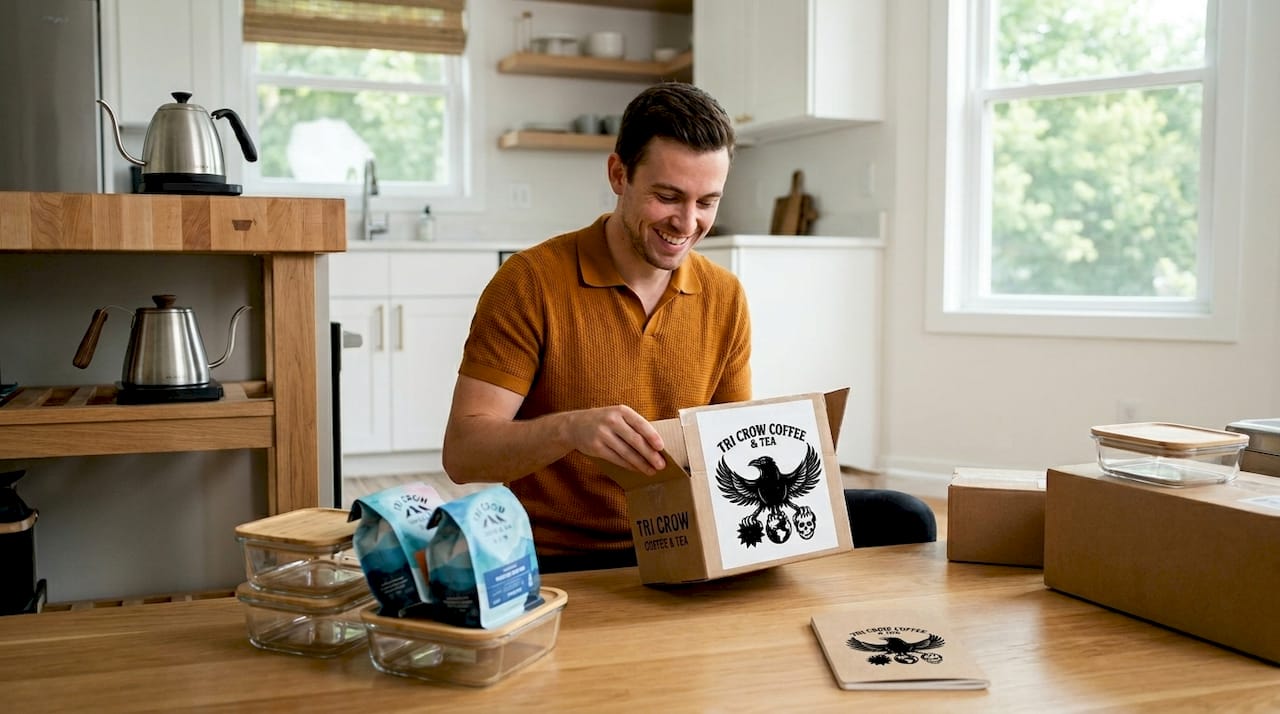
The retail coffee landscape in 2026 looks fundamentally different from five years ago. According to 2026 coffee industry trends, direct-to-consumer subscriptions, drive-through formats, and app-enabled convenience ordering are all posting strong growth numbers. This isn’t a passing trend. It reflects a structural shift in how people relate to their daily coffee ritual.
Here’s what’s actually driving each format’s growth:
-
Subscription and D2C models thrive because they eliminate the unpredictability of retail shelves. You know exactly what roast, what origin, and what roast date you’re getting. Discovery features, where roasters curate new single origins each month, have turned subscriptions into a form of ongoing coffee education.
-
Drive-through formats are expanding in suburban and rural markets where sit-down café culture hasn’t fully taken hold. The speed and consistency of drive-through models suit people who want quality without time investment.
-
App-enabled ordering is reshaping the café experience itself. Pre-ordering, loyalty programs, and personalization data allow shops to offer a more tailored ritual, even at scale.
“The daily coffee ritual is no longer defined by where you stand in line. It’s defined by the intentionality you bring to the experience, whether that’s at a drive-through window or grinding your own beans at home at 6 a.m.”
The impact on enthusiast culture is genuinely interesting. Subscriptions, in particular, are democratizing access to small-batch and single-origin coffees that previously required either proximity to a specialty roaster or extensive research. Someone in a mid-sized city with no local specialty shop can now access daily coffee ritual varieties that rival what’s available in major coffee cities.
At the same time, convenience formats are pushing innovation in product types. The growth of premium instant coffee is one of the clearest signals. Modern freeze-dried specialty instant coffee bears almost no resemblance to the grocery-store instant of a decade ago. Sourced from high-altitude farms, processed carefully, and dissolved in seconds, quality instant coffee is now a legitimate choice for travel, camping, or any situation where a grinder and kettle aren’t available.
Pro Tip: When evaluating a subscription service, look for three things: roast date transparency (they should tell you exactly when beans were roasted), origin documentation (a name or cooperative, not just a country), and a grind-on-demand option or strong whole-bean commitment. Any service that can’t tell you when their beans were roasted is prioritizing logistics over quality.
The challenge for enthusiasts is maintaining discernment within convenience. Not all subscription services prioritize freshness or traceability. Not all drive-through concepts use quality beans. The 2026 consumer who cares about their cup needs to apply the same critical lens to the purchase format as they do to the beans themselves.
Our take: What most trend roundups miss about coffee in 2026
Most coverage of coffee trends in 2026 focuses on what’s visible: new flavors, new café aesthetics, new gadgets, new milk alternatives. That coverage isn’t wrong, but it misses the mechanism driving all of it.
The real story of 2026 coffee isn’t flavor. It’s infrastructure. The decisions being made right now at the regulatory, supply chain, and retail infrastructure level will determine what coffee looks like for the next decade. Enthusiasts who understand this are better equipped to make choices that actually support the outcomes they want.
Here’s the uncomfortable truth: enjoying high-quality, ethically sourced coffee in 2026 requires a small but meaningful engagement with complexity. It means caring about processing ethics and sustainability the same way you care about flavor notes. It means understanding that price volatility isn’t just market noise. It’s a signal about structural fragility in the supply chains you depend on.
We think the ritual framing matters more than ever for this reason. When you treat brewing as intentional rather than habitual, you naturally pay more attention. You notice roast dates. You ask where the coffee came from. You become the kind of customer that rewards roasters and importers who are doing the hard work of documentation and ethical sourcing.
The trend roundups that focus only on oat milk foam art and single-serve capsule innovations are describing the surface. Beneath it, coffee’s future is being written in compliance documents, geolocation data, and water chemistry tests. The enthusiasts who engage with that deeper layer aren’t just better coffee drinkers. They’re actively participating in shaping what the industry becomes.
The most interesting ritual you can adopt in 2026 isn’t a new brew method. It’s informed purchasing. That’s the practice with the longest-lasting impact.
Elevate your next cup with the best of 2026’s coffee trends
The shifts described above aren’t abstract. They’re reflected in every choice you make at the point of purchase.
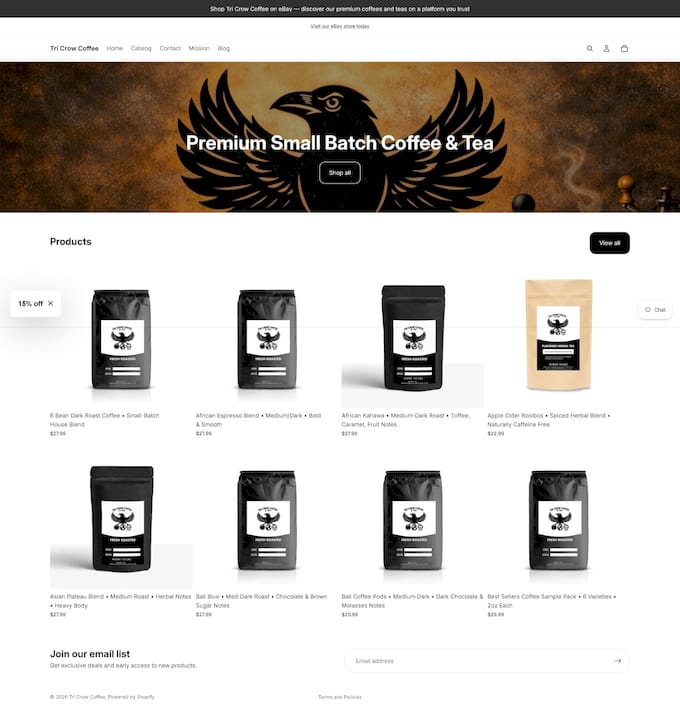
At Tri Crow Coffee, we source with the traceability and transparency that 2026’s standards demand, and we roast in small batches to ensure every bag you open is at peak freshness. If you want to taste where coffee is heading, our mushroom coffee blend is a direct expression of 2026’s functional coffee trend. For those focused on origin exploration, the single origin sample pack puts verified, traceable origins side by side so you can taste the difference that sourcing makes. And for anyone who wants the anchor of a deeply roasted, ritual-worthy classic, our French Roast delivers the grounded, intentional experience that defines everything we do. Your next cup can be part of something larger.
Frequently asked questions
Why are coffee prices still volatile in 2026?
Coffee prices remain volatile due to layered global supply dynamics, including climate instability in major growing regions and the compliance cost pressures that ICO January 2026 data reflects across the entire export chain.
What do new sustainability standards mean for home brewers?
Updated SCA standards for 2026 make consistent extraction, water chemistry awareness, and careful bean selection more accessible than ever, giving home brewers a clear, practical path to better quality.
How are EU regulations affecting coffee I can buy?
The EUDR requirements for coffee demand traceable, deforestation-free sourcing documentation, which is narrowing the field of available origins and pushing the industry toward greater supply chain accountability.
Is subscription coffee a passing fad or a lasting trend?
Subscription and D2C models are deeply entrenched in 2026 because they solve real problems around freshness, discovery, and consistency, and industry data confirms robust growth in both operator and consumer segments with no sign of slowing.
Recommended
-
Explore coffee drink varieties for a richer daily ritual – Tri Crow Coffee
-
Why coffee processing matters: flavor, ethics, and sustainability – Tri Crow Coffee
-
Whole bean coffee: unlock flavor, freshness, and ritual – Tri Crow Coffee
-
How to select coffee beans for great home brewing flavor – Tri Crow Coffee