
If you’ve ever stared at a coffee bag and wondered what “Gesha” or “Bourbon” actually means, you’re already asking the right question. Understanding what is coffee varietal goes well beyond memorizing names. It means recognizing that the word on the label represents genetics, history, and potential. Yet the varietal alone doesn’t guarantee what ends up in your cup. Where the coffee grew, how it was processed, and how it was roasted all shape the final flavor. This guide breaks down what coffee varietals are, how they differ, and how to use that knowledge when you’re choosing your next bag.
Table of Contents
Key takeaways
| Point | Details |
|---|---|
| Varietal vs. variety | The terms are used interchangeably in coffee, though “cultivar” is technically the precise word for a cultivated variety. |
| Genetics set the ceiling | A varietal defines flavor potential, not flavor outcome. Terroir and processing determine the actual cup. |
| Major lineages matter | Most Arabica varietals trace back to Typica or Bourbon, with Ethiopian heirlooms as the widest genetic reservoir. |
| Breeding is urgent | Developing new coffee varieties takes 10 to 30 years, making investment in breeding programs critically time-sensitive. |
| Exploration beats loyalty | Tasting across varietals and origins teaches you more about coffee flavor than sticking to one favorite ever will. |
What a coffee varietal actually is
The word “varietal” comes from wine terminology and was borrowed by the coffee industry to describe a coffee made from a specific variety of the plant species Coffea. Technically, the correct term for a cultivated variety is “cultivar,” but the coffee world uses varietal, variety, and cultivar almost interchangeably. Don’t let the terminology slow you down. What matters is that a varietal names the genetic identity of the plant that produced your beans.
Coffee belongs to the genus Coffea, which contains dozens of species. Two dominate commercial production. Coffea arabica, known simply as Arabica, accounts for most specialty coffee. Coffea canephora, known as Robusta, fills much of the mass-market and espresso blend demand. Every varietal you read on a specialty bag falls somewhere within those two species, or is a hybrid of them.
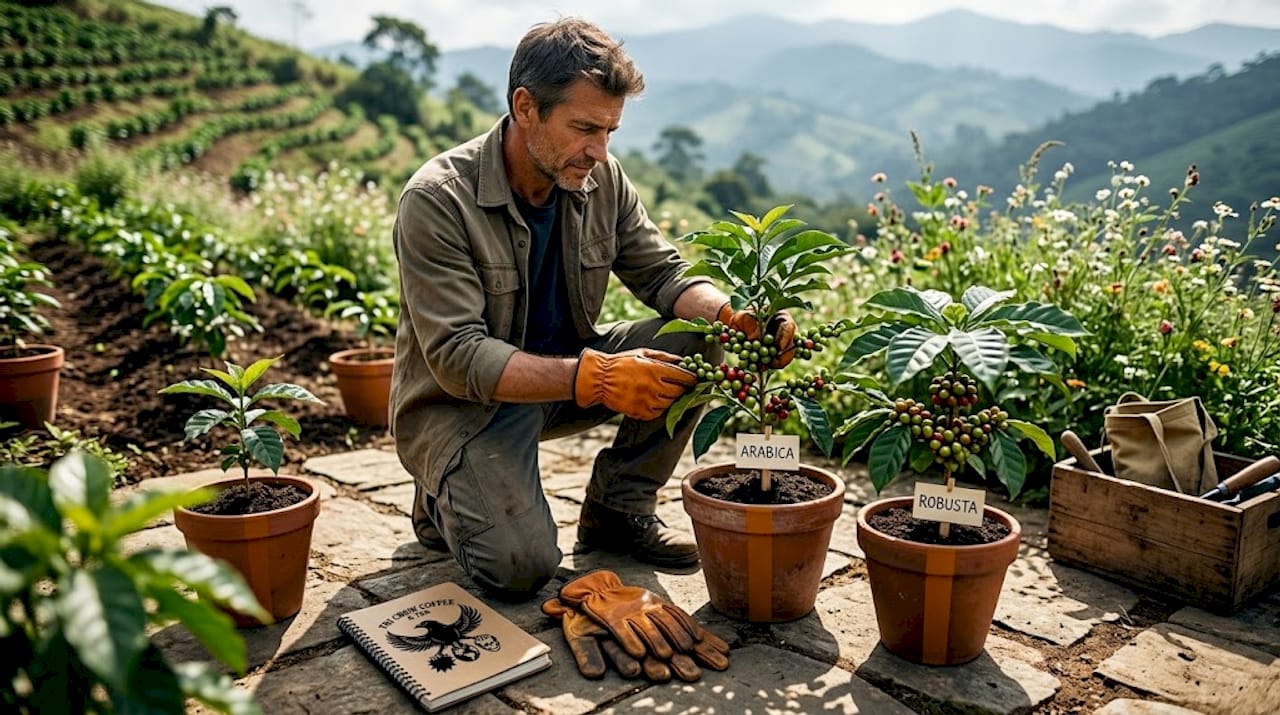
Here is where the genetics get interesting. Arabica is allotetraploid, meaning it carries 44 chromosomes and is self-pollinating. That self-pollinating trait sounds like an advantage, but it actually means Arabica has very limited genetic diversity. The plant is naturally inbred, which makes it delicious and complex but also surprisingly fragile. Robusta, by contrast, is diploid with 22 chromosomes and cross-pollinates freely, which is why it tends to be hardier and more disease-resistant than Arabica.
Within those two species, varietals emerge through several distinct pathways:
-
Natural mutations: Caturra is a compact mutation of Bourbon that appeared spontaneously in Brazil in the early 1900s. It kept much of Bourbon’s flavor while growing on a smaller plant, which made it easier to harvest.
-
Selective breeding: SL-28, developed in Kenya, was specifically bred for drought resistance and became celebrated for its blackcurrant acidity and full body.
-
Interspecific hybrids: The Timor Hybrid crosses Arabica with Robusta to introduce disease resistance genes into Arabica plants. Most Catimor and Sarchimor varieties that protect farmers from coffee leaf rust trace back to this hybrid.
Popular coffee varietals and where they come from
Most of the world’s Arabica varietals trace back to two foundational lineages: Typica and Bourbon. Both originated from a small population of plants that traveled out of Ethiopia and Yemen centuries ago. That narrow genetic bottleneck shapes everything downstream.
| Varietal | Lineage | Flavor notes | Key origin |
|---|---|---|---|
| Typica | Foundational Arabica | Clean, sweet, delicate | Central America, Indonesia |
| Bourbon | Mutation of Typica | Caramel, fruit, balanced | Rwanda, El Salvador, Brazil |
| Caturra | Mutation of Bourbon | Bright, citrus, light body | Colombia, Central America |
| Gesha (Geisha) | Ethiopian origin | Floral, jasmine, complex | Panama, Ethiopia, Colombia |
| SL-28 | Kenyan selection | Blackcurrant, wine-like | Kenya |
| Catimor | Timor Hybrid x Caturra | Earthy, mild | Southeast Asia, Central America |
| Ethiopian Heirloom | Diverse wild lineages | Wildly variable, intensely fruity | Ethiopia |
Gesha deserves a special mention because it represents what happens when a varietal’s genetic ceiling is genuinely extraordinary. The plant is notoriously low-yielding and demanding to grow, but at altitude with careful processing, it produces florals and complexity that most other varietals simply cannot replicate. It fetched record auction prices partly because of its flavor and partly because of its scarcity.
Ethiopian heirloom varietals are a category unto themselves. Ethiopia is the birthplace of Arabica coffee, and the genetic diversity found in wild and landrace plants there dwarfs what exists anywhere else in the world. When you buy an Ethiopian coffee labeled “heirloom,” you’re likely drinking beans from dozens or hundreds of genetically distinct plants growing together. That’s why Ethiopian coffees often taste unlike anything else: floral, fruity, tea-like. The diversity is the flavor.
Robusta varietals rarely appear on specialty bags by name, but blends of selected robusta varieties can increase crop yields by up to 86% while improving climate resilience. That number matters more every year as coffee-growing regions face rising temperatures and unpredictable rainfall.
How varietal impacts flavor — and what matters more
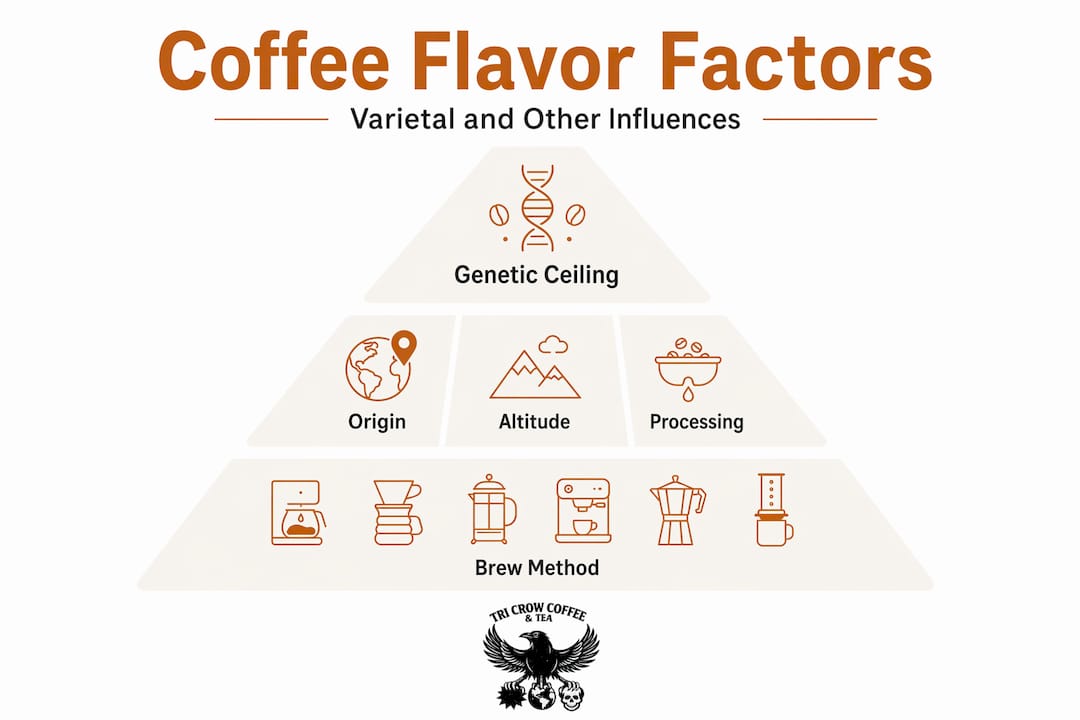
Here is the honest version that most coffee marketing skips: the varietal sets a genetic ceiling for flavor potential, but the actual cup you drink is shaped by factors that can either realize that potential or undermine it entirely.
Think of it this way. Gesha’s genetics carry a blueprint for extraordinary florals. But if those plants grow at low altitude in poorly drained soil with inconsistent rainfall, that blueprint never gets built. Conversely, a Caturra, which has a more modest genetic profile, grown at high altitude by a meticulous farmer and processed with exceptional care will outshine a sloppily processed Bourbon every single time. Processing and terroir routinely override the genetic potential of the varietal.
The factors that shape coffee flavor alongside genetics include:
-
Altitude: Higher altitude slows cherry ripening, concentrating sugars and developing more complex acids. The same varietal at 1,200 meters versus 1,800 meters tastes noticeably different.
-
Soil composition: Volcanic soils in Guatemala, mineral-rich red soils in Kenya, and sandy loam in Brazil all leave a distinct imprint on flavor regardless of varietal.
-
Processing method: Natural processing, where the cherry dries around the bean, introduces fruit-forward fermentation notes. Washed processing strips that fruit away, giving cleaner, brighter cups. The same varietal processed differently will taste like two different coffees.
-
Microclimate: Shade, humidity, and seasonal rainfall patterns all affect how the plant develops and what the bean accumulates before harvest.
Pro Tip: When reading a coffee bag, treat the varietal name as a starting point, not a promise. Look for origin, altitude, and processing method listed alongside it. Those three details tell you more about what’s in the cup than the varietal name alone.
You can learn more about flavor, genetics, and origin as interconnected influences rather than separate categories in specialty coffee. Understanding coffee varieties means holding all of those variables at once.
Why coffee breeding matters more than ever
The coffee industry is facing a problem that most drinkers never think about. Arabica’s narrow genetic base, combined with rising global temperatures, fungal diseases like coffee leaf rust, and the coffee berry borer pest, means that some of the world’s most beloved varieties are genuinely under threat.
Breeding new varietals is not fast work. Developing new coffee varieties takes between 10 and 30 years from initial cross-pollination to commercial release. That timeline means the work happening in breeding programs today determines what farmers will plant in 2040 and what you’ll be drinking in 2050.
Key priorities driving current breeding programs include:
-
Disease resistance: Coffee leaf rust wiped out entire crops across Central America in the early 2010s. New varietals that carry resistance genes are not optional. They’re survival tools for farming communities.
-
Climate adaptation: Varieties that tolerate higher temperatures, irregular rainfall, and shorter growing seasons are being developed specifically for regions where traditional varieties are already struggling.
-
Flavor quality: Breeders are not sacrificing taste for resilience. Programs are actively selecting for cup quality alongside agronomic traits, which is far harder than selecting for one alone.
-
Yield improvement: Smallholder farmers need viable economics. Higher-yielding varietals that maintain quality give farmers a path to profitability.
The Innovea Global Coffee Breeding Network accelerates this work by pooling breeding data and tools across participating countries. Rather than each nation’s research institution starting from scratch, they share genetic data and field trial results. That collaboration compresses what would otherwise be multi-decade timelines. Modern breeding is lagging despite critical climate challenges, and coffee is still treated as an orphan crop with limited historic genetic research investment compared to staple grains.
How to use varietal knowledge when buying coffee
You don’t need a botany degree to make better choices at the coffee counter. A few practical habits will immediately sharpen how you read labels and taste coffees.
-
Start with the origin, then the varietal. If you know you love Kenyan coffees, look for SL-28 or SL-34 varietals from that region. The combination of origin and varietal is a much stronger predictor of what you’ll taste than either factor alone.
-
Compare same varietal across origins. Buy a Bourbon from El Salvador and a Bourbon from Rwanda in the same month. Taste them side by side. The differences will teach you more about terroir than any article can.
-
Read the processing method. A naturally processed Heirloom Ethiopian will taste radically different from a washed one, even if the plants are genetically similar. Understanding how coffee processing works is as important as understanding the varietal.
-
Ask your roaster. Specialty roasters who know their supply chain can tell you which farm grew the coffee, what altitude the trees grew at, and how the processing was done. That information is gold.
-
Don’t dismiss blends. A well-designed coffee blend can showcase complementary varietals in a single cup and is worth exploring alongside single-origin offerings.
Pro Tip: Keep a simple tasting journal. Note the varietal, origin, processing method, and your flavor impressions for each coffee you try. After a dozen entries, patterns will emerge that tell you exactly what you actually like.
Coffee varietal differences are real and meaningful. But coffee bean genetics contribute to taste and aroma while environment and handling shape the cup. Treat varietal as one lens among several.
My honest take on varietal culture
I’ve watched the specialty coffee world develop an almost obsessive relationship with varietals over the past decade, and I have mixed feelings about where it’s landed.
On one hand, varietal awareness has been genuinely good for farmers. When a Gesha or an SL-28 commands a premium price at auction, growers in Panama and Kenya have a financial reason to preserve those plants and invest in careful cultivation. Consumer curiosity about types of coffee varietals has translated, in some cases, into better economics for farming families. That connection matters enormously.
On the other hand, I’ve seen the varietal name become a marketing shortcut that obscures more than it reveals. Bags that shout “Gesha” without mentioning altitude, farm, or processing are selling a reputation, not a guarantee. The varietal tells you what the plant could produce. Everything else determines what it actually did.
What I’ve found is that the best approach to understanding coffee varieties is treating them like chapters in a much longer story. The genetics are the premise. The terroir is the setting. The processing is the plot. You need all of it to understand the ending. Rushing to judge a coffee by varietal name alone is like reading the title of a novel and claiming you know the story.
The breeding urgency concerns me the most. We’re asking 10 to 30-year breeding programs to solve a climate problem that’s already here. The coffee industry needs to fund that research like the future of the crop depends on it. Because it does.
— David
Explore varietals through Tricrowcoffee
At Tricrowcoffee, every blend and single-origin offering starts with a clear understanding of where the beans come from and what the plants were bred to produce. Whether you’re drawn to the clean brightness of a Central American Caturra or the wild complexity of Ethiopian heirloom beans, exploring that range is exactly what we source for. The Latin American Blend brings together varietals selected for balance and depth, roasted in small batches to honor the genetics and the terroir behind them. If you want to taste what varietal and processing knowledge looks like in the cup, that’s your starting point. Coffee roasted with intention, sourced with care, and crafted for people who want to understand what they’re drinking.
FAQ
What is a coffee varietal, exactly?
A coffee varietal refers to a specific genetic variety within the Coffea species, most commonly Arabica or Robusta. The term, borrowed from wine, is used interchangeably with “variety” and “cultivar” in the coffee industry.
What are the most popular types of coffee varietals?
The most widely recognized types of coffee varietals include Typica, Bourbon, Caturra, Gesha, SL-28, Catimor, and Ethiopian Heirloom. Each has a distinct genetic lineage and flavor potential shaped by origin and processing.
Does varietal determine how coffee tastes?
Varietal sets a genetic ceiling for flavor potential, but terroir, altitude, and processing have a greater immediate impact on the actual cup. A well-processed Caturra at high altitude can outperform a poorly processed Bourbon every time.
What is the difference between Arabica and Robusta varietals?
Arabica is allotetraploid and self-pollinating with limited genetic diversity, producing complex and delicate flavors. Robusta is diploid, more disease-resistant, and yields a stronger, more bitter cup used heavily in espresso blends.
Why does coffee varietal matter for sustainability?
Breeding climate-resilient varietals is critical because rising temperatures and diseases like coffee leaf rust threaten Arabica crops. Developing new varieties takes 10 to 30 years, making early investment in breeding programs a priority for the industry’s future.
Recommended
-
Discover Coffee Bean Types, Flavor Profiles, and Origins – Tri Crow Coffee
-
Exploring different coffee roasts: a guide for enthusiasts – Tri Crow Coffee
-
Explore coffee drink varieties for a richer daily ritual – Tri Crow Coffee
-
How to select coffee beans for great home brewing flavor – Tri Crow Coffee