
Single origin coffee is one of the most misunderstood terms in specialty coffee. Most people assume it’s marketing language for “expensive beans.” The reality is far more interesting. What is single origin coffee, exactly? It’s a cup that tells you precisely where it came from, whether that’s a country, a specific region, a single farm, or even one small harvest lot. That geographic specificity changes everything about the flavor in your cup, the story behind it, and the impact your purchase has on the people who grew it.
Table of Contents
- Key takeaways
- What is single origin coffee, really?
- Single origin vs. blends
- Single origin coffee benefits worth knowing
- How to brew single origin coffee
- Sourcing, traceability, and ethics
- My honest take on single origin coffee
- Explore single origin coffee at Tri Crow Coffee
- FAQ
Key takeaways
| Point | Details |
|---|---|
| Geographic specificity defines it | Single origin coffee is traceable to one country, region, farm, or micro-lot. |
| Terroir shapes every sip | Soil, altitude, climate, and processing methods all drive distinct flavor profiles. |
| Different from blends by design | Blends prioritize consistency; single origin prioritizes character and traceability. |
| Brewing method matters | Pour-over and AeroPress extract the most nuance from single origin beans. |
| Ethics are built in | Traceability supports direct trade, fair labor, and sustainable farming communities. |
What is single origin coffee, really?
At its most basic, single origin means all the beans in your bag came from one traceable geographic source. But that definition has layers. “Single origin” can mean a whole country, like Ethiopia or Colombia. It can mean a specific region within that country, like Yirgacheffe or Huila. It can go even deeper to a single farm, cooperative, or a micro-lot, which is a small, precisely managed section of a farm harvested and processed separately for maximum flavor control.
The concept that separates single origin from everything else is terroir. Borrowed from the wine world, terroir describes the environmental conditions that shape a crop’s character. For coffee, that includes:
- Soil composition: Volcanic soils in Guatemala and Kenya produce beans with bright, mineral-driven acidity.
- Altitude: Higher-grown beans develop more slowly, concentrating sugars and producing more complex flavors.
- Rainfall and sunlight: Balanced rainfall and sunlight produce sweeter coffee cherries with more layered flavor.
- Processing method: Natural processed beans taste fruity and wine-like; washed beans taste cleaner and brighter.
- Harvesting practices: Hand-picked, selective harvesting catches only ripe cherries, which dramatically affects cup quality.
Micro-lots take terroir to its most precise expression. A farmer might separate one hillside plot from the rest of the farm because it gets more afternoon shade or has a different soil composition. That separation results in a cup with a flavor fingerprint found nowhere else on earth.
Pro Tip: When reading a single origin label, look for specificity. “Ethiopia” tells you very little. “Yirgacheffe, Kochere Cooperative, washed, 2025 harvest” tells you almost everything you need to predict the flavor.
Single origin vs. blends
Understanding the difference between single origin and blends is the fastest way to understand what you’re actually buying when you shop for coffee.
Blends combine beans from multiple origins to build a specific, repeatable flavor profile. A roaster might use a Brazilian base for body, add an Ethiopian for floral notes, and a Colombian for brightness. The goal is consistency. You open a bag of the same blend in January and again in July, and it tastes the same. That predictability is genuinely valuable for espresso, where small flavor changes can throw off an entire cafe’s calibration.
Single origin coffee does the opposite. It highlights natural variation rather than smoothing it over. A Kenyan AA from one harvest may taste like blackcurrant and tomato leaf. The next year’s harvest from the same farm might lean more toward grapefruit and dark cherry. That variability is not a flaw. It’s the point.
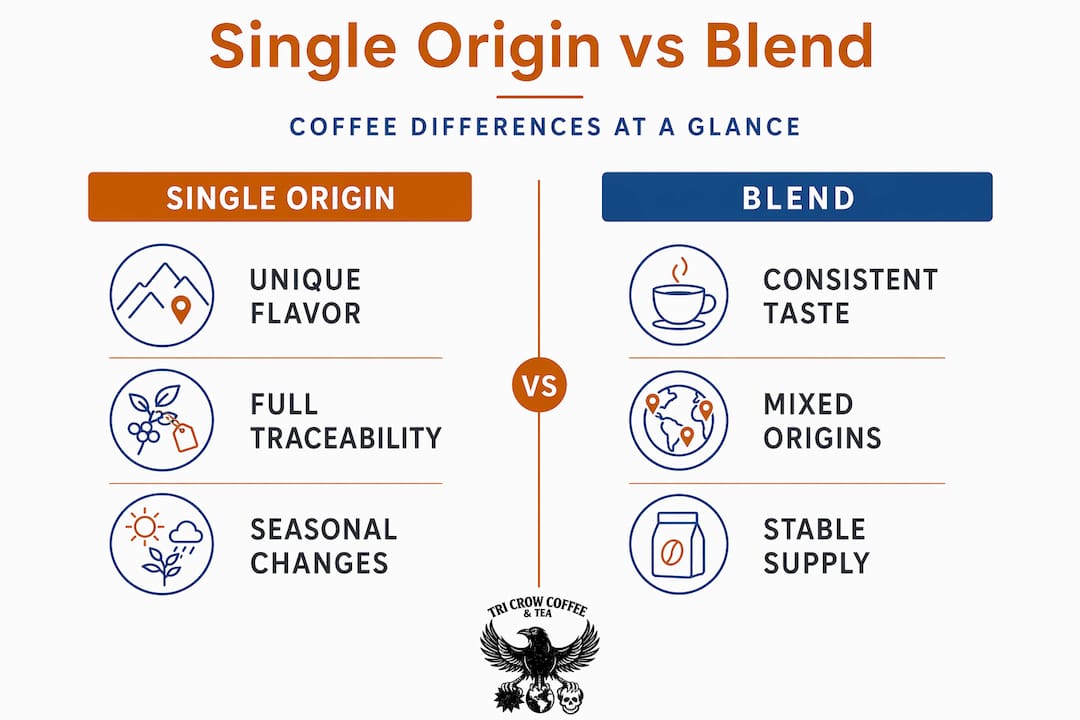
| Category | Single origin | Blend |
|---|---|---|
| Flavor | Unique, terroir-driven | Consistent, balanced |
| Traceability | Specific farm or region | Multiple undisclosed origins |
| Consistency | Varies by season | Designed to stay the same |
| Price | Generally higher | Often more affordable |
| Best for | Filter brewing, tasting | Espresso, milk-based drinks |
Here’s what the comparison reveals about sourcing ethics. With a blend, the origins of the beans are rarely disclosed in detail. With single origin, you know exactly where your money goes. Buyers can assess sustainability and fair labor practices because the supply chain is visible. That transparency is not incidental. It’s structural.
Single origin coffee benefits worth knowing
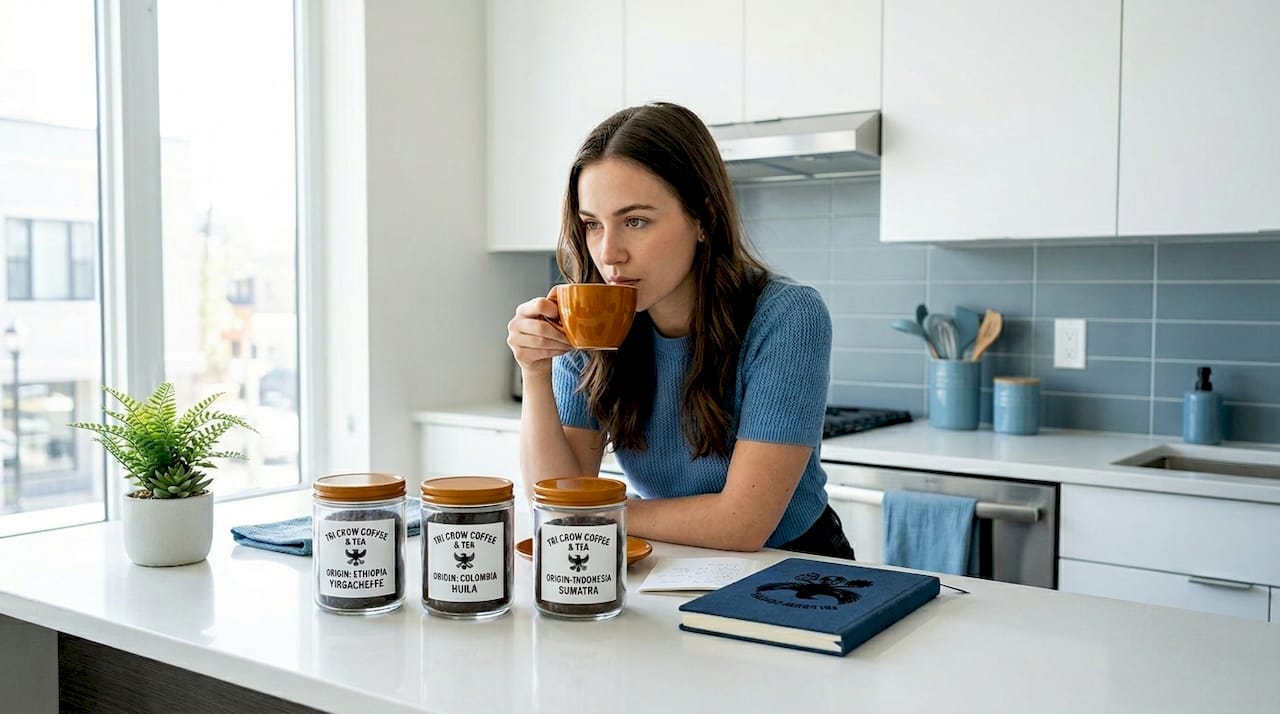
The most obvious single origin coffee benefit is flavor. But it’s worth being specific about what that means. Each cup reflects a collaboration between environment, farming practices, processing, and roasting. A naturally processed Ethiopian Sidama will taste nothing like a washed Colombian Nariño. That’s not just variety for its own sake. It’s a direct sensory report on a specific place at a specific time.
From a pricing perspective, single origin commands a premium for real reasons. In specialty markets, single origin retail prices reach significantly higher than commodity-grade coffee, reflecting traceability costs, ethical sourcing relationships, and small-batch production. You are not paying for a label. You are paying for a documented supply chain.
The ethical dimension is equally concrete. When a roaster sources single origin coffee through direct trade, the farmer receives a higher, negotiated price rather than the volatile commodity market rate. Communities benefit from that stability. Environmental stewardship improves when farmers are paid fairly, because they have the resources to invest in sustainable practices rather than cutting corners for yield.
There is also what you might call the experiential benefit. Single origin storytelling connects you to the land and the people behind the beans. Knowing that your morning cup came from a small cooperative on the slopes of Mount Elgon in Uganda, farmed by families who have grown coffee for three generations, changes how you drink it. That connection is real, and it’s one that blends structurally cannot offer.
Pro Tip: To assess single origin quality at home, try tasting the coffee black at three temperatures: just off boil, slightly cooled, and at room temperature. The flavor changes you notice at each stage reveal the coffee’s true complexity.
How to brew single origin coffee
Getting the most from a single origin coffee means choosing a brewing method that preserves its nuance rather than masking it. Pour-over and AeroPress are the preferred tools because they give you precise control over extraction and don’t introduce competing flavors the way some automatic machines can.
Here’s a straightforward pour-over process that works well for most single origin filter coffees:
- Grind fresh. Use a burr grinder and grind just before brewing. Medium-fine grind for pour-over, slightly coarser for AeroPress or French press.
- Weigh your coffee and water. A 1:15 ratio (1 gram of coffee to 15 grams of water) is a solid starting point. Adjust to taste.
- Heat water to 200°F. That is about 30 seconds off a full boil. Lighter roasts can handle up to 205°F to extract fully.
- Bloom your grounds. Pour twice the weight of water onto the coffee and wait 30 to 45 seconds. This releases CO2 and opens up the grounds.
- Pour slowly and evenly. Add the remaining water in two or three controlled pours, keeping the bed of coffee saturated but not flooded.
- Taste and adjust. If the cup tastes hollow or sour, grind finer next time. If it tastes bitter or muddy, grind coarser.
Pairing single origin coffees with food is genuinely rewarding once you know a coffee’s flavor notes. A bright, citrusy Kenyan pairs beautifully with lemon tarts or fresh cheese. A chocolatey Brazilian natural works alongside dark chocolate or almond pastries. You can find more detail on building those combinations in this coffee and food pairing guide.
Sourcing, traceability, and ethics
Knowing where your coffee comes from is not just interesting. It directly shapes whether your purchase supports farmers or undermines them. Traceability in single origin coffee works like a chain of custody. Every link matters, from the farm through the mill, the exporter, the importer, and finally the roaster.
What to look for when evaluating single origin sourcing:
- Farm or cooperative named on the bag. Vague terms like “East Africa blend” are a red flag for single origin claims.
- Processing method disclosed. Washed, natural, honey, or anaerobic tells you about post-harvest decisions and flavor trajectory.
- Harvest year listed. Coffee is agricultural. Fresh crop matters. Anything older than 18 months is past its peak.
- Certifications or direct trade relationships. Certifications like Fair Trade or Rainforest Alliance set baseline standards, but direct trade relationships often go further by negotiating prices above market rate.
Understanding why coffee origin matters goes beyond flavor. Smallholder farmers who grow the world’s best specialty coffee often operate in economically vulnerable communities. When buyers pay a traceable premium and roasters publish sourcing details publicly, that accountability improves conditions across the supply chain. It is the difference between coffee as a commodity and coffee as a relationship.
My honest take on single origin coffee
I came to single origin coffee through skepticism. I assumed the specificity on the label was largely aspirational, language meant to justify higher prices without changing much in the cup. What changed my mind was tasting a washed Gesha from Panama side by side with a natural Ethiopian Heirloom. I have never been more wrong about anything I put in my mouth.
What I have learned over years of drinking and studying single origin coffees is that the variability most people find unpredictable is actually the most honest thing about it. A blend gives you what you expect. Single origin gives you what the land actually produced that year. Sometimes that means a revelation. Sometimes it means a cup that’s more acidic than you were hoping for. Both experiences teach you something real about where flavor actually comes from.
My advice for anyone building appreciation for single origin coffee: resist the urge to immediately compare to your usual cup. Give each new origin three or four brews before forming an opinion. The first brew tells you very little. By the fourth, you start to understand the coffee on its own terms.
— David
Explore single origin coffee at Tri Crow Coffee
At Tri Crow Coffee, every coffee in our catalog is sourced with the same question in mind: can we tell you exactly where this came from, and are we proud of that answer? Our small-batch roasting process preserves the terroir-driven character that makes single origin coffee worth seeking out. Whether you are new to exploring origins or deepening a practice you have had for years, our selections are roasted to highlight what makes each source distinct.
For something outside the expected, try our Mint Coffee or explore the depth of our Coffee with Mushrooms, both crafted for drinkers who want more than a routine cup. If you are curious about how origin shapes flavor profiles and characteristics, our blog is built for that kind of exploration.
FAQ
What makes coffee “single origin”?
Single origin coffee comes from one traceable geographic source, which can range from an entire country down to a specific farm lot or micro-lot. The key requirement is that the beans are not mixed with coffee from other regions or origins.
Is single origin coffee always better than a blend?
Not always. Single origin coffee offers unique, terroir-driven flavors and greater traceability, but blends are specifically designed for consistency and work exceptionally well in espresso. The better choice depends on what you want from your cup.
How does single origin coffee taste different from regular coffee?
Single origin coffees have distinct flavor profiles shaped by soil, altitude, climate, and processing. You might taste jasmine and bergamot in an Ethiopian, dark chocolate in a Brazilian, or tropical fruit in a Kenyan. These are not additives. They come entirely from the bean and its environment.
Does single origin coffee change from year to year?
Yes. Because single origin coffee varies seasonally based on growing conditions and harvest outcomes, the same farm’s coffee can taste noticeably different from one year to the next. Many coffee drinkers see this as a feature rather than a drawback.
What is the best brewing method for single origin coffee?
Pour-over and AeroPress are widely considered the best methods because they allow precise control over water temperature, flow rate, and extraction time, all of which help preserve delicate origin-specific flavors.
Recommended
- Why coffee origin matters: flavor, ethics, and sustainability – Tri Crow Coffee
- Why coffee processing matters: flavor, ethics, and sustainability – Tri Crow Coffee
- Discover Coffee Bean Types, Flavor Profiles, and Origins – Tri Crow Coffee
- Why trace your coffee? The real benefits of transparency – Tri Crow Coffee