
Most people treat coffee as a solo act. You drink it before a meal, after a meal, or somewhere in between, but rarely with the meal in mind. Learning how to pair coffee with food changes that entirely. When the right roast meets the right dish, both flavors sharpen. The coffee tastes cleaner, the food tastes richer, and the whole experience becomes something you actually notice. This guide walks you through the principles, roast-level matching, brewing considerations, and ready-to-use pairing ideas that make every cup count.
Table of Contents
Key takeaways
| Point | Details |
|---|---|
| Roast level determines pairing range | Light roasts suit fruit and soft cheeses; dark roasts belong with bold, rich dishes. |
| Two strategies cover most situations | Complement similar flavors or contrast opposing textures and intensities for balance. |
| Brewing method shapes mouthfeel | Metal filters produce fuller-bodied coffee that suits savory, protein-rich foods. |
| Extraction balance matters | A well-extracted cup between 18% and 22% yield complements food without clashing. |
| Taste together, not separately | Sipping coffee alongside a bite confirms or cancels any pairing theory on the spot. |
How to pair coffee with food: start with the basics
Before you can match coffee with a meal, you need a clear read on what your coffee actually tastes like. That starts with roast level.
Light roasts preserve the most origin character. Expect brightness, floral notes, and fruit-forward flavors like citrus, berry, or stone fruit. The acidity is high, the body is lean, and the bitterness is low. These coffees feel almost tea-like compared to darker options.
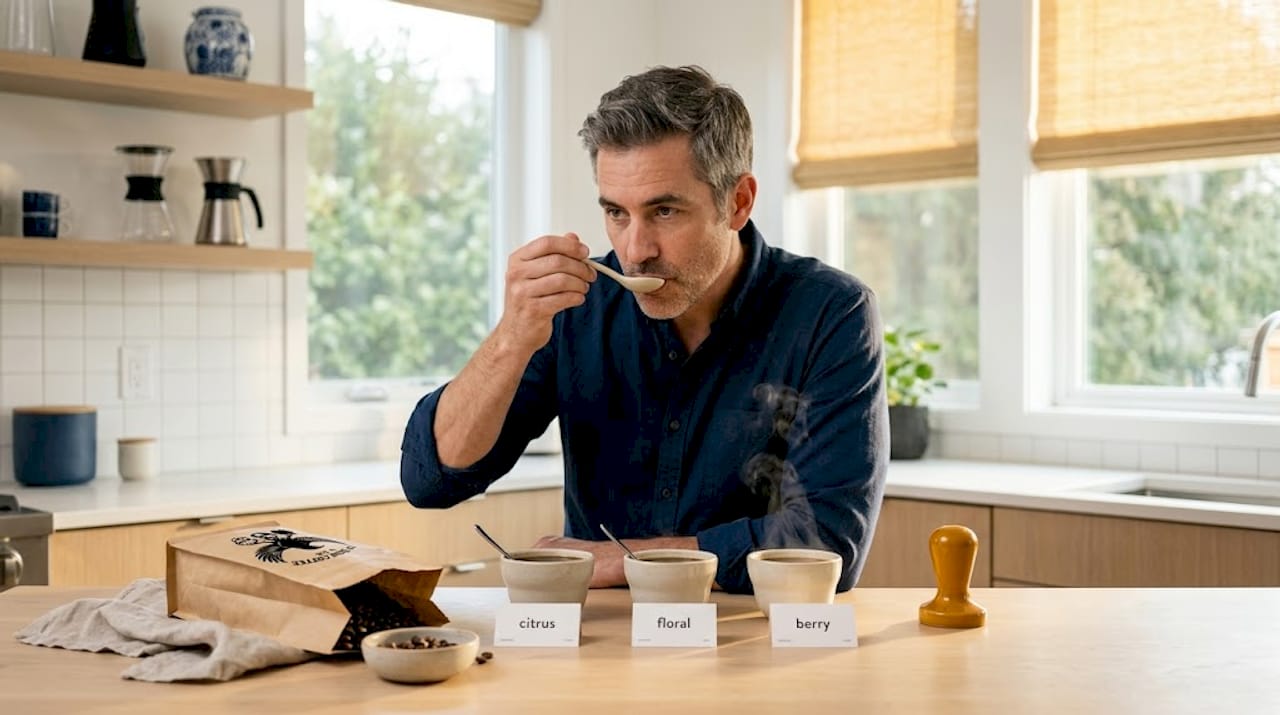
Medium roasts sit in a comfortable middle ground. The origin notes are still present but softer, with caramel, toasted nut, and mild chocolate starting to emerge. Body and acidity are balanced, which makes medium roasts the most food-friendly across a range of dishes.
Dark roasts sacrifice origin nuance for depth. You get roasted, smoky, bittersweet, and sometimes earthy flavors with low acidity and a full, heavy body. These coffees stand up to strong, bold food without getting lost.
Beyond roast level, the Coffee Flavor Wheel developed by the Specialty Coffee Association gives you a precise vocabulary for what you taste. Instead of stopping at “it tastes good,” you can identify whether a cup leans toward dried fruit, brown sugar, or roasted walnut — all of which point toward different food matches.
-
Light roasts: floral, citrus, berry, bright acidity
-
Medium roasts: caramel, hazelnut, milk chocolate, balanced body
-
Dark roasts: dark chocolate, smoke, molasses, bitter finish
Pro Tip: Before pairing, taste your coffee black for at least 30 seconds. Let it cool slightly — heat mutes many of the subtler flavor notes that determine the best food match.
Brewing method adds another layer. A French press uses metal mesh, which allows oils and fine particles through. The result is a thicker, heavier cup with more tactile presence. A pour-over with a paper filter removes those oils, producing a cleaner, brighter cup. The bean origin and type you choose also shapes the flavor foundation before you even decide how to brew it.
The two core pairing strategies
Every successful coffee and food pairing traces back to one of two approaches: complementing or contrasting. Understanding both gives you a framework that works across any meal, any coffee.
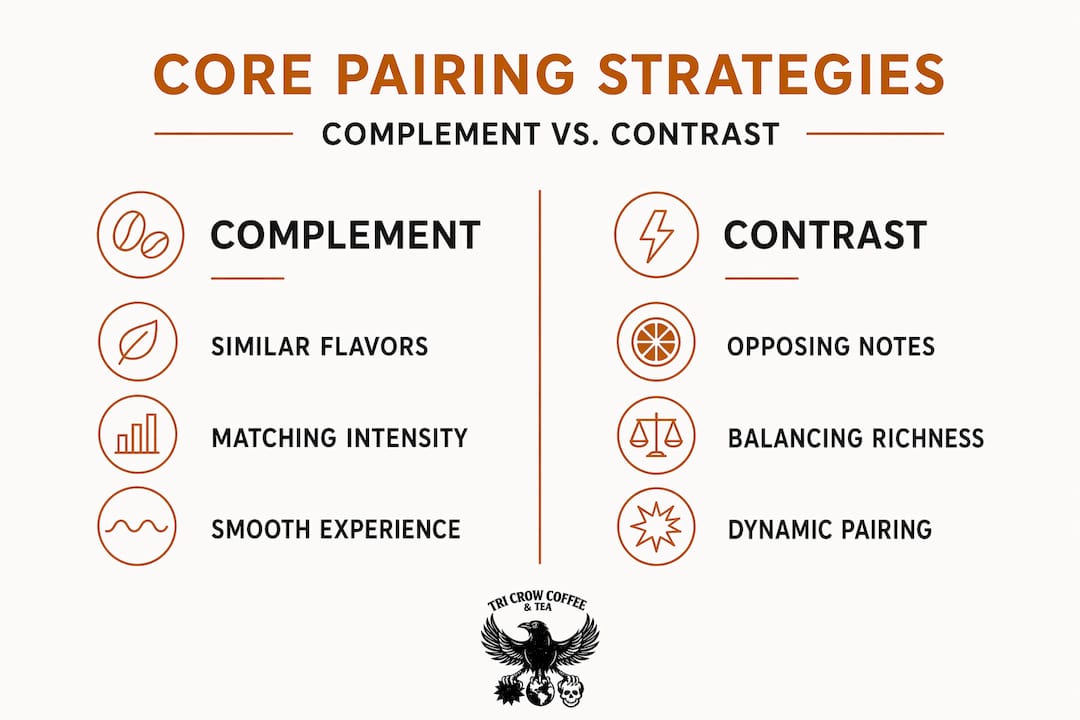
Complementing means matching similar flavor notes and intensities. A medium roast with caramel and hazelnut notes pairs with a walnut croissant because they share the same flavor family. The coffee and pastry reinforce each other, and neither overwhelms the other. Complementing and contrasting are the two primary strategies professionals use to balance flavor intensity across a pairing.
Contrasting uses opposing characteristics to create balance. A bright, high-acid light roast cuts through the fat in a rich, creamy cheese. The coffee cleans your palate between bites. The contrast refreshes rather than repeats.
| Strategy | How it works | Best for |
|---|---|---|
| Complementing | Match similar flavor notes and intensity levels | Pastries, nutty dishes, chocolate desserts |
| Contrasting | Use opposing flavors to balance and cleanse | Rich cheeses, fatty meats, cream-based dishes |
The most common mistake beginners make is ignoring intensity. A delicate light roast gets buried under a heavily spiced dish. A bold dark roast steamrolls a soft, mild pastry. Intensity matching is just as important as flavor matching.
Pro Tip: If you are unsure which strategy to use, start with complementing. It is more forgiving for beginners because you are reinforcing what already works rather than trying to engineer a contrast.
Matching roast levels to specific foods
This is where pairing theory becomes practical. Roast level dictates pairing suitability based on flavor notes and intensity, and there are clear patterns that hold across most situations.
| Roast Level | Flavor Profile | Best Food Pairings |
|---|---|---|
| Light | Floral, citrus, berry, bright | Soft cheeses, fruit salads, yogurt, butter croissants |
| Medium | Caramel, hazelnut, mild chocolate | Scrambled eggs, banana bread, pecan tart, brioche |
| Dark | Smoky, dark chocolate, molasses | BBQ ribs, aged cheddar, tiramisu, brownies |
The science behind classic pairings like coffee with chocolate or coffee with roasted nuts is not accidental. Roasted pastries and chocolate share aromatic compounds created by the Maillard reaction — the same browning chemistry that happens when coffee is roasted. That shared chemistry creates an almost automatic flavor harmony.
A few specific pairings worth knowing:
-
Espresso with biscotti is a classic for a reason. The dry, crisp texture of biscotti absorbs the intense shot without going soggy, while the almond or anise in the cookie mirrors the nutty base of a well-pulled espresso.
-
Cold brew with spicy food works because cold brew’s low acidity and high sweetness soften the heat without amplifying it.
-
Dark roast coffees pair well with dark chocolate and spiced flavors, while medium roasts complement nutty or milk chocolate, and light roasts suit white chocolate or fruit-forward sweets.
-
Light roast with a fresh goat cheese on a cracker is one of the most underrated coffee pairings. The acidity in both aligns, and the herbal, grassy notes in the cheese echo the floral quality of the coffee.
For anyone exploring ideal coffee and cheese combinations, the principle is straightforward: match the intensity. Aged, bold cheeses need dark roasts. Fresh, mild cheeses want something lighter and brighter.
How brewing method changes the pairing equation
The flavor in your cup is not fixed at the roast stage. Brewing decisions reshape it significantly, and that reshape changes which foods work best alongside it.
Metal filters produce fuller body coffee suited for savory dishes, while paper filters produce cleaner cups suited for delicate pairings. That difference matters at the table. A French press coffee has weight and texture that can stand alongside eggs, bacon, or a slice of savory quiche. A pour-over, clean and precise, suits lighter fare like a fruit scone or yogurt parfait.
Here is how the main brewing methods break down for pairing purposes:
-
French press: High oil content, heavy mouthfeel, works with protein-rich and savory foods
-
Pour-over: Clean, bright, light body — best with pastries, fruit-based dishes, soft cheeses
-
Espresso: Concentrated and intense, suited for small bites like chocolate, biscotti, or dark desserts
-
Cold brew: Low acid, naturally sweet, pairs well with spicy dishes, creamy foods, and anything chocolate
Extraction control is the other variable most people overlook. Coffee extraction is a selective process dissolving hundreds of compounds that determine flavor complexity. An ideal extraction yield between 18% and 22% balances acids, sugars, and bitterness in a way that complements food rather than fighting it. Under-extracted coffee tastes sour and thin. Over-extracted coffee tastes harsh and dry. Both will clash with almost anything you eat alongside them.
Pro Tip: If a pairing is not working and you cannot identify why, check your grind size. A coarser grind under-extracts; a finer grind over-extracts. Small adjustments here can fix a pairing that should theoretically work but does not taste right.
The mouthfeel concept known in Italian as tattilità reinforces this. Rich, fatty foods pair well with high-acidity coffees because the acid cuts through the fat on the palate, resetting your taste for the next bite. The brewing method’s impact on oil content and sediment is what determines whether your coffee has that palate-cleansing quality or amplifies richness instead.
Common mistakes and how to avoid them
Good pairing practice is as much about knowing what to skip as it is about knowing what to choose.
-
Avoid pairing coffee with acidic fruits like oranges or lemons, and skip overly sugary snacks. Both cause flavor clashes or leave your palate confused between sips.
-
Do not pair a delicate light roast with anything heavily spiced or smoked. The coffee disappears.
-
Avoid pairing dark roast with very sweet milk-based desserts unless the dessert has a bitter element, like espresso in tiramisu.
-
Do not skip tasting together. Tasting coffee and food simultaneously is the only reliable confirmation method. Theoretical matches do not always survive contact with real flavors.
Pro Tip: Between pairing experiments, cleanse your palate with a small piece of plain bread or a few sips of still water. This resets your taste buds and makes each pairing evaluation more accurate.
If you want to sharpen your palate for pairing decisions, practicing coffee cupping is one of the fastest ways to build the vocabulary and sensitivity you need.
Ready-to-use pairing ideas by meal type
These are concrete suggestions you can try this week, organized by when and what you are eating.
-
Breakfast with a medium roast: Scrambled eggs and a butter croissant alongside a medium roast with caramel and hazelnut notes. The sweetness in the coffee harmonizes with the toasted butter in the pastry, and the eggs are neutral enough to let the coffee shine.
-
Mid-morning with a light roast: Greek yogurt with honey and berries paired with an Ethiopian light roast. The shared acidity between the yogurt and the coffee creates a clean, lively combination.
-
Chocolate dessert with a dark roast: A dark chocolate brownie alongside a dark roast or espresso. Shared bitterness and the Maillard chemistry between roasted coffee and chocolate make this one of the most reliable coffee pairings for desserts.
-
Tiramisu with espresso: The classic affogato variation where hot espresso is poured over mascarpone or gelato. Every element is built around coffee, so the pairing is self-reinforcing.
-
BBQ or smoked meats with dark roast: The smokiness in both the food and the coffee aligns. A French roast or dark blend does not get overwhelmed by bold, charred flavors.
-
Spicy Thai or Mexican food with cold brew: Cold brew’s sweetness and low acid act as a mild counterbalance to heat without extinguishing it.
-
Soft cheese board with a light roast: A goat cheese or brie alongside a floral light roast. The coffee’s brightness cuts through the fat and the herbal notes in both complement each other.
My honest take on pairing coffee with food
I used to think coffee pairing was a niche obsession for people with too much time. Then I started actually paying attention. I remember the first time I tried a light roast alongside a fresh goat cheese and realized I had been missing an entire dimension of how coffee can taste. That single experience shifted how I think about both food and coffee.
What I have learned through continued experimentation is that mouthfeel deserves more attention than most people give it. Getting the brewing method right for the specific dish you are eating makes a bigger difference than most flavor pairings. I have had theoretically perfect pairings fall flat because the coffee body was wrong for the food texture. A thin pour-over next to a fatty, savory dish just does not hold up, regardless of how well the flavor notes align on paper.
The other thing I would push back on is the idea that pairing has to be complicated. Start with one rule: match the intensity. A light dish gets a light coffee; a bold dish gets a bold coffee. Everything else builds from there. And please, taste them together. That is the whole point. The experience only exists in the moment the two meet in your mouth.
— David
Explore Tricrowcoffee’s blends built for pairing
If you want to put these principles into practice with coffees that actually reward your attention, Tricrowcoffee has built its small-batch lineup with exactly this kind of intentional drinking in mind.
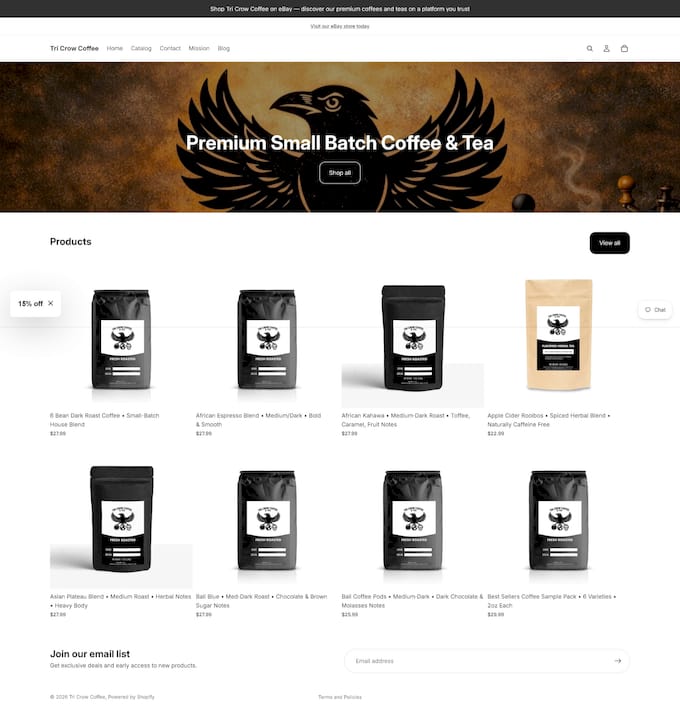
For medium-roast pairing, the Coffee with Mushrooms Medium Roast offers earthy depth and balance that works beautifully alongside eggs, grain-based dishes, and mild cheeses. When you want something bold for richer pairings, the Coffee with Mushrooms Dark Roast delivers a full-bodied intensity that stands up to BBQ, dark chocolate, and aged cheese. And for something unexpected, the Mint Coffee introduces herbal brightness that contrasts beautifully with creamy or chocolate-forward desserts. Each blend is roasted in limited batches so the flavor you pair with your food is always at peak freshness.
FAQ
What is the easiest way to start pairing coffee with food?
Start by matching intensity. A light roast goes with mild, delicate foods, and a dark roast goes with bold, rich dishes. This single rule covers most pairing decisions without requiring deep flavor knowledge.
What foods should you avoid pairing with coffee?
Acidic fruits like oranges and overly sugary snacks tend to clash with coffee, muddying the flavors of both. Spicy or intensely seasoned foods also overwhelm delicate light roasts.
How do coffee pairings for desserts work?
Dark roasts and espresso pair best with chocolate-based desserts because they share bitter, roasted compounds from the Maillard reaction. For lighter desserts like fruit tarts, a bright light roast adds contrast without competing.
Does brewing method matter for food pairing?
Yes. Metal filters create fuller-bodied coffee that suits savory, protein-rich foods, while paper filter pour-overs produce cleaner cups better suited for pastries and light dishes.
What are the best coffee and cheese combinations?
Light roasts pair well with fresh, soft cheeses like goat cheese or brie. Dark roasts and aged, sharp cheeses like cheddar or Manchego work well together because both share high intensity and bold flavor.
Recommended
-
Discover Coffee Bean Types, Flavor Profiles, and Origins – Tri Crow Coffee
-
What is coffee cupping and why it matters for your palate – Tri Crow Coffee
-
Coffee blends explained: Unlock balanced flavors and rituals – Tri Crow Coffee
-
How to select coffee beans for great home brewing flavor – Tri Crow Coffee