
TL;DR:
- Light roast coffee is roasted to an internal temperature of 350°F to 401°F, preserving the bean’s original flavor and antioxidants. It offers brighter, more complex flavors that reflect the coffee’s origin, with higher caffeine content per scoop due to denser beans, and contains less acrylamide than darker roasts. Selecting high-quality light roast involves checking freshness, origin specifics, and roast profile, as the term “light” varies across roasters.
Light roast coffee is defined by roasting beans to an internal temperature of 350°F to 401°F, stopping at or just after the first crack to preserve the bean’s original character. This is the roast level specialty coffee roasters call “transparent” because the cup reflects the farm, not the roaster. If you have ever wondered why light roast coffee tastes brighter, carries more complexity, or shows up in specialty cafés as the premium option, the answer lives in what the roaster chose not to do. Less heat means more of the bean survives intact, and that changes everything from flavor to antioxidant content to caffeine.
Why light roast coffee stands apart from other roasts
Light roast is not simply an underdeveloped version of a darker roast. It is a deliberate choice to stop the roasting process before the bean’s original compounds break down. The result is a coffee that tastes like the place it came from, not the drum it was roasted in.
The defining characteristic is terroir transparency. Specialty coffee roasters treat light roasting as the best method to reveal what makes a specific farm, region, or processing method unique. An Ethiopian Yirgacheffe roasted light will taste like jasmine and blueberry. Roast that same bean dark, and you get chocolate and smoke. The origin disappears.
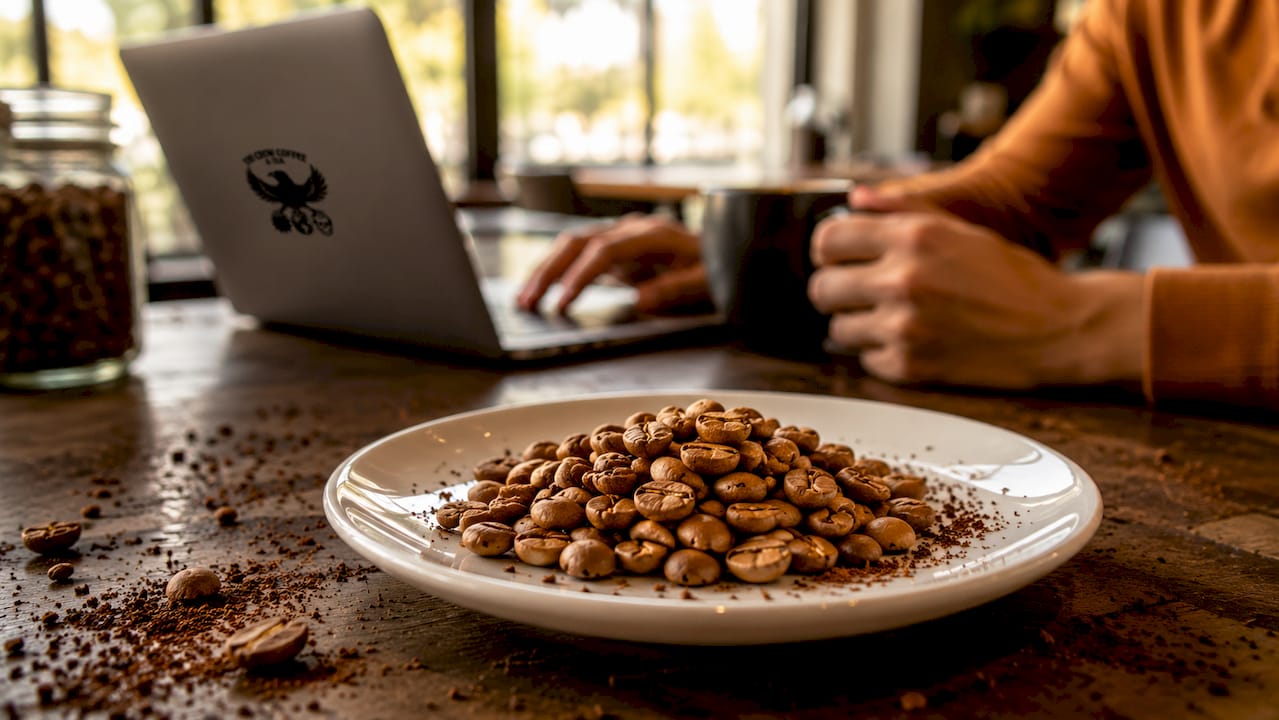
Light roast beans also look different. They are light brown, dry on the surface, and noticeably harder than darker roasts. No oils have migrated to the surface because the roasting process stopped before the bean’s cell walls broke down enough to release them.
What does light roast coffee actually taste like?
The flavor profile of a light roast is built around brightness, complexity, and origin character. These are not vague marketing terms. They describe specific sensory experiences tied to the chemistry of the bean.
Here is what you can expect from a well-sourced light roast:
- Bright acidity: A clean, lively tartness similar to lemon or green apple. This comes from retained organic acids that darker roasts burn off.
- Fruity notes: Berries, stone fruit, citrus, and tropical flavors are common, especially in African and Central American origins.
- Floral aromatics: Jasmine, rose, and lavender notes appear frequently in Ethiopian and Kenyan light roasts.
- Tea-like body: The mouthfeel is lighter and less viscous than a dark roast. Think black tea rather than whole milk.
- Sweetness without bitterness: Properly extracted light roasts finish clean and sweet, not harsh.
Darker roasts develop caramelized, smoky, and bitter flavors through extended Maillard reactions. Those flavors are the roast talking. In a light roast, the flavors are the bean talking.
Pro Tip: Small changes in roast profile shift flavor dramatically. A roaster stopping at 385°F versus 400°F on the same Ethiopian bean can produce a cup that tastes like two different coffees. When you find a light roast you love, note the roaster’s specific profile, not just the origin.
Is light roast coffee healthier than dark roast?
The short answer is yes, in specific ways. The longer answer requires separating three distinct health factors: antioxidants, acrylamide, and caffeine.
Antioxidant content
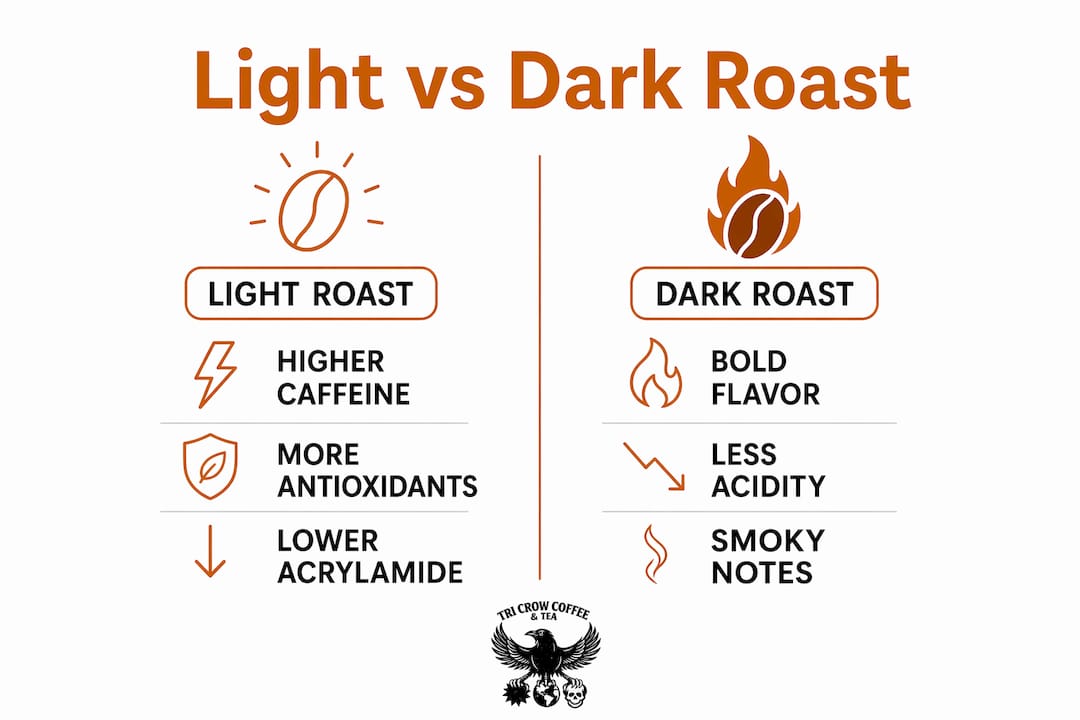
Light roast coffee retains up to 3 times more chlorogenic acid than darker roasts. Chlorogenic acid is the primary antioxidant in coffee, linked to anti-inflammatory effects and blood sugar regulation. High heat degrades it, so the less roasting, the more survives. This is the single strongest health argument for choosing a lighter roast. You can read more about coffee’s science-backed benefits to put this in broader context.
Acrylamide levels
Light roast contains significantly lower acrylamide than dark roast coffee. Acrylamide is a compound that forms during high-heat roasting and has been flagged in food safety research. Lower acrylamide exposure is a meaningful advantage for daily drinkers.
The acidity misconception
Many people avoid light roast because they assume it is harder on the stomach. The data does not support this. pH values between light and dark roasts range between 4.8 and 5.2, with minimal difference between roast levels. The brightness you taste in a light roast is flavor acidity, not stomach acidity. These are separate things.
Caffeine comparison
| Factor | Light Roast | Dark Roast |
|---|---|---|
| Caffeine per scoop (volume) | Higher | Lower |
| Caffeine per gram (weight) | Roughly equal | Roughly equal |
| Chlorogenic acid | High | Low |
| Acrylamide | Low | High |
| Antioxidant type | Chlorogenic acid | Melanoidins |
Light roasts deliver more caffeine per volume scoop because the beans are denser and have lost less water weight during roasting. This contradicts the popular belief that dark roast is “stronger.” If you measure by weight, caffeine is roughly equal. If you measure by the scoop, light roast wins.
Pro Tip: If you are managing caffeine intake carefully, weigh your coffee rather than scooping it. A gram-for-gram comparison gives you a consistent dose regardless of roast level.
How origin and roasting practices shape light roast quality
Choosing a light roast is not as simple as picking any bag labeled “light.” The term itself is not standardized across the industry. One roaster’s light is another’s medium. What actually determines quality is the combination of bean origin, processing method, and roasting precision.
Here is what to evaluate when selecting a light roast:
- Roast date over roast level: Freshness matters more than the label. Look for a roast date within the last two to four weeks. Avoid bags with only a “best by” date.
- Origin specificity: A bag that says “Ethiopia Yirgacheffe, washed process” tells you far more than one that says “light roast blend.” Specific origins signal a roaster who cares about transparency.
- Processing method: Washed coffees tend toward clean, bright, and floral. Natural-processed coffees lean fruity and wine-like. Both shine in light roasts.
- Roaster reputation: Small-batch roasters who publish roast profiles and source information are more likely to deliver consistent light roasts.
The concept of terroir in coffee works exactly like it does in wine. Soil, altitude, rainfall, and processing all leave fingerprints in the bean. Light roasting preserves those fingerprints. Darker roasting erases them.
Light roast beans are also physically denser than darker roasts. That density affects how you grind and brew them, which leads directly to the next section.
Pro Tip: Grind light roast beans finer than you would for a medium or dark roast. Denser beans resist extraction, and a coarser grind will produce a sour, thin cup. Start one notch finer than your usual setting and adjust from there.
How to brew light roast coffee for the best results
Light roast coffee is less forgiving than dark roast. That is not a flaw. It is a feature that rewards precision. Small deviations in water temperature, grind size, or extraction time cause imbalanced or sour results. Here is how to get it right.
- Use higher water temperature. Brew at 200°F to 205°F (just off boiling). Light roast beans need more heat to extract properly. Brewing at 195°F, which works fine for dark roast, will under-extract a light roast and produce sourness.
- Grind finer than you think. Light roast beans are denser and require a finer grind for proper extraction. Use a burr grinder, not a blade grinder. Blade grinders produce uneven particle sizes that make consistent extraction impossible.
- Measure by weight, not volume. A tablespoon of light roast weighs more than a tablespoon of dark roast because the beans are denser. Use a kitchen scale and aim for a 1:15 to 1:17 coffee-to-water ratio by weight.
- Choose the right brewing method. Pour-over methods like the Hario V60 or Chemex give you full control over water flow and extraction time. AeroPress is also excellent for light roast because you can adjust pressure, temperature, and steep time independently.
- Bloom your coffee first. Add twice the weight of water to coffee grounds and wait 30 to 45 seconds before continuing your pour. This releases trapped CO2 and improves extraction evenness. Learn more about why blooming matters for light roast specifically.
Pro Tip: Invest in a gooseneck kettle with a built-in thermometer. Controlling pour rate and water temperature simultaneously is the single biggest upgrade you can make for brewing light roast at home.
Key takeaways
Light roast coffee delivers superior antioxidant content, more caffeine per scoop, and the clearest expression of origin flavor because the roasting process stops before heat destroys these qualities.
| Point | Details |
|---|---|
| Roasting temperature defines light roast | Beans stop at 350°F–401°F, preserving original flavor compounds and bioactive content. |
| Chlorogenic acid advantage | Light roast retains up to 3x more of this key antioxidant compared to dark roast. |
| Caffeine per scoop is higher | Denser beans mean more caffeine by volume, contrary to popular belief. |
| Grind finer for proper extraction | Light roast density requires a finer grind and higher water temperature to avoid sourness. |
| Origin and freshness beat the label | Roast level terms are not standardized; prioritize roast date and specific origin over marketing language. |
Light roast taught me to actually taste coffee
I spent years drinking dark roast because I thought it meant serious coffee. Bold, strong, no nonsense. Then a roaster handed me a cup of washed Kenyan light roast and told me to smell it before I drank it. It smelled like blackcurrant and black tea. I thought he had handed me the wrong drink.
That moment changed how I think about roast levels entirely. Dark roast is not more coffee. It is more roast. The bean is almost secondary. With light roast, the bean is everything. You are tasting the altitude, the soil, the way the farmer processed the cherry. That is a completely different experience.
The challenge is that light roast punishes lazy brewing. I have made plenty of sour, thin cups by using the wrong grind or water that was not hot enough. Each bad cup taught me something. The precision required is not a burden once you accept it. It becomes part of the ritual.
My honest recommendation: do not start with a blend. Start with a single-origin light roast from Ethiopia or Kenya, brew it as a pour-over, and taste it black before you add anything. You will either love what you find, or you will understand exactly why you prefer something darker. Either outcome is useful.
— David
Explore tri crow coffee’s small-batch roasts
Tri Crow Coffee sources and roasts in small batches specifically to maintain the kind of flavor transparency that light roast demands. Every batch is produced in limited quantities so freshness is never a compromise.
If you are ready to taste the difference that origin and roast precision make, the Medium Roast Cold Brew is a strong starting point. It bridges the brightness of a lighter roast with the smooth body that cold brewing produces, showing chocolate and floral notes in the same cup. For those drawn to the caffeine conversation, the Max Caf Blend combines Tanzania and India Robusta for a high-caffeine option with real character. Both reflect Tri Crow Coffee’s commitment to intentional, traceable sourcing.
FAQ
What temperature defines a light roast coffee?
Light roast coffee is roasted to an internal bean temperature of approximately 350°F to 401°F, stopping at or just after the first crack. This lower temperature preserves the bean’s original flavor compounds and antioxidants.
Does light roast coffee have more caffeine than dark roast?
Light roast contains more caffeine per volume scoop because the beans are denser and retain more water weight. Measured by weight, caffeine levels between roast levels are roughly equal.
Is light roast coffee easier on your stomach than dark roast?
Not necessarily. The pH difference between light and dark roast coffee is minimal, ranging between 4.8 and 5.2. The bright, acidic taste of light roast is a flavor characteristic, not a sign of higher stomach acidity.
What brewing method works best for light roast coffee?
Pour-over methods like the Hario V60 or Chemex and the AeroPress are best suited for light roast. These methods give you precise control over water temperature, grind size, and extraction time, all of which matter more with light roast than with darker roasts.
How do i know if a light roast is actually high quality?
Look for a specific roast date within two to four weeks of purchase, a named single origin, and a stated processing method. Roast level labels are not standardized, so origin specificity and freshness are the most reliable quality indicators.