
TL;DR:
- Coffee terroir is the unique combination of environmental factors and farming practices that influence its flavor before processing or roasting. It encompasses altitude, soil, climate, topography, and farm management, shaping the coffee’s chemical profile and taste characteristics. Recognizing terroir helps consumers understand flavor differences in single-origin coffees and appreciate the land’s influence on each cup.
Coffee terroir is defined as the unique combination of environmental conditions and farming practices that give each coffee its distinctive flavor before processing or roasting ever begins. The concept, borrowed from wine culture, covers five core pillars: altitude, climate, soil composition, topography, and local farm management. Together, these factors shape the sugars, acids, and aromatic compounds that develop inside the coffee cherry. Understanding terroir is the difference between drinking coffee and actually tasting where it came from.
What is coffee terroir and why does it matter?
Coffee terroir is the environmental “address” of every bean you brew. Two coffees grown from the same Geisha varietal, one from Panama’s Boquete highlands and one from Ethiopia’s Yirgacheffe region, will taste dramatically different. The soil, the rain, the angle of the hillside, and even the shade trees overhead all leave a fingerprint on the final cup. Terroir is not a marketing term. It is a measurable set of conditions that shape flavor before a single bean is picked.
This matters to you as a coffee drinker because it explains why no two single-origin coffees taste alike, even when roasted identically. It also explains why a great roaster cannot manufacture complexity from a mediocre origin. The flavor potential is set in the field. Roasting and processing can express or suppress that potential, but they cannot create what terroir did not provide.
What environmental factors define coffee terroir?
The physical environment around a coffee plant controls nearly every flavor variable in the cup. Each factor works alongside the others, and no single element defines terroir on its own.
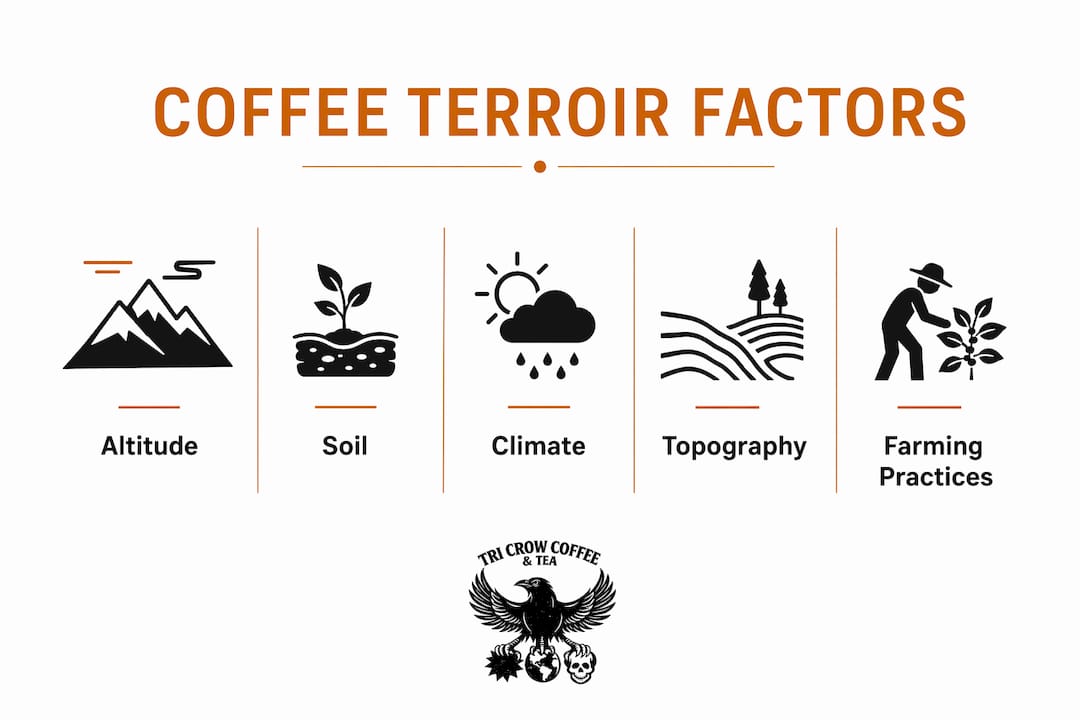
Altitude is the most discussed factor for good reason. Higher elevations slow cherry maturation, giving the plant more time to build sugars and complex acids inside each bean. Elevation above 1,200 meters is commonly linked with premium Arabica quality. Coffees from Ethiopia’s Sidama zone, grown above 1,800 meters, routinely show bright citrus acidity and floral notes that lower-grown beans simply cannot replicate.
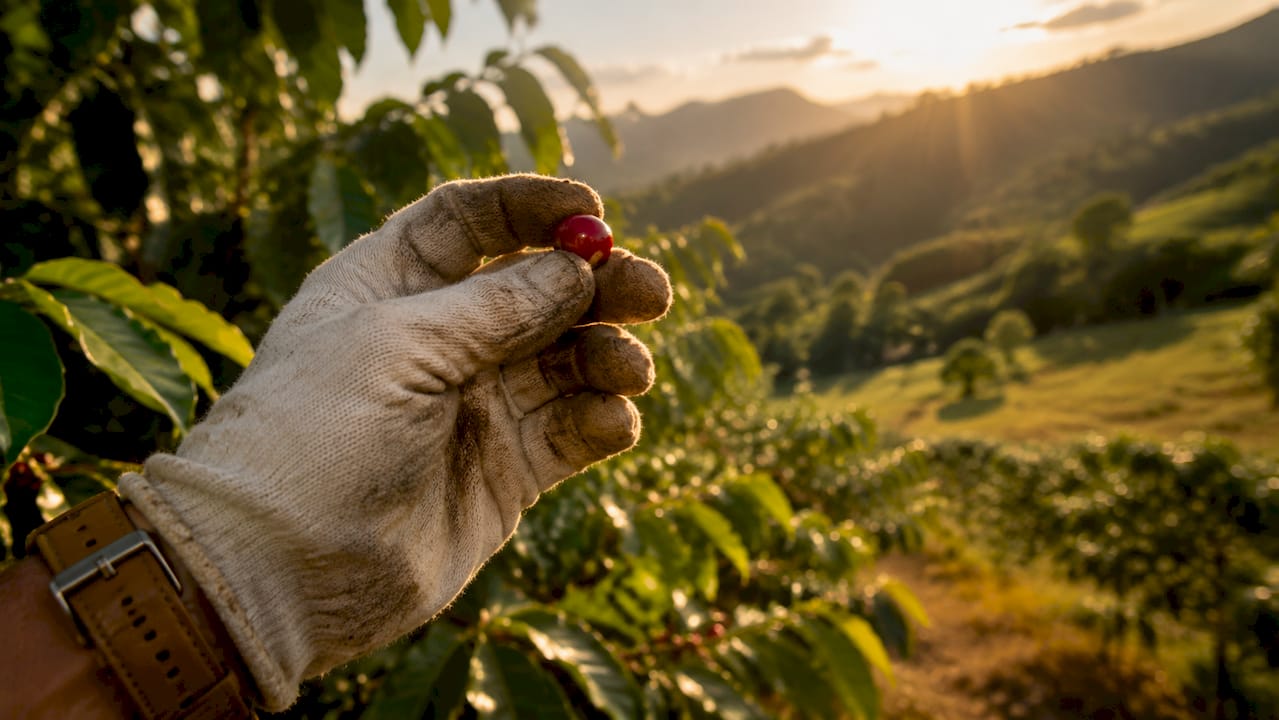
Soil composition is equally powerful, though less visible. Volcanic soils rich in phosphorus and potassium, found in origins like Guatemala and Ethiopia, contribute directly to root health and the development of flavor precursors in the cherry. Mineral-dense soil feeds the plant differently than sandy or clay-heavy ground, and that difference shows up in the cup as depth and sweetness.
Climate and microclimate factors include:
- Rainfall patterns: too much water dilutes sugars; too little stresses the plant and concentrates flavor
- Temperature ranges: cool nights slow metabolism and preserve delicate aromatic compounds
- Sunlight hours: direct sun increases photosynthesis and sugar production
- Wind and shade: wind patterns and biodiversity protect the plant and sustain long-term flavor potential
- Topography: slope direction and sun exposure create pockets of warmth or moisture that shift flavor within a single farm
Pro Tip: When reading a coffee bag, look for altitude listed in meters above sea level. Anything above 1,500 meters is a strong signal of terroir-driven complexity worth exploring.
How do micro-terroir and seasonality shape flavor?
Terroir is not a fixed property. It shifts across geography and across time, which is what makes specialty coffee endlessly interesting.
Micro-terroir refers to small-scale environmental variations within a single farm or estate that produce distinct flavor lots. A hillside plot facing east gets morning sun and cooler afternoons. A valley plot holds more moisture and stays warmer at night. Both plots may sit 200 meters apart, yet produce coffees that taste like they came from different countries. Specialty coffee buyers pay premiums for microlots that capture this nuance, because the flavor difference is real and repeatable within a single harvest.
The table below shows how two plots on the same farm can diverge in flavor based on micro-terroir conditions.
| Factor | East-Facing Hillside Plot | Valley Floor Plot |
|---|---|---|
| Morning sun exposure | High | Low |
| Nighttime temperature | Cooler | Warmer |
| Moisture retention | Lower | Higher |
| Typical flavor notes | Bright acidity, floral | Fuller body, earthy sweetness |
| Specialty buyer premium | Higher | Moderate |
Seasonality adds another layer. Terroir changes year to year based on rainfall totals and temperature swings during the growing season. A drought year in Colombia’s Huila region produces a different cup than a year with balanced rains, even from the same trees on the same plot. The specialty coffee industry embraces this variability rather than fighting it. Vintage variation is not a flaw. It is nature’s signature on each crop.
Pro Tip: If you find a single-origin coffee you love, buy an extra bag. The next harvest year will taste different. That is terroir working exactly as it should.
Terroir vs. varietal vs. processing: what is the difference?
These three terms overlap constantly in coffee conversations, and the confusion is understandable. Each one shapes flavor, but each one does it differently.
The clearest way to separate them: varietal is the coffee’s genetic voice, and terroir is its environmental accent. A Bourbon varietal grown in Rwanda will share certain genetic flavor tendencies with a Bourbon grown in El Salvador. But the Rwandan version carries the mineral character of volcanic lake-region soils and the brightness of high-altitude growing. The Salvadoran version carries the stone-fruit richness of its own climate. Same voice, different accent. You can explore this further in Tri Crow Coffee’s coffee varietal flavor guide.
Processing is the third variable. Washed, natural, and anaerobic processing methods determine how terroir’s flavor potential is expressed in the cup, but they do not change the terroir itself. A natural-processed Ethiopian coffee will taste fruitier and heavier than a washed coffee from the same farm. The terroir is identical. The processing amplified different compounds. Think of processing as the lens through which terroir is viewed, not the source of the image. Tri Crow Coffee’s guide on why processing matters breaks this down in full.
Here is how the three factors interact in practice:
- Terroir sets the flavor ceiling: the acids, sugars, and aromatic compounds available in the bean
- Varietal determines which flavor compounds the plant is genetically capable of producing
- Processing decides which of those compounds are amplified, muted, or transformed before roasting
No single factor works in isolation. The best specialty coffees align all three.
How can you recognize terroir in your cup?
Tasting terroir is a skill, and it builds with practice. The sensory cues are real and learnable.
Acidity is the most direct terroir signal. Bright, clean acidity in a Kenya AA or a Yirgacheffe points directly to high altitude and mineral-rich soil. Flat or muted acidity often signals lower-grown coffee or over-processing. Acidity is not a flaw. In terroir-expressive coffee, it is a feature.
Aroma carries terroir’s most complex information. Floral notes in Ethiopian coffees come from jasmine-like aromatic compounds that develop at high altitude in specific soil conditions. Earthy, tobacco-like notes in Sumatra coffees reflect the wet-hulled processing common there, layered over the volcanic soil character of the Mandheling region. Wine tasting parallels are genuinely useful here: the same trained attention to aroma that works for wine translates directly to coffee.
Body and sweetness reflect soil fertility and climate stability. Coffees from Guatemala’s Antigua region, grown in volcanic soil with consistent dry-season harvests, show a chocolate-and-caramel sweetness that is almost impossible to fake with roasting alone.
Follow these steps to start recognizing terroir in your own tasting:
- Choose a single-origin coffee with altitude and region listed on the bag
- Brew it black using a consistent method, pour-over or French press, to remove variables
- Note the first aroma before sipping: floral, fruity, earthy, or nutty
- Taste and identify the acidity level: bright and citrusy, mild and malic, or flat
- Consider the finish: does a flavor linger? Lingering finish often signals terroir complexity
- Compare two single-origins side by side to make differences concrete
Pro Tip: Coffee cupping, the formal tasting method used by professionals, is the fastest way to train your palate for terroir differences. Tri Crow Coffee’s guide on coffee cupping walks you through the process step by step.
Reading origin labels with altitude and farm information is the simplest consumer tool for identifying terroir-driven coffees. Bags that list only a country of origin tell you very little. Bags that list a specific region, farm, altitude, and varietal are telling you the full terroir story.
Key takeaways
Coffee terroir is the environmental foundation of every flavor in your cup, and understanding it makes every sip more intentional.
| Point | Details |
|---|---|
| Terroir is multi-factor | Altitude, soil, climate, topography, and farm practices all combine to set flavor potential. |
| Micro-terroir creates variety | Plots within the same farm can produce distinct flavor profiles based on sun exposure and moisture. |
| Seasonality means change | Year-to-year variation in rainfall and temperature shifts flavor even from the same trees. |
| Varietal and processing are separate | Varietal is genetic voice; terroir is environmental accent; processing expresses the result. |
| Labels reveal terroir | Bags listing altitude, region, and farm give you the clearest signal of terroir-driven quality. |
Terroir changed how i drink coffee
I spent years buying coffee by roast level and price. Dark roast meant bold. Light roast meant sour. That was the full extent of my framework. Then I tasted a washed Yirgacheffe next to a natural Sidama from the same harvest year, both roasted identically light, and the difference was so dramatic I had to set my cup down. One tasted like bergamot and jasmine. The other tasted like blueberry jam and dark chocolate. Same country. Same roast. Completely different cups.
That moment made terroir real for me in a way no article had. The flavor was not coming from the roaster’s skill. It was coming from the ground, the altitude, the microclimate of two different growing zones. Once you taste that difference, you cannot untaste it.
Sourcing terroir-expressive coffees is genuinely hard. Farms that manage micro-terroir carefully, separating hillside lots from valley lots, are rare. Roasters who preserve that work by roasting to the coffee rather than to a house profile are rarer still. When you find both in the same bag, it is worth paying attention to. Micro-terroir and seasonality mean the discovery never ends. Every new harvest is a new conversation with the same piece of land.
— David
Taste terroir for yourself with tri crow coffee
Understanding terroir is one thing. Tasting it is another.
Tri Crow Coffee sources with terroir in mind. The Tanzania single-origin is a direct example: a medium-light roast with detailed farm origin information that lets you taste exactly what altitude and volcanic soil do to a bean. For a broader exploration, the best sellers sample pack puts six distinct coffees from different origins side by side, making terroir differences concrete and personal. Each batch is roasted in small quantities so the origin character stays intact from field to cup.
FAQ
What is the simplest coffee terroir definition?
Coffee terroir is the set of environmental and farming conditions, including altitude, soil, climate, and topography, that shape a coffee’s flavor before processing or roasting begins.
How does altitude affect coffee terroir and flavor?
Higher altitudes slow cherry maturation, producing denser beans with greater acidity and more complex flavor compounds. Elevation above 1,200 meters is commonly associated with premium Arabica quality.
What is the difference between terroir and coffee varietal?
Varietal is the coffee plant’s genetic makeup, which determines its flavor potential. Terroir is the environmental accent that shapes how those genetic flavors actually express in the cup.
Can terroir change from year to year?
Yes. Seasonality means rainfall and temperature differences shift flavor profiles annually, even from the same farm and trees. This variability is a natural part of terroir-driven coffee.
How do i find coffees that showcase terroir?
Look for single-origin or microlot coffees with specific altitude, region, and farm information on the bag. These details signal that the producer and roaster are treating terroir as a quality indicator worth communicating.