
TL;DR:
- Micro lot coffee consists of small, traceable batches sourced from specific farm plots with distinctive soil and microclimate influences. These highly curated coffees offer complex flavors, often scoring above 87 on the SCA scale, and require detailed lot information for authentic quality. Proper brewing techniques like pour-over and fresh grinding are essential to fully experience their unique terroir-driven characteristics.
Micro lot coffee is defined as a small, highly traceable batch of coffee beans sourced from a specific plot of land within a single farm, produced with exceptional care to highlight distinct flavor characteristics. The term “microlot” is the recognized industry term used by specialty coffee professionals, including those operating under Specialty Coffee Association (SCA) standards. These lots typically yield fewer than 100 bags, making them rare by nature. That scarcity is not a marketing trick. It reflects the intense labor, selective harvesting, and precise processing that go into every batch. If you want to understand why some cups taste like nothing you have ever had before, micro lot coffee is the answer.
What is micro lot coffee and how is it sourced?
Micro lot coffee production starts at the plot level, not the farm level. A producer identifies a specific block of land with distinct soil composition, altitude, or microclimate, then harvests and processes that block completely separately from the rest of the farm. This separation is what makes traceability possible. You can trace a micro lot back to the exact field, the harvest date, and the processing method used.
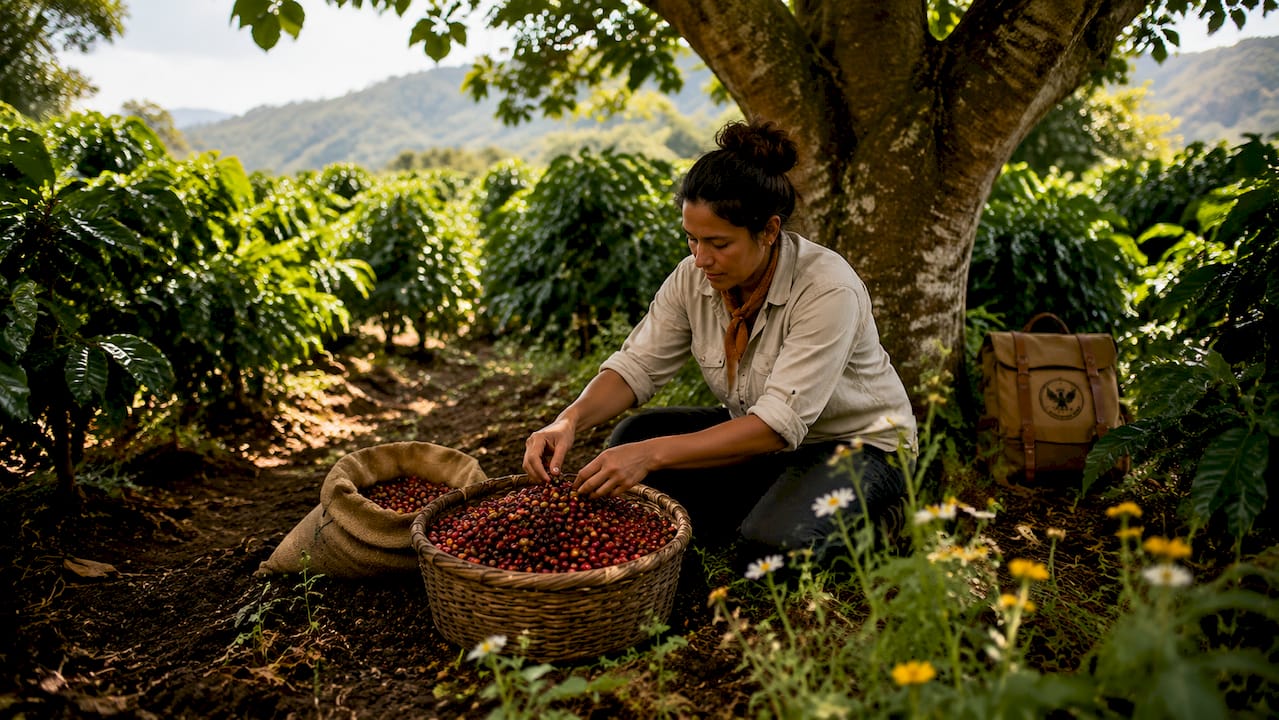
Terroir drives flavor variability in a way that bulk coffee never captures. Two plots on the same farm, separated by 200 feet of elevation, can produce cups that taste completely different. Soil mineral content, surrounding vegetation, rainfall patterns, and shade coverage all shape what ends up in your cup.
Selective harvesting is standard practice for micro lots. Pickers hand-sort cherries at the tree, choosing only those at peak ripeness. This contrasts sharply with strip harvesting, where everything comes off the branch at once regardless of ripeness. The result is a cleaner, more consistent raw material before processing even begins.
Experimental processing methods like anaerobic fermentation and fruit-added fermentation have grown significantly in micro lot production from 2023 through 2026. These techniques allow producers to amplify or reshape flavor compounds in ways that traditional washed or natural processing cannot. Understanding how processing shapes flavor helps explain why two micro lots from the same origin can taste dramatically different.
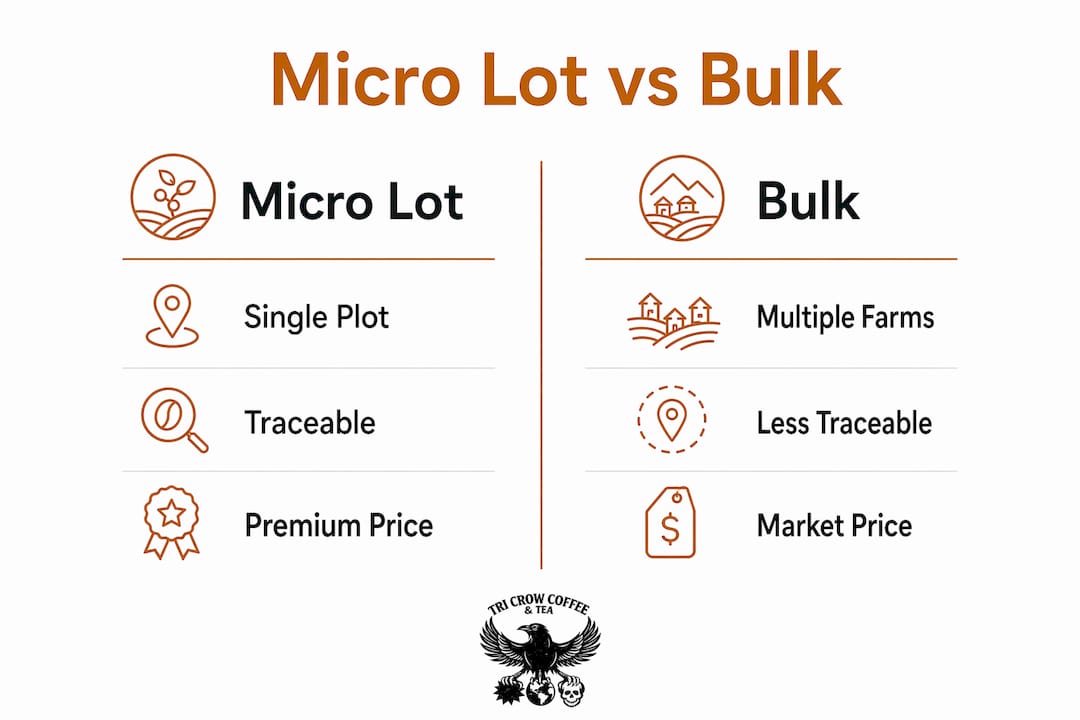
Micro lot vs. bulk coffee: key differences
| Factor | Micro Lot Coffee | Bulk Coffee |
|---|---|---|
| Source | Single farm plot, specific block | Multiple farms or regions blended |
| Harvest method | Hand-picked, selectively sorted | Strip or machine harvested |
| Processing | Experimental or precision methods | Standard washed or natural |
| Volume | Fewer than 100 bags per lot | Thousands of bags per shipment |
| Traceability | Farm block, harvest date, method | Region or country level only |
| Pricing | Fixed, premium, market-independent | Tied to commodity C-market rates |
Pro Tip: When evaluating a micro lot, look for the lot card. A legitimate micro lot listing includes the farm block name, the harvest date, the processing method, and the producer’s name. If those details are missing, the label may not reflect true micro lot production.
How do micro lot coffees taste differently?
Flavor is the most compelling reason to seek out micro lot coffee. These cups go well beyond the standard chocolate, nut, and caramel notes that define most commercial roasts. A well-sourced micro lot might deliver jasmine florals, ripe stone fruit, fermented berry, black tea, or even savory umami notes depending on the origin and processing method.
Micro lot coffees commonly score above 87 or 88 on the SCA’s 100-point quality scale. That score places them firmly in specialty territory, where flavor complexity and clean cup quality are non-negotiable. To put that in context, most commercially sold coffee scores below 80.
The SCA score matters, but it is not the whole story. The “micro lot” label carries no legal definition and no regulatory standard. The label alone does not guarantee quality. A producer can call anything a micro lot. What actually signals quality is the combination of a high SCA score, detailed traceability information, and a roaster with a track record of honest sourcing. Learning to read coffee flavor profiles helps you evaluate what you are tasting against what the label claims.
Common micro lot coffee tasting notes and characteristics include:
- Floral: Jasmine, rose, lavender (common in Ethiopian Yirgacheffe micro lots)
- Fruit-forward: Blueberry, mango, passionfruit, peach (natural and anaerobic processed lots)
- Bright acidity: Citrus, tamarind, malic acid (high-altitude washed lots from Colombia or Kenya)
- Savory complexity: Black tea, tobacco, dark chocolate with fermented notes (experimental processing)
- Sweetness: Brown sugar, honey, caramel with clean finish (well-sorted, ripe cherry lots)
The flavor range is wide because terroir and processing interact in unpredictable ways. That unpredictability is part of the appeal. Each lot is a one-time agricultural event that cannot be exactly replicated.
How to buy and brew micro lot coffee at home
Buying micro lot coffee well requires reading the lot card, not just the bag design. The most important details are the farm or block name, the harvest date, the processing method, and the variety. These four data points tell you more about what is in the bag than any tasting note written by a marketing team. Traceability details like farm block and processing method are the real indicators of micro lot authenticity.
Price is a reliable signal too. Micro lots cost more because intensive labor and sorting drive up production costs significantly. A bag priced at commodity rates is almost certainly not a true micro lot. Expect to pay a premium, and understand that premium reflects a resource-heavy agricultural process, not just a marketing label.
Brewing micro lot coffee correctly matters as much as buying it well. Follow these steps to get the most from your cup:
- Grind fresh. Use a burr grinder and grind immediately before brewing. Pre-ground coffee loses volatile aromatics within minutes, and micro lot flavor depends on those aromatics.
- Use filtered water at 200°F. Water quality directly affects extraction. Chlorinated tap water mutes delicate floral and fruit notes.
- Choose a pour-over method. Brewing with a Hario V60, Chemex, or Kalita Wave gives you control over extraction and lets the full flavor profile come through without interference from paper or metal filters altering the cup.
- Start with a 1:15 coffee-to-water ratio. Micro lots are often more soluble than commodity coffee due to higher quality processing. Start lighter and adjust to taste.
- Taste it black first. Milk and sugar mask the exact notes that make micro lot coffee worth the price. Taste it plain before adding anything.
Pro Tip: Brew the same micro lot twice using different methods, such as pour-over and French press, and compare the results side by side. The difference in texture, clarity, and flavor intensity will teach you more about that coffee than any tasting note ever could.
For more guidance on selecting quality beans before you brew, the details you look for at purchase directly shape what ends up in your cup.
Where do micro lots fit in the specialty coffee market?
Micro lots serve a specific strategic role for roasters and producers alike. For roasters, a micro lot functions as a hero SKU, a flagship offering that signals quality, sourcing relationships, and expertise to discerning buyers. For consumers, micro lots offer a way to benchmark their palate against isolated, terroir-driven flavors that blends cannot replicate.
The pricing structure of micro lots also sets them apart from commodity coffee. Micro lot prices are fixed independently of the C-market, the commodity exchange that drives prices for bulk coffee. That stability benefits producers, who receive predictable income regardless of market swings, and buyers, who pay a consistent premium tied to quality rather than speculation.
Producers rarely treat an entire farm as a micro lot operation. Only select plots undergo micro lot production because the cost and labor required make it unsustainable at scale. Most farms balance a small micro lot program with larger bulk production to manage financial risk. When you buy a micro lot, you are paying for a deliberate agricultural experiment that most of the farm’s output never receives.
Micro lot market dynamics at a glance
| Market Factor | Micro Lot | Commodity Coffee |
|---|---|---|
| Pricing model | Fixed, producer-set premium | C-market commodity rate |
| Volume availability | Extremely limited, seasonal | Year-round, high volume |
| Consumer appeal | Specialty, flavor-driven buyers | Mass market, convenience buyers |
| Roaster strategy | Hero SKU, brand differentiation | Blend base, cost management |
| Producer risk | High labor cost, limited yield | Lower per-unit cost, higher volume |
Current 2026 coffee trends show growing consumer interest in specific varietals and experimental processing methods, both of which are central to the micro lot experience. That interest is pushing more roasters to invest in direct sourcing relationships with producers who can deliver consistent micro lot quality season after season.
Key takeaways
Micro lot coffee delivers flavor complexity and traceability that commodity coffee cannot match, but the label only holds value when backed by detailed lot information and honest sourcing.
| Point | Details |
|---|---|
| Micro lot definition | A small, traceable batch from a specific farm plot, typically fewer than 100 bags. |
| Quality signal | Look for SCA scores above 87 and full lot details, not just the label. |
| Flavor range | Expect florals, stone fruit, bright acidity, or savory notes depending on terroir and processing. |
| Brewing approach | Use pour-over methods, fresh-ground beans, and filtered water to preserve delicate flavors. |
| Market role | Micro lots offer fixed pricing, producer stability, and a benchmark for specialty palate development. |
Why micro lots changed how i think about coffee
I used to think the origin story on a coffee bag was mostly decoration. A farm name, a region, maybe an altitude number. Then I tasted a washed Gesha from a single plot in Panama, and the cup tasted like jasmine tea and white peach. Nothing I had ever brewed at home came close to that clarity.
What shifted for me was understanding that micro lot coffee is not just a premium product. It is a record of a specific place and moment in time. The soil, the weather that season, the decisions a farmer made about when to pick and how to ferment. That cup cannot be reproduced exactly. The next harvest will be different.
The part most people miss is that the label is almost meaningless without the details behind it. I have tasted bags labeled “micro lot” that were indistinguishable from a grocery store blend. And I have tasted unlabeled single-farm coffees that were extraordinary. The word is a starting point, not a guarantee.
My advice: find a roaster who publishes full lot information and can tell you about the producer by name. That transparency is the real signal. When a roaster knows the farmer, knows the processing method, and can explain why this specific plot tastes the way it does, you are in good hands. Everything else is just packaging.
— David
Explore micro lot and single origin coffees at tri crow coffee
Tri Crow Coffee sources and roasts in small batches specifically to preserve the kind of flavor clarity that micro lot production makes possible. Every roast is produced in limited quantities, so the character of each origin stays intact from farm to cup.
If you are ready to taste the difference that traceability and intentional sourcing make, the single origin coffee collection at Tri Crow Coffee is the place to start. Each selection is chosen for distinct flavor profiles and honest sourcing, giving you a direct line to the kind of cup this article has been describing. Explore the full range and find the origin that speaks to you.
FAQ
What is the micro lot coffee definition in simple terms?
Micro lot coffee is a small, traceable batch of beans sourced from a specific plot within a single farm, produced with selective harvesting and precise processing to highlight unique flavors.
What makes coffee qualify as a micro lot?
No legal standard defines the term, but true micro lots are traceable to a specific farm block, include harvest date and processing method details, and typically yield fewer than 100 bags per lot.
How do micro lot coffee tasting notes differ from regular coffee?
Micro lot coffees often deliver complex notes like jasmine, stone fruit, bright citrus, or fermented berry, well beyond the chocolate and nut profiles common in commodity roasts.
What is the best way to brew micro lot coffee at home?
Pour-over methods like the Hario V60 or Chemex work best. Use freshly ground beans, filtered water at 200°F, and a 1:15 coffee-to-water ratio to let the full flavor profile come through.
Is micro lot coffee worth the higher price?
For flavor-driven coffee drinkers, yes. The premium reflects intensive hand-sorting, selective harvesting, and experimental processing that commodity coffee never receives, producing a cup that is genuinely one of a kind.