
Batch brew gets written off as glorified drip coffee. That’s the misconception holding a lot of home brewers back from one of the most consistent, scalable brewing methods available. What is batch brew, really? It’s an automated brewing process that replicates the precision of pour-over at volume, using controlled water temperature, timed dispersal, and measured ratios to produce repeatable, high-quality results cup after cup. This guide breaks down how the batch brew coffee method works, the parameters that matter, how it compares to manual methods, and what you can do right now to get better results at home.
Table of Contents
Key takeaways
| Point | Details |
|---|---|
| Batch brew is automated precision | It replicates pour-over consistency at scale using controlled temperature, timing, and ratio. |
| Ratios and grind size are non-negotiable | Use a 1:15 to 1:18 ratio and a medium-coarse grind to avoid sour or bitter results. |
| Thermal carafes protect flavor | Glass pots on heating plates ruin coffee within 30 minutes; a thermal carafe preserves it for hours. |
| Batch size affects extraction quality | Brewing smaller, optimized batches produces better flavor than oversized single batches. |
| Documentation drives improvement | Tracking ratios, grind settings, and brew times turns guesswork into a repeatable craft. |
What is batch brew and how does it work?
Batch brew is an automated coffee brewing method that produces a large quantity of coffee in a single cycle, using a machine to manage water heating, dispersal, and extraction. Think of it as the machine doing exactly what a skilled barista would do with a pour-over kettle, but consistently, every single time, without the need for hands-on attention.
The batch brewing process works like this: the machine heats water to a precise temperature, then disperses it evenly over a bed of ground coffee sitting in a filter basket. Gravity pulls the brewed coffee down into a thermal carafe or serving pot below. The whole cycle is automated and repeatable. Once you dial in your recipe, the machine handles the rest.
Here’s what the core components of a batch brewer actually do:
-
Water heater: Brings water to the optimal brewing temperature range and holds it there throughout the cycle.
-
Spray head (showerhead): Distributes hot water evenly across the entire coffee bed to promote uniform extraction.
-
Filter basket: Holds the ground coffee and paper or metal filter; its size relative to your dose matters more than most brewers realize.
-
Thermal carafe: Captures the brewed coffee and keeps it at temperature without a heating element that would cook the coffee and destroy flavor.
The key distinction between batch brew and a standard home drip machine is engineering intent. Consumer drip machines are built for convenience and low cost. Batch brewers, including prosumer home models, are designed to hit consistent temperature and timing with the kind of control that actually affects flavor. That gap in precision is where most people’s “it’s just drip coffee” assumption falls apart.
Compared to manual methods like pour-over, batch brew trades hands-on control for repeatability. A pour-over gives you the ability to adjust bloom time, pour rate, and agitation on the fly. Batch brew sets those parameters once and reproduces them reliably. For anyone brewing for a group, running a home coffee station before work, or experimenting with recipes they want to repeat exactly, that trade-off is entirely worth it.
Dialing in your batch brew recipe
Getting the most out of batch brewing comes down to four variables: ratio, grind size, brew time, and water temperature. Get these right and you have a recipe you can reproduce indefinitely.
-
Coffee-to-water ratio. The optimal ratio range sits between 1:15 and 1:18. Most cafes settle at 1:16 to 1:17 for balanced strength. In practical terms, that means roughly 55 to 60 grams of coffee per liter of water. Start at 1:16 and adjust from there based on how you like your cup.
-
Grind size. Medium-coarse is the target, roughly the texture of kosher salt. Too fine and you’ll choke the flow rate, extending contact time and pushing bitterness. Too coarse and water passes through too fast, leaving you with a weak, sour, underdeveloped cup.
-
Brew time. For a standard batch around 1.8 liters, brew time should fall between 4 and 8 minutes. Under 4 minutes points to too coarse a grind or too small a dose. Over 8 minutes usually signals too fine a grind or channeling in the coffee bed.
-
Water temperature. Stay between 195°F and 205°F. Below that range, extraction stalls and you’ll taste sourness and flatness. Above it, you risk scorching the grounds and pulling harsh, bitter compounds.
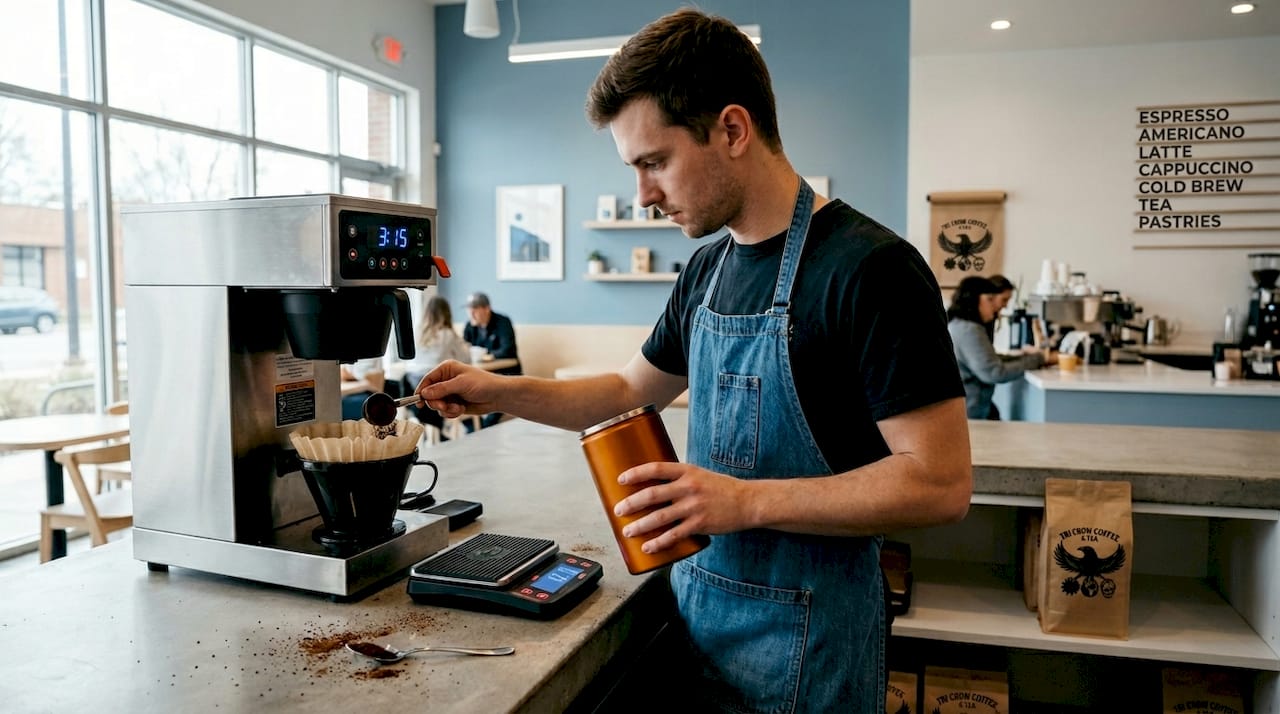
Precision in measurement matters as much as knowing the numbers. Weigh your coffee and water every time, at least while you’re dialing in a new recipe. A kitchen scale with 0.1g accuracy removes the inconsistency that comes from scooping by volume. Pair that with a timer and you’ll have the data you need to troubleshoot any cup that doesn’t taste right.
Pro Tip: When changing your batch brew recipe, adjust only one variable at a time. Change the dose, taste the result, then decide whether to move the grind. Changing two things at once makes it impossible to know what actually improved the cup.
Batch brew vs pour-over: which should you use?
This comparison gets framed as quality versus convenience, but that’s too simple. The real question is what you’re trying to accomplish.
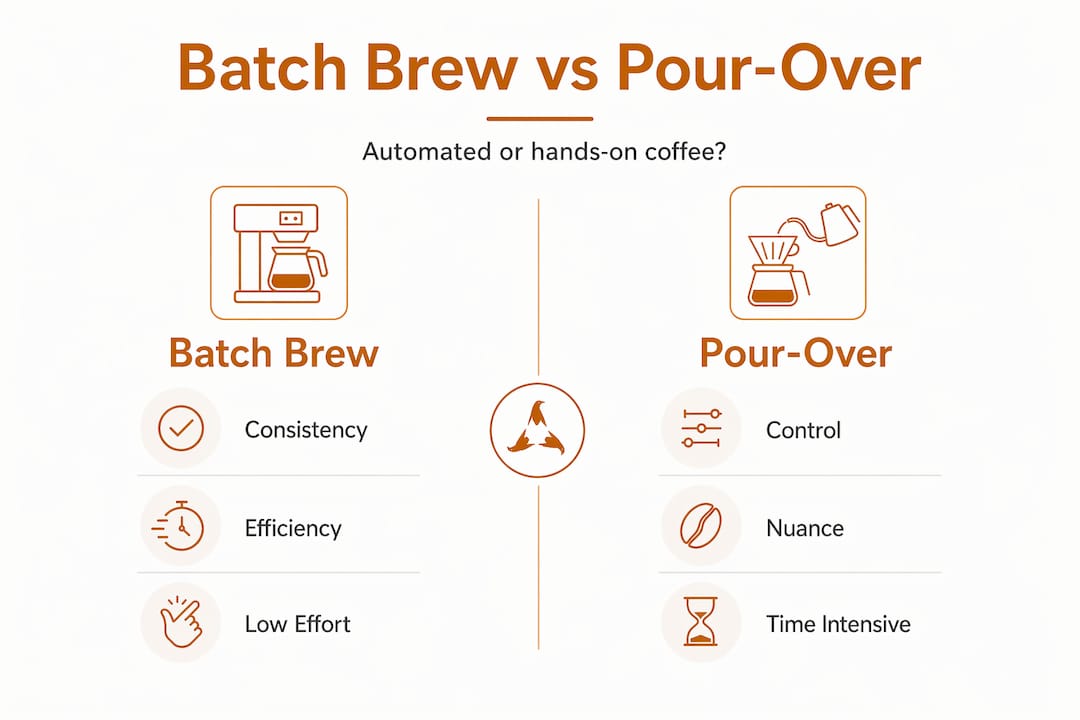
| Factor | Batch brew | Pour-over |
|---|---|---|
| Consistency | Very high (automated) | Variable (skill-dependent) |
| Volume | High (6 to 12+ cups per cycle) | Low (1 to 2 cups) |
| Flavor control | Moderate (set-and-repeat) | High (adjustable in real time) |
| Time investment | Low (hands-off after setup) | High (active attention required) |
| Skill ceiling | Moderate | High |
| Best for | Groups, busy mornings, cafes | Single cups, flavor exploration |
Batch brew provides consistency and efficiency that manual methods simply cannot match at volume. A barista dials in a recipe once, and the machine reproduces it across every subsequent batch. That repeatability is not a limitation. It’s the point.
Pour-over’s advantage is its ceiling. When you understand coffee extraction principles deeply, you can coax nuance from a single-origin bean in ways a batch brewer cannot fully replicate. The manual control over bloom, pour speed, and agitation lets you highlight delicate floral or fruit notes that batch brewing can sometimes flatten.
The practical answer: use batch brew when you’re brewing for multiple people or want a reliable daily cup without ceremony. Use pour-over when you want to explore a specific bean’s character or you’re brewing one cup with full attention. Many serious home brewers use both, and there’s no reason you have to choose.
Practical tips for better batch brewing at home
The gap between an average and an excellent batch-brewed cup often comes down to small decisions that get overlooked. Here’s where most home brewers leave quality on the table.
Match your batch size to your machine. Brewing a half-batch in a full-sized filter basket creates a shallow coffee bed that water passes through unevenly. If you need a smaller volume, increase your dose rather than adjusting your grind size. A deeper bed with the standard grind produces a more uniform extraction than a thin bed with a finer grind.
Switch to a thermal carafe immediately. If your machine uses a glass pot on a heating plate, that plate is actively destroying the coffee you just brewed. Glass pots ruin flavor within 30 minutes by continuing to heat the coffee and triggering chemical breakdown. A thermal carafe keeps coffee fresh for 2 to 3 hours with no heat source needed.
Brew smaller batches, more often. The optimal batch size for most home brewers is around 12 cups, roughly 1.8 liters. Brewing beyond that point causes uneven water distribution and inconsistent extraction. If you need more coffee, brew two smaller batches instead of one large one.
Additional habits that consistently improve results:
-
Grind fresh. Use a burr grinder and grind immediately before brewing. Pre-ground coffee loses volatile aromatic compounds within minutes of grinding, and those compounds are what make a cup interesting. Choosing the right whole beans matters just as much as grinding them fresh.
-
Clean your equipment regularly. Coffee oils build up in the basket, spray head, and carafe. Those oils go rancid and contaminate future brews. Rinse after every use and run a full descale cycle monthly.
-
Keep a brewing log. Write down your dose, grind setting, water volume, and brew time for every session. Note what you tasted. This is how you build a recipe that’s genuinely yours.
Pro Tip: If your batch brew tastes hollow or thin but your ratio is correct, check your water temperature before adjusting anything else. Many home brewers blame their grind when the machine is simply not reaching 195°F.
My honest take on batch brewing
I’ll be direct: batch brewing converted me. I came from a manual-only approach where I was convinced that hands-on control was the only way to get a cup worth drinking. What changed my thinking wasn’t convenience. It was the data.
When I started tracking ratios and grind settings the way I would any other repeatable process, I realized how many variables I was casually ignoring during manual brewing. Batch brewing forced me to get specific. Once I was specific, I could improve systematically rather than hoping each cup came out right.
The biggest mistake I see home brewers make is treating batch brewing like a set-it-and-forget-it appliance while expecting specialty-level results. You still have to do the work upfront. You dial in the ratio, you choose a bean with the flavor profile you want, you learn how your machine behaves. After that, the machine rewards your preparation with consistency that’s genuinely hard to match by hand.
My suggestion: brew manageable batches repeatedly rather than trying to push your machine’s maximum volume. Brew the same recipe five times, adjust one thing each time, and taste every cup critically. That process of documented iteration, treating each batch as a data point rather than just a drink, is what separates a good home batch brewer from a great one. It’s less romantic than a slow pour-over ritual, but the results speak plainly.
— David
Brew better with Tri Crow Coffee
If you’re ready to put these techniques into practice, the coffee you choose makes as much difference as your parameters. Tri Crow Coffee sources and roasts in small batches specifically to give home brewers the freshness and consistency that batch brewing rewards.
The Mint Coffee in coarse grind is ground precisely for batch brewing methods, taking one variable completely off your plate. For those who want bold, clean extraction, the French Roast holds up beautifully through the full batch brew cycle without turning harsh. Every Tri Crow Coffee blend is crafted in limited quantities so you get the freshest possible starting point for your recipe. Explore the full range at Tri Crow Coffee and find the beans your batch brewer deserves.
FAQ
What is batch brew coffee?
Batch brew is an automated method that brews a large quantity of coffee in one cycle by heating water and dispersing it evenly over a bed of ground coffee. It produces consistent, repeatable results with less hands-on effort than manual brewing methods.
How is batch brew different from regular drip coffee?
Batch brew uses precisely controlled water temperature, timed dispersal, and exact ratios to replicate the quality of pour-over at scale. Standard consumer drip machines prioritize convenience over brewing precision, which produces a noticeably less refined cup.
What grind size should I use for batch brew?
A medium-coarse grind, similar in texture to kosher salt, is the standard recommendation for batch brewing. This grind size supports the 4 to 8 minute brew time needed for balanced extraction without bitterness or sourness.
How long does batch brew coffee stay fresh?
Batch brew coffee stays fresh for 2 to 3 hours in a thermal carafe. In a glass pot sitting on a heating plate, flavor degrades within 30 minutes as the continued heat breaks down the coffee’s compounds.
Can I brew a small batch in a full-size batch brewer?
You can, but you should increase your dose rather than adjusting your grind. A shallow coffee bed in a full basket causes uneven extraction. A deeper bed with a standard grind produces a more consistent and flavorful result.