
TL;DR:
- Proper coffee storage involves using airtight, opaque containers in a cool, dark, dry place to block air, light, heat, and moisture that degrade flavor. Freezing in single-use portions with minimal thawing preserves freshness and prevents moisture damage, while buying roast dates ensures peak quality within three to four weeks. Avoid storing beans in the refrigerator or open containers, and always label for freshness to maintain optimal flavor.
Proper coffee bean storage is defined by one principle: block the four enemies of freshness. Air, light, heat, and moisture degrade flavor faster than most coffee drinkers realize, and a fifth threat, strong odors, can quietly ruin even a premium roast. Knowing how to store coffee beans correctly means choosing the right container, the right location, and the right habits before you ever open a bag. Sources like The Kitchn and Partners Coffee agree that an airtight, opaque container in a cool, dark cupboard is the gold standard for daily storage. Get these basics right, and your beans will taste as good on day 21 as they did on day one.
What are the ideal conditions for storing coffee beans at home?
The best way to store coffee at home is in a cool, dark, and dry environment at room temperature, ideally between 65°F and 75°F. That range keeps the oils in your beans stable and slows the oxidation that flattens flavor. Most kitchens have at least one spot that qualifies. The challenge is avoiding the spots that do not.
These locations are the worst places to keep your beans:
- Near the oven or stovetop. Heat spikes every time you cook, and repeated exposure breaks down aromatic compounds fast.
- On a windowsill or open counter. Direct sunlight accelerates oxidation and can raise the surface temperature of a container by 10°F or more.
- Next to the dishwasher. Steam and heat cycle out constantly, creating the humidity that coffee absorbs like a sponge.
- On top of the refrigerator. The compressor generates warmth, and the location is rarely as cool as it feels.
A pantry shelf or a closed cabinet away from appliances is the right call. The goal is thermal stability. Beans do not need cold air. They need consistent air. Fluctuating temperatures cause the same condensation damage as improper freezing, just more slowly.
Pro Tip: Label your container with the roast date the moment you transfer beans. You will always know exactly how old your supply is, and you will stop guessing when it is time to reorder.
Which containers best preserve coffee bean freshness?
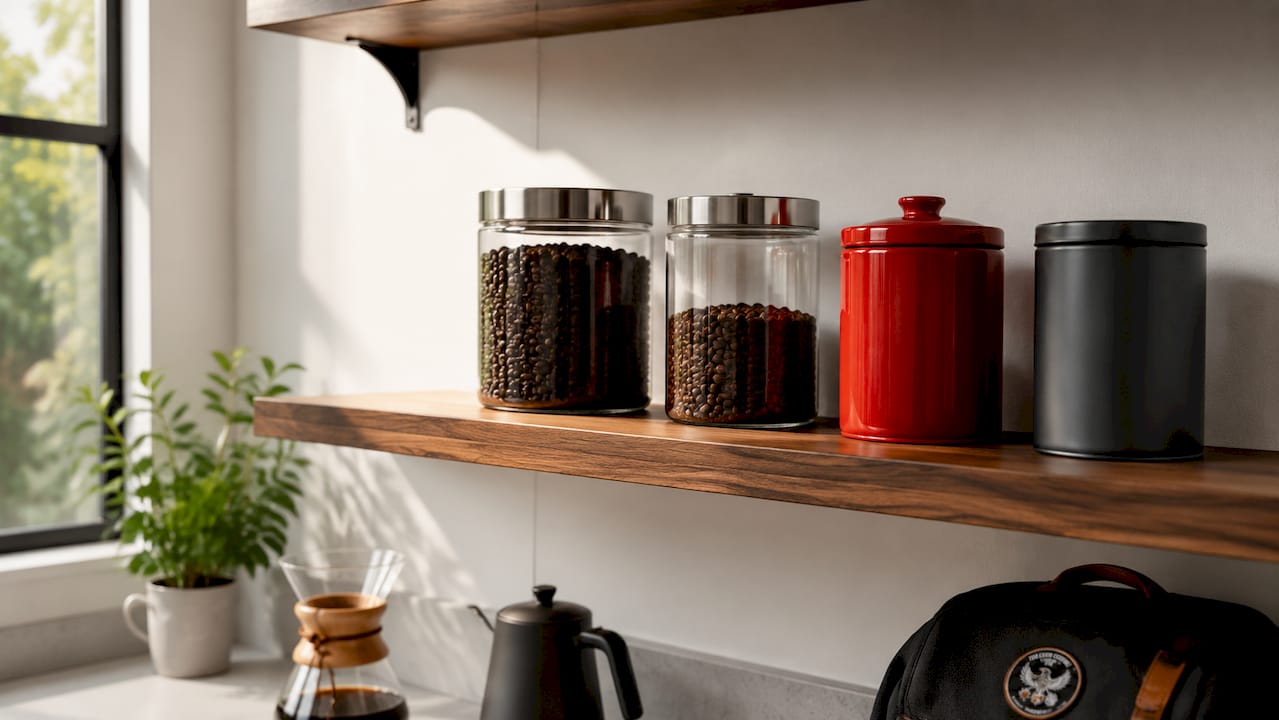
Airtight, opaque containers are the non-negotiable standard for preserving coffee at home. The container blocks two of the four main threats simultaneously: air and light. Material choice matters less than the seal and opacity, but ceramic, stainless steel, and BPA-free polymer canisters all perform well in practice.
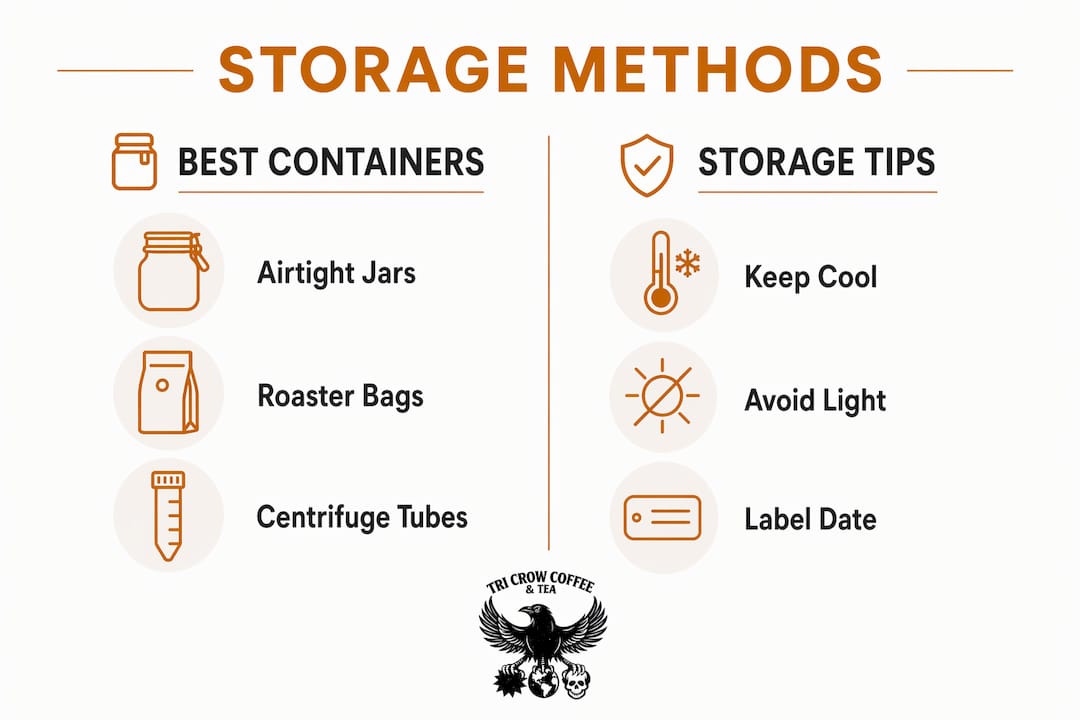
Many roasters, including small-batch producers like Tri Crow Coffee, ship beans in multi-laminate bags with a one-way CO2 valve. Original roaster bags with a one-way valve and a tight reseal often outperform household containers because they vent off-gassing CO2 while blocking outside air. If the bag reseals firmly and the valve is intact, you do not need to transfer beans at all for the first week or two.
Here is how the most common storage options compare:
| Container Type | Pros | Cons |
|---|---|---|
| Roaster bag with one-way valve | Vents CO2, blocks air and light | Degrades after repeated opening |
| Ceramic canister with airtight lid | Opaque, stable, attractive | No CO2 venting, pricier |
| Stainless steel canister | Durable, blocks light completely | Can retain heat if left near stove |
| Glass jar with rubber seal | Easy to find, inexpensive | Transparent unless stored in dark space |
| Vacuum-sealed bag | Removes oxygen entirely | Requires vacuum sealer equipment |
| Medical-grade centrifuge tubes | Single-dose precision, freezer-safe | Niche, requires advance portioning |
The most interesting option on that list is the centrifuge tube. Specialty coffee enthusiasts use medical-grade centrifuge tubes to store single doses of beans, which allows them to freeze portions and grind directly without exposing the remaining supply to moisture. It sounds extreme until you taste the difference.
Pro Tip: If you want to extend the life of your original roaster bag, heat-seal the bag after squeezing out the air using a hair straightener set to low heat. Run it across the top fold twice. It mimics a factory seal and costs nothing.
How and when should you freeze coffee beans?
Freezing is the right move for long-term storage, not daily use. Freezing in small, airtight, vacuum-sealed containers preserves quality for up to 3–4 months with minimal flavor loss, provided you follow the process correctly. The biggest mistake people make is treating the freezer like a pantry, pulling beans out and putting them back repeatedly.
Condensation from repeated temperature changes is the primary cause of freezer-related staleness. Every time a cold bean hits warm air, moisture forms on the surface. That moisture seeps into the porous structure of the bean and degrades the oils that carry flavor. One freeze-thaw cycle done correctly causes no damage. Five cycles done carelessly ruin the bag.
Follow this process to freeze beans without sacrificing quality:
- Portion before freezing. Divide your beans into weekly or single-brew amounts immediately after purchase. Use vacuum-sealed bags or airtight freezer-safe containers for each portion.
- Remove all air. Press out every pocket of air before sealing. A vacuum sealer is ideal. If you do not own one, use the displacement method: submerge the bag in water to force air out before sealing.
- Label each portion. Write the roast date and freeze date on every container. Beans frozen within a few days of roasting retain the most flavor.
- Freeze once. Commit each portion to a single freeze-thaw cycle. Never return thawed beans to the freezer.
- Thaw before opening. Move a portion to your counter and let it reach room temperature before opening the container. This prevents condensation from forming on the beans themselves.
- Use within two weeks of thawing. Once thawed, treat the beans exactly like fresh beans and consume them promptly.
Pro Tip: Centrifuge tubes are ideal for the freezer portioning method. Each tube holds a single dose, seals completely, and goes straight from freezer to grinder without exposing the rest of your supply.
What mistakes ruin coffee bean freshness?
Most coffee storage failures come from a short list of avoidable errors. Knowing what goes wrong makes it easy to fix.
- Storing in a clear container on the counter. Glass jars look great but expose beans to light every time the kitchen light turns on.
- Keeping beans in the refrigerator. The fridge is humid, and coffee absorbs odors easily due to its porous structure. Beans stored next to leftovers will taste like them.
- Buying in bulk without a freeze plan. A 5-pound bag consumed over three months at room temperature will be stale by week five.
- Leaving the bag open between uses. Even a loosely folded top lets oxygen in continuously.
- Repeated freezer cycling. Pulling beans in and out of the freezer causes the condensation damage described above.
Here is how each mistake affects your cup:
| Mistake | Flavor Impact |
|---|---|
| Clear container in light | Flat, oxidized taste within days |
| Fridge storage | Off-flavors from absorbed odors |
| Bulk room-temp storage | Stale, papery taste after 4–5 weeks |
| Open bag between uses | Rapid loss of aroma and brightness |
| Repeated freeze-thaw cycles | Musty, muted flavor profile |
Stale beans are easy to identify. The aroma fades first. Fresh beans smell sharp and complex the moment you open the container. Stale beans smell faintly of cardboard or nothing at all. If the grind produces almost no bloom when you brew, the beans have lost most of their CO2 and are past their peak.
How should you buy coffee beans with storage in mind?
Roast date is the most reliable indicator of freshness, and you should never buy coffee without one printed on the bag. A “best by” date tells you almost nothing. A roast date tells you exactly where you stand.
Buying with storage in mind means matching purchase quantity to your actual consumption rate. Here are the practical rules:
- Buy for 2–4 weeks of use at room temperature. Most whole beans stay at peak flavor for 3–4 weeks after roasting when stored correctly.
- Check the roast date before buying. Beans roasted more than four weeks ago are already declining, regardless of how they are stored.
- Buy smaller bags more often rather than large bags less often. Freshness compounds over time. A 12-ounce bag purchased weekly beats a 3-pound bag purchased monthly.
- Plan your freeze supply separately. If you want a 3-month supply, portion and freeze the excess immediately after purchase, not after the beans have been sitting out for two weeks.
Tri Crow Coffee roasts in small batches specifically to give you beans at peak freshness. That approach only pays off if you store them correctly after they arrive. Buying fresh and storing poorly is the most common way coffee enthusiasts undercut their own investment.
Key takeaways
Proper coffee bean storage requires airtight, opaque containers in a cool, dark, dry location, with freezing reserved for long-term portions using a strict single-cycle thaw process.
| Point | Details |
|---|---|
| Block the four enemies | Air, light, heat, and moisture degrade flavor; your container and location must address all four. |
| Use airtight, opaque containers | Ceramic, stainless steel, or original roaster bags with one-way valves all work well for daily storage. |
| Freeze in single-use portions | Divide beans before freezing and thaw each portion once, sealed, at room temperature before opening. |
| Buy by roast date | Never purchase coffee without a visible roast date; consume within 2–4 weeks for peak flavor. |
| Avoid the fridge for daily use | Refrigerator humidity and odors degrade coffee faster than proper pantry storage. |
What i have learned from years of storing coffee beans
I have tried nearly every storage method described in this article, and the one that changed my daily routine most was the portioning habit. I used to buy a large bag, roll it shut, and pull from it every morning. By week three, the cup was noticeably flat. Switching to a ceramic canister with a proper silicone-sealed lid made an immediate difference. The aroma on opening was sharper, and the brew had more clarity.
The freezer experiment took longer to get right. My first attempt involved no portioning at all. I put the whole bag in the freezer and pulled it out every morning. The condensation damage was real and cumulative. Once I switched to pre-portioned vacuum-sealed bags, the quality held through the full 3–4 month window without any noticeable drop.
The detail most people overlook is the thaw step. Letting a sealed portion come to room temperature before opening takes about 20 minutes. That single habit prevents almost all moisture damage. It feels like a small thing, but it is the difference between freezer-fresh beans and beans that taste like they have been through a dishwasher.
The coffee freshness principles behind all of this are not complicated. Coffee is a porous, oil-rich seed that reacts to its environment constantly. Treat it accordingly, and it rewards you every morning.
— David
Fresh beans deserve the right start
You have the storage knowledge. Now pair it with beans worth protecting.
Tri Crow Coffee roasts in limited batches so every bag ships at peak freshness. The Max Caf Blend, sourced from Tanzania and India Robusta, delivers a high-caffeine cup with real depth. The Cowboy Blend brings dark and medium roast character with notes of cocoa, caramel, and vanilla. Both are built for the kind of drinker who takes their morning ritual seriously. Order a bag, portion it right, store it correctly, and taste the difference that intentional sourcing and proper storage actually make.
FAQ
How long do coffee beans stay fresh at room temperature?
Whole coffee beans stored in an airtight, opaque container in a cool, dark location stay at peak flavor for 3–4 weeks after the roast date. After that, flavor compounds begin to fade noticeably.
Is storing coffee beans in the fridge a good idea?
No. The refrigerator introduces humidity and strong odors that coffee absorbs readily due to its porous structure. A cool, dark pantry or cupboard outperforms the fridge for daily storage.
What is the best container for coffee beans?
An airtight, opaque container made from ceramic, stainless steel, or BPA-free polymer is the best option for home storage. Original roaster bags with a one-way CO2 valve also perform well if they reseal tightly.
Can you freeze coffee beans without ruining them?
Yes, if you portion beans into single-use, vacuum-sealed containers before freezing and thaw each portion once, sealed, at room temperature. Repeated freeze-thaw cycles cause condensation damage that degrades flavor.
How do you know if coffee beans have gone stale?
Stale beans lose their sharp, complex aroma and produce little to no bloom when brewed. If your grounds smell faintly of cardboard or produce a flat, papery cup, the beans are past their peak.