
Arabica coffee is the cup most people picture when they think of quality coffee. Yet what is arabica coffee beyond a marketing label on a bag? It accounts for over 60% of global production, and brands routinely stamp “100% Arabica” on their packaging as a promise of quality. But most casual drinkers and even regular enthusiasts have no idea what actually separates Arabica from every other coffee on the shelf. This guide covers everything worth knowing: the biology, the flavor science, the honest comparison with Robusta, and why it costs what it does.
Table of Contents
- Key takeaways
- What arabica coffee is: origins and botany
- Arabica coffee characteristics: flavor, chemistry, and what you taste
- Arabica vs Robusta: the real differences
- How arabica coffee is grown and harvested
- Arabica in the market: trends, pricing, and consumer behavior
- My take on arabica after years of drinking it intentionally
- Explore quality arabica from Tri Crow Coffee
- FAQ
Key takeaways
| Point | Details |
|---|---|
| Arabica dominates global coffee | Arabica makes up over 60% of all coffee produced worldwide, making it the most consumed species. |
| Lower caffeine, richer flavor | Arabica has roughly half the caffeine of Robusta but more sugar and lipids, which produce a smoother cup. |
| Growing it is labor-intensive | Arabica cherries ripen unevenly, requiring multiple rounds of hand-picking that drive up quality and price. |
| Terroir shapes every cup | Altitude, soil, and processing method create dramatic flavor differences between Arabica origins. |
| Climate change is a real threat | Temperatures above 30°C stress Arabica plants, pushing farmers and researchers toward new solutions. |
What arabica coffee is: origins and botany
Coffea arabica is a flowering plant in the Rubiaceae family, native to the highland forests of Ethiopia. It was likely first brewed as a beverage in Yemen sometime around the 15th century, where Sufi monks reportedly used it to stay alert during night prayers. From Yemen, it spread through the Arabian Peninsula, into Europe, and eventually across every suitable growing region on the planet.
The plant itself is relatively small compared to other coffee species, typically growing between 2.5 and 4.5 meters tall when cultivated. It produces glossy, dark green leaves and small white flowers that smell faintly of jasmine. The cherries take about 9 months to ripen from flower to fruit, which is longer than most commercial coffee species. That slow development contributes directly to the flavor complexity Arabica is known for.
A few key botanical traits distinguish the species:
- Arabica is self-pollinating, which makes it genetically less diverse than cross-pollinating species. This is both an advantage and a vulnerability.
- The beans inside each cherry have a distinctive S-shaped crease. Roasters use this visual cue to verify bean identity before roasting.
- Arabica has 44 chromosomes, while most other coffee species have 22. That extra genetic complexity contributes to its broader flavor range.
Pro Tip: If you want to verify you are holding genuine Arabica beans before brewing, look for the gently curved, S-shaped line running down the flat side of each bean. Robusta beans have a much straighter crease.
The Ethiopian highlands are still considered the genetic homeland of all Arabica coffee, and wild varieties found there represent the deepest reservoir of genetic diversity in the species. Regions like Yirgacheffe and Sidamo produce some of the most sought-after lots on the specialty market precisely because of this deep-rooted origin.
Arabica coffee characteristics: flavor, chemistry, and what you taste
This is where arabica coffee characteristics get genuinely interesting. The flavor is not just a sensory accident. It is the direct result of specific chemical compounds that exist in Arabica at different ratios than in any other coffee species.
Arabica beans contain roughly 1.2% caffeine by dry weight, compared to about 2.7% in Robusta. They also carry higher lipid content (15 to 17%) and higher sugar content (6 to 9%). Those lipids coat your palate and create the silky, smooth mouthfeel that premium coffee drinkers pay for. The sugars caramelize during roasting and produce the natural sweetness you can taste even without adding anything to your cup.
What arabica actually tastes like
The taste of arabica coffee is genuinely difficult to pin to a single description, and that is the point. Flavor notes vary widely depending on origin, altitude, and processing method, but the most commonly identified profiles include:
- Chocolate and caramel: Especially common in lower-altitude Brazilian and Colombian lots
- Citrus and berry: More typical of East African origins like Ethiopia and Kenya
- Floral and jasmine: A hallmark of light-roasted washed Ethiopians
- Nutty and mild: Common in Central American lots from Honduras or Guatemala
The acidity in quality Arabica is bright but not sharp. Think lemon zest, not lemon juice. That distinction matters when you are choosing a brewing method. Higher-acid Arabica coffees shine in pour-over or filter brewing, where the clarity of flavor comes through. Darker roasts tend to suppress the acidity and bring out chocolate and body instead.
Pro Tip: Processing method dramatically shifts the taste profile of the same Arabica bean. A naturally processed Ethiopian coffee can taste like blueberry jam, while a washed version from the same farm tastes clean and floral. Understanding how processing affects flavor helps you choose more intentionally.

The caffeine question
A common misconception: stronger flavor does not mean more caffeine. Arabica coffee caffeine content is actually lower than Robusta, not higher. If you drink Arabica for the taste, you are also naturally getting a lighter caffeine load. For people who love coffee but are sensitive to caffeine, that is genuinely useful information, not just trivia.
Arabica vs Robusta: the real differences
The arabica vs robusta comparison comes up constantly, and it deserves a clear breakdown rather than the oversimplified “Arabica is better” framing you often see.
| Category | Arabica | Robusta |
|---|---|---|
| Caffeine content | ~1.2% | ~2.7% |
| Sugar content | 6–9% | 3–7% |
| Flavor profile | Sweet, complex, fruity, floral | Earthy, bitter, woody, nutty |
| Growing altitude | 600–2,200 meters | Sea level to 800 meters |
| Disease resistance | Lower | Higher |
| Bean shape | Oval with S-shaped crease | Rounder with straight crease |
| Common use | Specialty, filter, single-origin | Espresso blends, instant coffee |
| Price | Higher | Lower |
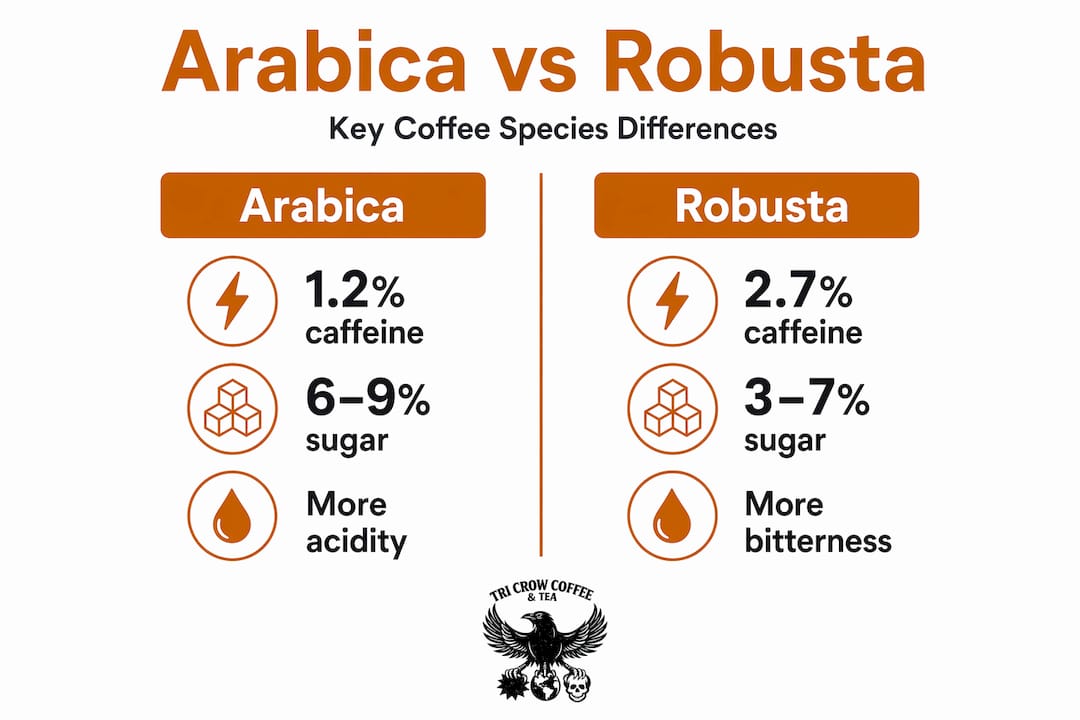
Neither species is objectively better. Robusta brings a thick crema to espresso blends and the punch of caffeine that some drinkers specifically want. Italian-style espresso blends historically rely on Robusta for exactly those qualities. But for complexity, nuance, and the kind of flavor that changes with terroir, Arabica is the species worth understanding.
Is arabica coffee stronger? Not in caffeine. But in flavor depth and aroma complexity, most tasters would say yes. The two species are simply built for different things.
How arabica coffee is grown and harvested
Understanding how arabica coffee is grown explains why it costs more and why its quality varies so much between origins. Arabica is not a forgiving plant.
-
Altitude requirements. Arabica thrives between 600 and 2,200 meters above sea level. The cooler temperatures at higher altitudes slow bean development, which lets more complex sugars and acids accumulate before harvest. This is why Ethiopian and Colombian mountain-grown coffees taste so different from flat-grown alternatives.
-
Temperature sensitivity. Temperatures above 30°C stress the plant, reducing both yield and quality. Arabica’s narrow climate tolerance makes it one of the agricultural crops most directly threatened by rising global temperatures.
-
Rainfall and shade. Arabica needs consistent rainfall, typically 1,500 to 2,000 mm annually, distributed across the year rather than concentrated in a single wet season. Many farms grow Arabica under a canopy of shade trees, which regulates temperature, adds organic matter to the soil, and supports biodiversity.
-
Hand-picking. Arabica cherries ripen unevenly across the same branch, meaning pickers must return to the same tree multiple times across a harvest season to select only the ripe red cherries. This is where labor costs climb sharply, and it is one reason you pay more for quality Arabica than for commodity coffee.
-
Climate adaptation research. Scientists are actively exploring heat-tolerant coffee species like Coffea stenophylla that produce Arabica-like flavors with greater resilience to warming temperatures. This research is genuinely urgent for the long-term future of specialty coffee.
Pro Tip: When you see a bag labeled with a specific farm name and altitude, that is not just marketing. The altitude number tells you something real about the flavor density and acidity you can expect. Higher generally means brighter and more complex.
Arabica in the market: trends, pricing, and consumer behavior
Arabica’s market position tells you a lot about where consumer values are heading. U.S. consumers pay a 30 to 50% price premium for high-scoring, traceable single-origin Arabica lots. That is not just brand loyalty. It reflects a genuine shift in how people think about what they drink.
Several forces are shaping the Arabica market right now:
- Specialty coffee culture has trained a large and growing consumer segment to read tasting notes, ask about origin, and seek out specific processing methods. This raises the floor for what counts as acceptable quality.
- Transparency and traceability have become purchasing drivers. Buyers increasingly want to know the farm, the farmer, and the practices behind their coffee. Arabica’s premium price is partly a transparency premium.
- Sustainability concerns are creating pressure throughout the supply chain. Climate change threatens the growing regions where the best Arabica is produced. Ethical sourcing and direct trade relationships are no longer niche considerations. They are becoming standard expectations in the specialty segment.
- The “100% Arabica” label has become one of the most recognized quality signals in the grocery aisle, even among consumers who could not explain why. Marketing around this label has shaped consumer expectations broadly, sometimes beyond what the label actually guarantees on its own.
You can explore how these forces connect by looking at 2026 coffee trends around ritual, quality, and sustainability. The patterns are clear. People want to drink better coffee and feel good about where it comes from.
My take on arabica after years of drinking it intentionally
I want to be honest about something: the “Arabica is always better” framing you see everywhere is too simple. I have had mediocre Arabica and genuinely interesting Robusta. What the framing gets right is that well-grown, well-processed, properly roasted Arabica has a flavor ceiling that almost nothing else in the coffee world matches.
What gets left out of most discussions is the human cost behind that complexity. Every cup of truly great Arabica represents a farmer who climbed their mountain multiple times per harvest to pick only the ripe cherries. Someone who absorbed the price risk when temperatures spiked and yields dropped. The flavor in your cup is not just chemistry. It is labor, terrain, and in many cases, an agricultural tradition that has survived for centuries.
I have also noticed that casual drinkers who switch from grocery-aisle blends to a genuinely traceable, single-origin Arabica often have the same reaction: they had no idea coffee could taste like that. Not because their palates were untrained, but because they had never been given the real thing. Understanding bean types, flavor profiles, and origins is a practical first step, not an enthusiast luxury.
My honest suggestion: buy one bag of high-quality, single-origin Arabica and brew it simply. No flavored syrups, no dark roast masking the origin character. Let the coffee show you what the fuss is actually about. You will not need convincing after that.
— David
Explore quality arabica from Tri Crow Coffee
Tri Crow Coffee sources and roasts small-batch Arabica coffees with the same care you just read about. The Italian Roast brings deep, chocolatey Arabica character through a slow, attentive roast process. The French Roast pushes those same beans to a bolder, smokier expression without burning away the quality underneath. Both are crafted in limited batches, sourced with transparency, and built for drinkers who want their coffee to mean something. If you want to understand why origin matters in practice, start with a bag you can actually taste.
FAQ
What is arabica coffee exactly?
Arabica coffee comes from the Coffea arabica plant, native to Ethiopia, and makes up over 60% of all coffee produced globally. It is known for its smooth, complex flavor and lower caffeine content compared to Robusta.
Is arabica coffee stronger than robusta?
Arabica is not stronger in caffeine. Arabica contains roughly 1.2% caffeine versus Robusta’s 2.7%, but most people describe Arabica as more complex and flavorful, which can feel more intense in terms of taste experience.
What does arabica coffee taste like?
The taste of arabica coffee ranges from chocolate and caramel to citrus, berry, and floral notes, depending on where and how it was grown. Origin, altitude, and processing method all shape the final flavor significantly.
Why does arabica coffee cost more?
Arabica requires specific altitude and climate conditions, and its cherries ripen unevenly, requiring multiple hand-picking passes per harvest season. That labor intensity, combined with lower disease resistance, makes production more expensive than Robusta.
How is arabica coffee different from other coffees?
Arabica has higher sugar and lipid content, a lower caffeine level, and a flavor profile shaped by terroir including altitude, soil, and processing. The S-shaped crease on each bean is a physical marker that distinguishes it from other species at a glance.
Recommended
- Discover Coffee Bean Types, Flavor Profiles, and Origins – Tri Crow Coffee
- Why coffee origin matters: flavor, ethics, and sustainability – Tri Crow Coffee
- Why coffee processing matters: flavor, ethics, and sustainability – Tri Crow Coffee
- What is coffee extraction? A brewer’s guide to better flavor – Tri Crow Coffee