
TL;DR:
- Natural process coffee is dried with the whole cherry intact, allowing fruit sugars to transfer into the bean for bold, fruity flavors. It involves careful harvesting, sorting, sun-drying for several weeks, and skilled management to prevent defects, producing a full-bodied, wine-like taste with berry and tropical fruit notes. Although water use is minimal, the process demands high labor intensity and expert supervision to ensure quality and sustainability.
Natural process coffee is defined as coffee dried with the whole cherry intact, allowing the fruit’s sugars and fermentation compounds to absorb directly into the bean before the outer layers are removed. This method, also called dry processing, produces some of the most distinctive cups in specialty coffee. The flavors are bold, fruity, and complex in ways that washed coffees rarely match. Understanding what is natural process coffee means understanding how the fruit itself becomes the flavor. Producers in Ethiopia and Yemen developed this method centuries ago, and today it drives some of the most sought-after lots in the specialty market.
How is natural process coffee made?
Natural coffee processing is a multi-stage method that requires patience, skill, and the right climate. Each step directly shapes what ends up in your cup.
-
Harvesting ripe cherries. Producers selectively pick only fully ripe, red cherries by hand. Ripe cherries contain more sugar, which feeds fermentation and builds the sweetness the method is known for. Unripe or overripe cherries at this stage introduce defects that no amount of careful drying can fix.
-
Sorting and cleaning. Freshly picked cherries are sorted to remove damaged fruit, leaves, and debris. Floatation tanks are sometimes used. Cherries that float are discarded because they are underdeveloped or hollow.
-
Spreading on drying beds or patios. The whole cherries are spread in thin, even layers on raised drying beds or paved patios under direct sun. Raised beds are preferred because they allow airflow beneath the cherries, which promotes even drying and reduces mold risk.
-
Turning and raking. Workers turn the cherries multiple times per day. This step is non-negotiable. Consistent turning and monitoring prevent hot spots, control fermentation speed, and stop mold from taking hold. Skipping or reducing turns is one of the fastest ways to ruin a batch.
-
Drying for 3–6 weeks. The drying phase spans 15–42 days depending on altitude, humidity, and temperature. Higher altitudes and cooler temperatures slow drying, which can deepen flavor complexity. Producers must manage drying speed carefully. Too fast yields flat flavors; too slow invites unfavorable fermentation.
-
Dry milling. Once the cherries reach the target moisture level, they go through a dry mill. This machine strips away the dried fruit skin, pulp, and parchment layer to reveal the green coffee bean inside. The bean is then sorted, graded, and prepared for export.
Pro Tip: If you are buying natural process coffees, ask the roaster for the drying duration and altitude. Lots dried at high altitude for 30 or more days tend to show the most layered fruit complexity.
What does natural coffee taste like?
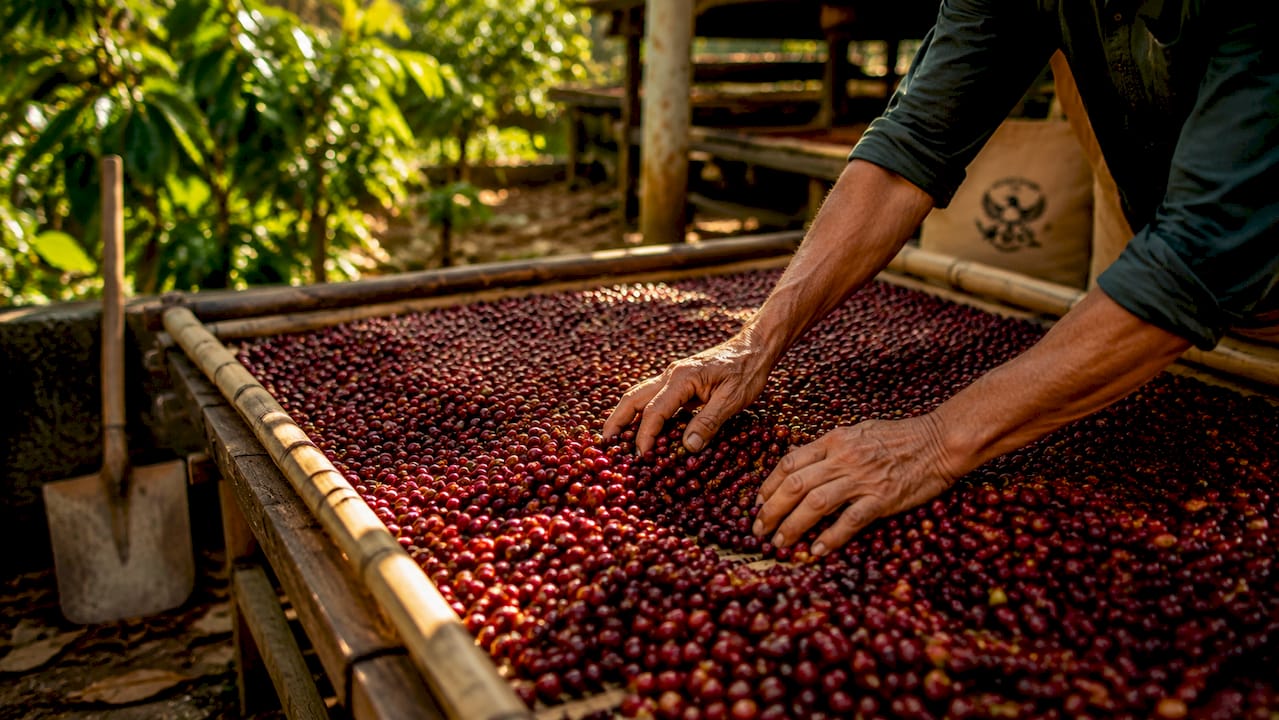
The natural coffee flavor profile is the most fruit-forward of any processing method. Sugars and fermentation compounds from the fruit migrate into the bean during the weeks of drying contact. That transfer is what creates the signature taste.
Common flavor notes in well-processed naturals include:
- Berries: Blueberry, strawberry, and raspberry are the most frequently cited notes, especially in Ethiopian naturals.
- Tropical fruit: Mango, pineapple, and passionfruit appear in naturals from Brazil and parts of Central America.
- Wine-like depth: Extended fermentation produces notes that resemble red wine or port, particularly in high-altitude lots.
- Jam and dried fruit: As the cherry dries, fruit flavors concentrate into richer, more syrupy expressions.
The body of a natural process coffee is typically heavier and more viscous than a washed coffee. Acidity is softer and rounder. This combination makes naturals feel indulgent and full in the mouth.
“Natural processed coffees consistently outperform washed alternatives in taste when sourced and processed with expert care.” — FNB Coffee
The risk side is real. Poor airflow or drying management can cause sourness, alcoholic notes, or a fermented funk that overwhelms the cup. This is why quality control is the difference between a transcendent natural and a defective one. The flavor complexity arises from fermentation and extended fruit contact, which means the same process that creates the best cups can also create the worst ones if not managed with skill.
Natural vs. washed vs. honey: how do they compare?
The difference in coffee processing techniques comes down to how much fruit contact the bean has before drying. Here is a direct comparison of the three main methods:
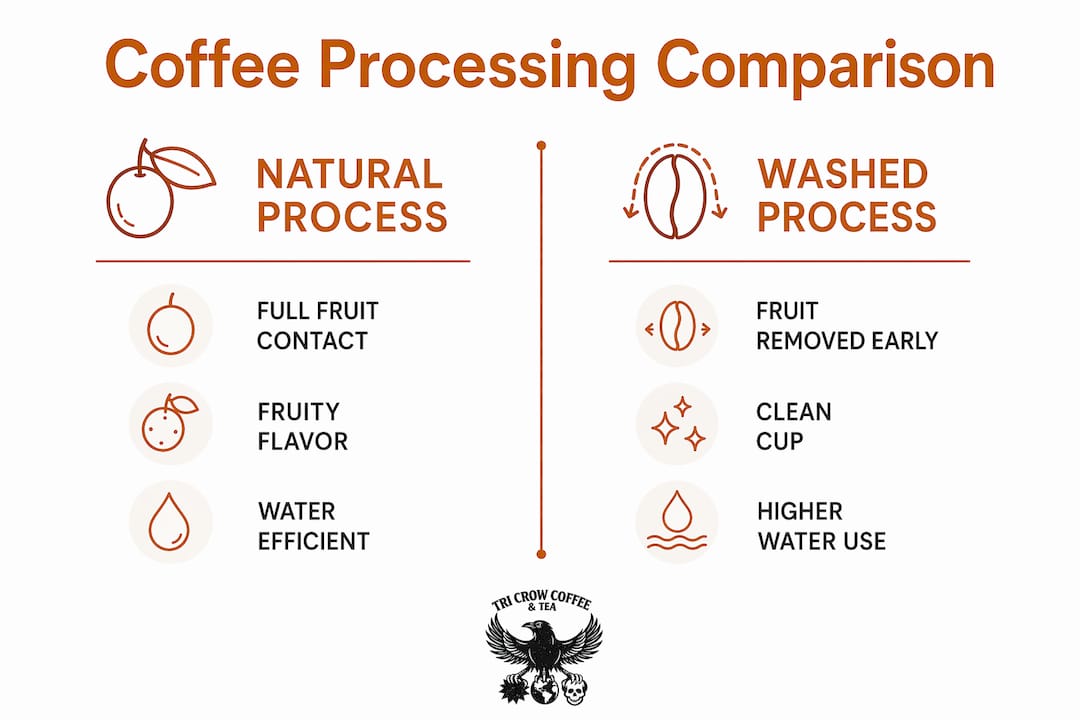
| Factor | Natural Process | Honey Process | Washed Process |
|---|---|---|---|
| Fruit contact | Full cherry intact | Partial mucilage left on | Fruit fully removed before drying |
| Water use | Very low | Moderate | High |
| Drying time | 3–6 weeks | 2–4 weeks | 1–2 weeks |
| Flavor profile | Fruity, sweet, wine-like, heavy body | Balanced, sweet, mild fruit | Clean, bright, acidic, lighter body |
| Labor intensity | Very high | High | Moderate |
| Defect risk | High without skilled management | Moderate | Lower |
| Best climates | Dry, low-humidity regions | Varied | Wet or humid regions |
Washed processing removes all fruit before drying, which produces a clean, transparent cup that highlights the bean’s origin character. Ethiopia’s Yirgacheffe region is famous for washed coffees that show floral and citrus notes with precision. Honey processing sits between the two. The outer skin is removed, but some sticky mucilage remains on the bean during drying. The result is a sweeter cup than washed but less intensely fruity than natural.
Natural processing is the oldest of the three methods. It originated in Ethiopia and Yemen where water was scarce and sun was abundant. That origin story explains why the method thrives in dry climates. Brazil, Ethiopia, and Yemen remain the dominant producers of natural process lots today.
Pro Tip: When comparing naturals to washed coffees from the same origin, brew both at the same ratio and temperature. The contrast in body and sweetness becomes immediately obvious and teaches you more about processing than any description can.
Is natural coffee processing more sustainable?
Natural process coffee uses substantially less water than washed coffees, which makes it a strong candidate for sustainable production in water-stressed regions. Skipping the wet washing stage removes one of the most resource-intensive steps in coffee production. That is a genuine environmental benefit.
The sustainability picture is more complicated than water use alone, though. Consider these factors:
- Labor demands are high. Natural processing demands skill and frequent supervision throughout the entire drying period. Producers cannot walk away. This translates to more paid labor hours per batch, which can support rural farm economies when wages are fair.
- Mold risk requires skilled workers. Preventing mold without fungicides requires experienced hands and consistent attention. Farms that invest in trained workers produce better naturals and reduce waste.
- Climate dependency is real. Natural processing requires dry, predictable weather during the drying window. Climate variability is making this harder to guarantee in some traditional growing regions.
- Flavor quality incentivizes care. When a natural process lot commands a premium price at auction, producers have a direct financial reason to invest in quality control and sustainable practices. The specialty market’s appetite for naturals creates that incentive.
The connection between coffee processing and sustainability is not simple. Natural processing reduces water use but increases labor demands. Done well, it supports both environmental and economic sustainability. Done poorly, it produces defective coffee and wastes the entire harvest.
Key takeaways
Natural process coffee delivers its distinctive fruity, full-bodied flavor because the whole cherry dries intact, transferring fruit sugars and fermentation compounds directly into the bean over 3–6 weeks.
| Point | Details |
|---|---|
| Core definition | Natural process coffee dries whole cherries intact, letting fruit compounds absorb into the bean. |
| Flavor signature | Expect berries, tropical fruit, wine-like depth, heavy body, and soft acidity in well-processed lots. |
| Labor intensity | Constant turning and monitoring over 3–6 weeks makes this one of the most demanding processing methods. |
| Sustainability trade-off | Natural processing uses far less water than washed methods but requires significantly more skilled labor. |
| Quality control is decisive | Poor drying management produces sourness and off-flavors; expert care produces the best cups in specialty coffee. |
Why natural process coffee rewards patient drinkers
I have tasted a lot of coffee over the years, and natural process lots are the ones that stop me mid-sip. Not because they are always perfect. Because when they are right, nothing else tastes like them.
The common misconception I hear most often is that natural processing is the easy, low-tech option. People assume that because it skips the wet washing stage, it must require less effort. That is exactly backwards. Natural processing is not easier despite its traditional roots. The labor demands are equivalent to or greater than washed methods. The difference is that the consequences of a mistake are slower to appear and harder to reverse.
My recommendation for anyone exploring naturals: start with an Ethiopian natural from the Sidama or Guji zone. These lots tend to show the blueberry and wine notes that define the method at its best. Brew them as a pour-over or Aeropress to preserve the fruit clarity. Avoid dark roasting naturals if you can. The roast tends to flatten the fruit notes that make the processing worth the effort.
Understanding how processing shapes flavor changes how you shop for coffee. You stop buying by roast level alone and start asking how the coffee was processed. That question opens up a much more interesting world.
— David
Taste the craft at tri crow coffee
If reading about fruit-forward, complex coffee has you ready to brew something worth slowing down for, Tri Crow Coffee roasts in small batches specifically to preserve that kind of flavor integrity. Every lot is chosen with processing and origin in mind.
The Max Caf Blend brings together Tanzania and India Robusta for a bold, high-caffeine cup with real depth. For something with cocoa, caramel, and vanilla notes in a dark roast, the Cowboy Blend delivers the kind of richness that natural process enthusiasts tend to appreciate. Tri Crow Coffee keeps batches small so the flavor stays consistent from bag to bag. Browse the full range and find a roast that matches what you just learned.
FAQ
What is natural process coffee in simple terms?
Natural process coffee is coffee dried with the whole fruit cherry still wrapped around the bean. The fruit’s sugars and fermentation compounds absorb into the bean during drying, creating fruity, sweet, and complex flavors.
How long does natural coffee processing take?
The drying phase typically spans 15–42 days depending on climate, altitude, and humidity. Higher altitudes and lower humidity generally extend drying time and can increase flavor complexity.
Does natural process coffee taste different from washed coffee?
Natural process coffee has a heavier body, softer acidity, and more pronounced fruit notes such as berries and wine compared to washed coffee, which tends to be cleaner, brighter, and more acidic.
Is natural process coffee better for the environment?
Natural processing uses significantly less water than washed processing, which is a clear environmental advantage. The trade-off is higher labor demand and greater risk of defects if drying is not carefully managed.
Which countries produce the best natural process coffee?
Ethiopia, Brazil, and Yemen are the most recognized producers of natural process coffee. Ethiopian naturals from regions like Sidama and Guji are especially prized for their blueberry and wine-like flavor notes.
Recommended
- Whole bean coffee: unlock flavor, freshness, and ritual – Tri Crow Coffee
- Discover Coffee Bean Types, Flavor Profiles, and Origins – Tri Crow Coffee
- What is coffee extraction? A brewer’s guide to better flavor – Tri Crow Coffee
- Why coffee origin matters: flavor, ethics, and sustainability – Tri Crow Coffee