
If coffee upsets your stomach, the fastest fix is switching to a cold brew or medium-dark roast brewed through a paper filter, and always drinking it with food rather than on an empty stomach. That single combination addresses the three main triggers: high titratable acidity, irritating coffee oils, and an unprotected stomach lining. A 2024 Delphi consensus of 11 gastroenterologists agreed that limits should be individualized, not blanket rules, which means you have room to experiment rather than quit coffee entirely.
Three things to try today:
- Brew one cup of cold brew or a medium-dark roast and compare how your stomach feels versus your usual cup.
- Switch from a metal mesh filter to a paper filter to trap oils linked to irritation.
- Drink your next cup with breakfast instead of before it.
Pro Tip: Start with just one change at a time. If you swap roast, brew method, and timing all at once, you won’t know which variable actually helped.
Key Takeaways
Low-acid, paper-filtered coffee brewed with food is the most reliable starting point for sensitive stomachs, backed by both gastroenterologist consensus and peer-reviewed GI research.
| Point | Details |
|---|---|
| Cold brew or medium-dark roast first | Both reduce titratable acidity; cold brew is the highest-leverage single experiment. |
| Paper filters matter | They trap oils and diterpenes linked to digestive irritation; switch from metal mesh. |
| Never drink on an empty stomach | Food buffers gastric acid exposure and reduces immediate symptom risk. |
| Test decaf for 3–5 days | Decaf reduces caffeine load but still stimulates gastric secretion; results vary by person. |
| Tri Crow Coffee’s House Blend | Medium roast, balanced profile, low brightness; the recommended first choice for sensitive stomachs. |
Table of Contents
- Which Tri Crow coffees work best for a sensitive stomach?
- How does coffee actually irritate your stomach?
- What to look for when buying coffee for a sensitive stomach
- Brewing techniques that reduce acidity and stomach irritation
- Everyday habits that reduce coffee-related stomach upset
- When should you cut back or see a clinician?
- How Tri Crow roasts for a gentler cup
- Does Arabica or Robusta go easier on your stomach?
- Can additives or supplements neutralize coffee acidity?
- How grind size affects acid extraction and stomach comfort
- A roaster’s perspective on finding what works for you
- Tri Crow’s gentle roasts are worth a one-week trial
- Sources
- FAQ
Which Tri Crow coffees work best for a sensitive stomach?
Three blends from Tri Crow Coffee cover the main use cases for stomach-friendly coffee:
- House Blend (Medium Roast, Central & South American): The gentlest starting point. Balanced, low-brightness, with no sharp citrus notes that tend to aggravate reflux. This is the one to try first.
- Cowboy Blend (Dark & Medium Roast, Cocoa/Caramel/Vanilla): The darker roast reduces chlorogenic acid content, and the chocolate-caramel flavor profile signals lower perceived brightness. Good for people who already know lighter roasts bother them.
- Max Caf Blend (High Caffeine, Tanzania + India Robusta): Higher caffeine means more gastric stimulation, so this one needs food pairing and dilution. Try it as a half-strength brew with a meal rather than straight.
When you’re reading a Tri Crow product page, check three things: roast level (medium or darker), flavor notes (chocolate, caramel, nut over citrus or “bright”), and whether a grind option matches your brew method. Sample packs let you test before committing to a full bag.
Pro Tip: Flavor notes on the bag are a reliable proxy for acidity. “Cocoa” and “caramel” almost always mean a smoother, lower-acid cup. “Citrus” or “berry” usually means higher brightness.
| Blend | Roast | Flavor Profile | Best For |
|---|---|---|---|
| House Blend | Medium | Balanced, mild | First test for sensitive stomachs |
| Cowboy Blend | Dark/Medium | Cocoa, caramel, vanilla | Those who need lower brightness |
| Max Caf Blend | Medium | Bold, high-caffeine | Caffeine lovers who pair with food |
How does coffee actually irritate your stomach?
Coffee triggers gastric acid secretion and stimulates the release of gastrin, a hormone that tells your stomach to produce more acid. It can also relax the lower esophageal sphincter (LES), the valve that keeps stomach acid from backing up into the esophagus. A peer-reviewed review on coffee’s GI effects confirms these mechanisms while noting that the evidence linking coffee directly to GERD and peptic ulcers is mixed and highly dependent on coffee type and preparation.
The dose matters. A large prospective analysis published in Clinical Gastroenterology and Hepatology found that higher coffee intake was associated with a modestly increased risk of new-onset GER symptoms compared to lower intake. That’s a modest but real signal, and it tracks with what most sensitive drinkers already suspect: more cups, more trouble.
What this means practically: your reaction to coffee depends on the specific coffee, how it’s brewed, how much you drink, and what else is in your stomach. Two people with identical reflux histories can respond completely differently to the same cup.
What to look for when buying coffee for a sensitive stomach
Use this checklist before you buy:
- Roast level: Start with medium-dark or dark. Roasting breaks down chlorogenic acids as roast level increases, which tends to reduce perceived acidity. Very dark roasts can introduce bitterness, so medium-dark is often the sweet spot.
- Flavor notes: Choose chocolate, caramel, nut, or vanilla. Avoid bags labeled “bright,” “citrus,” or “berry” until you know your tolerance.
- Processing labels: “Low-acid” on the bag usually means the roaster has selected beans or a roast profile for reduced acidity. Swiss Water decaf removes caffeine without chemical solvents, which some sensitive drinkers prefer.
- Bean variety: Arabica beans generally produce a smoother, less harsh cup than Robusta. More on this below.
- Roast date: Fresh coffee off-gasses CO2, which can affect extraction and perceived harshness. Look for a roast date within the past 4–6 weeks.
Pro Tip: If you’re unsure, buy a small bag or sample pack first. A Tri Crow sample pack lets you test multiple roasts before committing to a full bag, which is exactly the kind of low-risk experiment that works for sensitive stomachs.
Brewing techniques that reduce acidity and stomach irritation
The method matters as much as the bean. Here’s what actually works:
Cold brew
- Combine coarsely ground coffee with cold or room-temperature water at a 1:8 ratio (1 cup grounds to 8 cups water).
- Steep in the refrigerator for 12–18 hours.
- Strain through a paper filter or cheesecloth.
- Dilute the concentrate 1:1 with water before drinking.
Lab and industry data consistently show that cold brew measures lower titratable acidity than hot-brewed coffee. It’s the single highest-leverage experiment for a sensitive stomach.
Paper-filter drip or pour-over
- Use a medium-coarse grind.
- Keep water temperature between 195°F and 200°F (slightly below boiling).
- Pour slowly and evenly to avoid over-extraction.
Paper filters trap diterpenes (coffee oils) that can contribute to digestive irritation, per Cleveland Clinic guidance. Metal mesh filters let those oils pass through. Switching to paper is one of the easiest changes with a noticeable payoff.
Espresso and stovetop
Quick extraction at high pressure with a darker roast can actually produce a lower-acid shot than a long drip brew. The catch is concentration: a double shot is a small volume of very strong coffee. Drink it with food and don’t stack multiple shots.
Pro Tip: Paper filters do double duty: they reduce oils AND fine sediment, both of which can contribute to stomach upset. If you’re using a French press or metal-filter pour-over, that’s worth changing before anything else.
| Method | Acidity Level | Filter Type | Notes |
|---|---|---|---|
| Cold brew | Lower | Paper/cloth | Best first test; steep 12–18 hrs |
| Paper-filter drip | Moderate | Paper | Removes oils; use 195–200°F water |
| Espresso | Variable | None | Darker roast + small serving helps |
| French press | Higher | Metal | Oils pass through; not ideal |
Everyday habits that reduce coffee-related stomach upset
Small behavior changes often matter more than switching beans entirely:
- Never drink coffee on an empty stomach. Food acts as a buffer and reduces direct acid exposure to the stomach lining. Even a small snack helps.
- Reduce serving size first. Try one 8-oz cup instead of two, or brew at a lower ratio, before changing anything else.
- Space cups out. Back-to-back cups amplify gastric acid production. Give your stomach 2–3 hours between servings.
- Add a splash of milk. Milk proteins can bind some chlorogenic acids and blunt acid stimulation for some people, according to Verywell Health. Full-fat dairy may worsen reflux for others, so test a small amount first.
- Try decaf for 3–5 days. Decaf still contains compounds that stimulate gastric secretion, so it’s not a guaranteed fix. But if caffeine is your main trigger, you’ll know within a week. See Tri Crow’s guide to decaf coffee for more on processing methods.
Pro Tip: Drink a full glass of water before your first cup. It dilutes stomach acid before coffee arrives and is one of the simplest, most underused habits for sensitive drinkers.
When should you cut back or see a clinician?
Most coffee-related stomach discomfort responds to the changes above within 1–2 weeks. If it doesn’t, that’s useful information.
Red flags that warrant a clinician visit:
- Unintentional weight loss
- Frequent vomiting or regurgitation
- Difficulty swallowing
- Persistent severe heartburn despite 2–4 weeks of lifestyle changes
For testing a roast or brew change, give it 1–2 weeks before drawing conclusions. For a bigger shift, like eliminating coffee entirely or switching to decaf, the 2024 Delphi consensus recommends evaluating symptom patterns over a longer window and individualizing the approach rather than applying a blanket rule.
How Tri Crow roasts for a gentler cup
Small-batch roasting gives Tri Crow Coffee direct control over roast profiles in a way large commercial operations can’t replicate. Each batch is roasted to a specific profile rather than blended to a cost target, which means the roast level on the bag is accurate and consistent.
Here’s how to brew each recommended blend for maximum stomach comfort:
- House Blend (medium roast): Use a paper-filter drip or pour-over. Medium-coarse grind, 195–200°F water, 1:15 coffee-to-water ratio. This roast’s balanced Central and South American beans produce a clean, low-brightness cup with no harsh finish.
- Cowboy Blend (dark/medium): Works well as a paper-filter drip or cold brew. The darker roast has already broken down many of the sharper acids. Brew at 1:16 ratio for a slightly lighter extraction.
- Max Caf Blend (high caffeine): Brew at half strength (1:20 ratio) or dilute the finished cup 1:1 with hot water. Always pair with food. The Tanzania and India Robusta base is bold; dilution and food pairing are non-negotiable for sensitive stomachs.
Pro Tip: Try Tri Crow’s coffee blends guide to understand how blend composition shapes mouthfeel and brightness before you order.
Does Arabica or Robusta go easier on your stomach?
Arabica beans generally contain less caffeine than Robusta, roughly half the amount by weight. Since caffeine is one of the compounds that stimulates gastric acid and can relax the LES, lower-caffeine Arabica tends to be the gentler choice for most sensitive drinkers.
Robusta also has a harsher, more bitter flavor profile and higher chlorogenic acid content, both of which can increase perceived acidity and gastric irritation. That said, roast level modifies this significantly. A dark-roasted Robusta (like the India component in Max Caf) can be more tolerable than a light-roasted Arabica, because the roasting process degrades chlorogenic acids regardless of bean variety.
The practical rule: start with Arabica, medium-dark roast. If you’re drawn to a Robusta blend for the caffeine, dilute it and eat first.
Can additives or supplements neutralize coffee acidity?
A few options have real-world support:
Alkaline water: Brewing with alkaline water (pH 8–9) can raise the pH of the finished cup slightly. The effect is modest, but some sensitive drinkers notice a difference. It’s a low-effort experiment worth trying.
Milk or milk alternatives: As noted above, milk proteins bind some chlorogenic acids. Oat milk and almond milk are popular alternatives for those who don’t tolerate dairy, though their buffering effect is less studied.
Eggshell powder: Adding a small amount of crushed, cleaned eggshell to your grounds before brewing raises the pH of the brew. The calcium carbonate in eggshells acts as a basic buffer. It’s an old Scandinavian brewing trick that actually has chemical logic behind it, though no large clinical trials have tested it specifically for reflux.
Baking soda: A pinch in your finished cup raises pH quickly. Use sparingly; too much changes the flavor noticeably and adds sodium.
None of these are substitutes for choosing a lower-acid bean and brew method, but they’re useful additions once you’ve optimized the basics.
How grind size affects acid extraction and stomach comfort
Grind size controls how quickly water extracts compounds from coffee grounds. A finer grind increases surface area, which speeds extraction of both desirable flavors and harsh acids. A coarser grind slows extraction and tends to produce a smoother, less acidic cup.
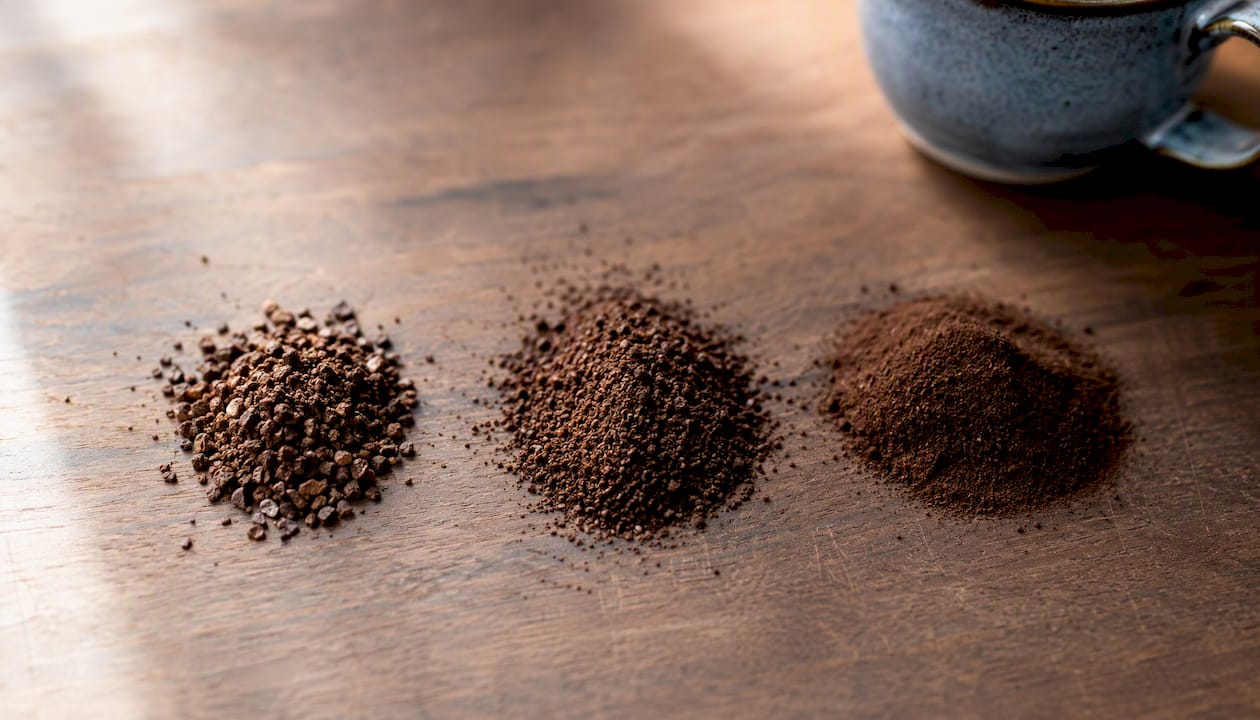
For sensitive stomachs, a medium-coarse grind is the practical target for most brew methods. It extracts enough flavor without over-pulling the sharp, irritating compounds that come out late in extraction. This is especially relevant for cold brew, where the long steep time already maximizes extraction; a coarse grind prevents the brew from turning harsh over 12–18 hours.
Espresso is the exception. It uses a fine grind but a very short extraction time (25–30 seconds), so the total acid load per shot is lower than you might expect. The problem with espresso for sensitive stomachs is usually concentration and volume, not the grind itself.
For a deeper look at how grind size and water temperature interact, Tri Crow’s brewing guide covers the mechanics in plain terms.
A roaster’s perspective on finding what works for you
The honest truth about coffee and stomach sensitivity is that there’s no universal answer, and anyone who tells you otherwise is selling something simpler than the science supports. What I’ve seen, both in roasting and in listening to customers, is that sensitivity is deeply personal. One person’s perfect cup is another person’s two-hour regret.
What actually works is methodical experimentation: change one variable at a time, give it a week, and pay attention. Switch the roast first. If that helps, great. If not, try the brew method. Then timing. Then serving size. The temptation is to overhaul everything at once, but that approach tells you nothing useful.
Small-batch roasting matters here because consistency matters. When every bag of House Blend tastes the same, you can actually trust your experiment. If the roast profile shifts batch to batch, you’re not testing coffee, you’re testing randomness.
Tri Crow’s gentle roasts are worth a one-week trial
If you’ve read this far, you already know the variables. The next step is a simple 7-day experiment: pick one of Tri Crow Coffee’s gentler roasts, brew it with a paper filter, eat something first, and track how your stomach responds.
Start with the House Blend if you want the most balanced, low-brightness option. Move to the Cowboy Blend if you already know darker roasts suit you better. If caffeine is non-negotiable, try the Max Caf Blend at half strength with breakfast. All three are available directly from Tri Crow’s online shop. Use the roast level and flavor note filters when browsing to narrow your options before you order.
Sources
- Delphi consensus (2024) advising individualized limits on coffee for reflux-like symptoms
- Review on coffee effects across the gastrointestinal tract (PMC8778943)
- Association between beverage intake and incidence of gastroesophageal reflux symptoms (Clinical Gastroenterology and Hepatology)
- Does coffee cause acid reflux? (Cleveland Clinic)
- Low‑Acid Coffee: 12 science-backed ways to choose beans and brew a gentler cup (Coffeenatics)
If symptoms persist despite 2–4 weeks of changes, consult a gastroenterologist. This article is general information, not medical advice.
This article is general information, not a substitute for advice from a qualified doctor. Consult a qualified healthcare professional about your own circumstances before acting on anything here.
FAQ
What is the best coffee roast for a sensitive stomach?
Medium-dark and dark roasts tend to be gentler because roasting degrades chlorogenic acids, reducing perceived acidity. Start with a medium-dark roast brewed through a paper filter.
Does cold brew really have less acid than hot coffee?
Lab measurements consistently show cold brew has lower titratable acidity than hot-brewed coffee, making it a practical first experiment for sensitive drinkers.
Can decaf coffee still cause stomach problems?
Yes. Decaf removes most caffeine but retains other compounds that stimulate gastric acid secretion. Test it for 3–5 days to see whether it helps your specific symptoms.
Is Arabica or Robusta easier on the stomach?
Arabica generally contains less caffeine and produces a smoother cup, making it the better starting point. Robusta’s higher caffeine and chlorogenic acid content can increase gastric irritation.
Which Tri Crow Coffee blend is best for a sensitive stomach?
The House Blend (medium roast, Central and South American) is the gentlest starting point. The Cowboy Blend’s darker roast and cocoa-caramel profile make it a strong second option for those who need lower brightness.