
An espresso drinks list is the organized map of every beverage built on a concentrated coffee shot, ranging from a straight ristretto to a full espresso martini. Espresso drinks fall into four categories: classic shots, milk-based drinks, water-based specialties, and dessert or cocktail variations. Understanding each category by its core ratios, not just its name, is the fastest way to decode any coffee menu and build a home repertoire worth drinking every day.
1. The espresso drinks list: classic shots that start everything
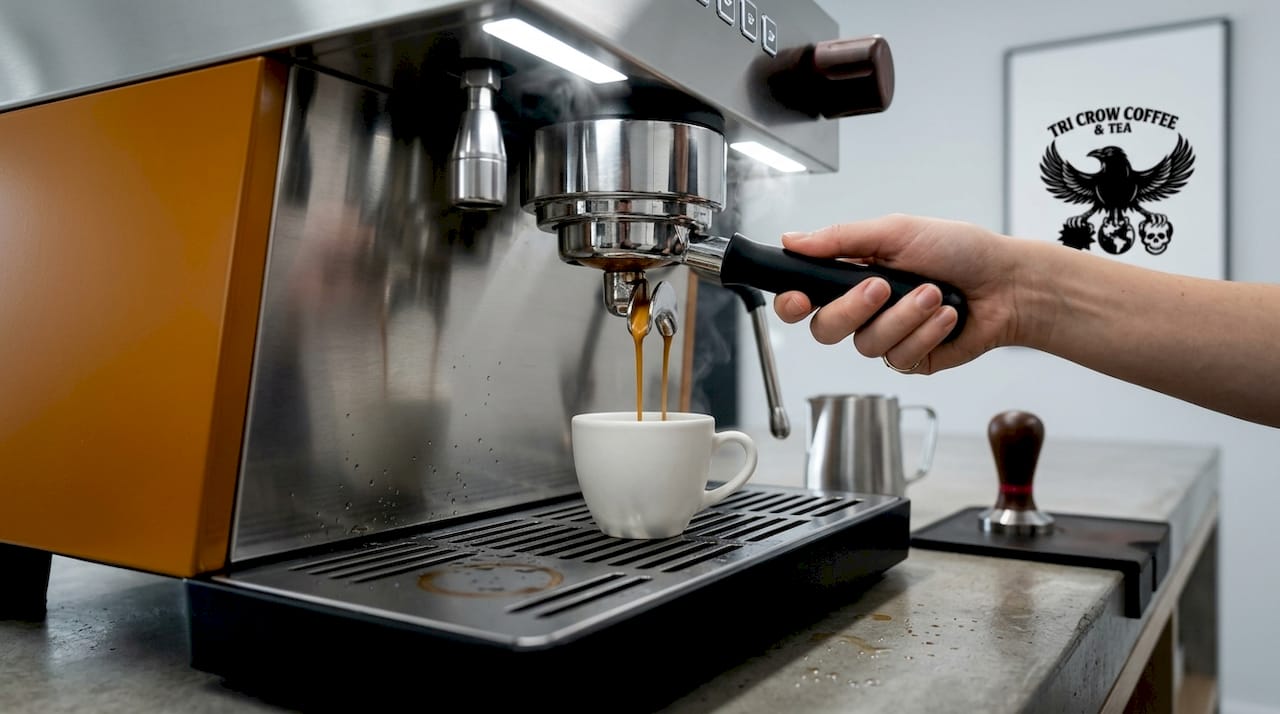
Every drink on any espresso coffee menu traces back to one of four base shots. These foundational shots define the flavor ceiling for everything built on top of them.
- Solo (single espresso): One shot pulled from 7 to 9 grams of ground coffee, yielding roughly 1 ounce. Concentrated, bold, and the reference point for all ratios.
- Doppio: A double shot from 14 to 18 grams, yielding about 2 ounces. The standard base for most café drinks today.
- Ristretto: A restricted shot using the same dose as a single but only half the water. The result is sweeter, thicker, and more syrupy because fewer bitter compounds extract in the shorter pull.
- Lungo: The opposite of a ristretto. More water runs through the same dose, producing a longer, milder shot with a slightly bitter finish.
- Café crème: A European staple brewed with significantly more water than a lungo, landing close to an Americano in volume but with a lighter crema layer.
Pro Tip: Shot yield directly controls flavor intensity. A ristretto from the same beans as a lungo will taste like a completely different coffee. When you find a bean you love, try it as both before adding milk or water.
The coffee extraction process behind each shot type explains why small changes in water volume produce such dramatically different cups. Mastering this one variable before moving to milk-based drinks saves a lot of confusion later.
2. Milk-based espresso drinks and how ratios define them
Milk-based drinks are the most popular espresso beverages on any café menu, and they are also the most misunderstood. The difference between a latte and a flat white is not just size. It is a precise shift in the espresso-to-milk ratio and the texture of the milk itself.
- Latte: A 1:3 to 1:4 espresso-to-milk ratio makes the latte the mildest milk-based option. Steamed milk dominates, with a thin layer of microfoam on top. Ideal for those new to espresso.
- Cappuccino: Equal thirds of espresso, steamed milk, and dry foam. The foam layer is thicker and airier than a latte, giving it a lighter body despite the same espresso base.
- Macchiato: Espresso “stained” with a small dollop of milk foam. The traditional version is mostly espresso. Chain versions differ substantially, often resembling a small latte, so confirming milk content when ordering manages expectations.
- Flat white: A double espresso with a thin layer of velvety microfoam and very little steamed milk beyond that. Stronger than a latte, smoother than a cappuccino.
- Cortado: A 1:1 ratio of espresso to steamed milk with no foam. Punchy, balanced, and one of the most honest expressions of espresso quality in a milk drink.
- Piccolo latte: A ristretto base in a small glass topped with steamed milk. Sweeter and more concentrated than a standard latte.
- Breve: A latte made with half-and-half instead of whole milk. Richer, creamier, and noticeably heavier on the palate.
Pro Tip: Milk texture matters as much as ratio. Silky microfoam integrates with espresso and creates a sweeter, rounder flavor. Stiff, bubbly foam sits on top and keeps the espresso and milk separate. Ask your barista for “microfoam” specifically when ordering a flat white or cortado.
Milk-based espresso drinks reveal espresso shot quality more directly than water-diluted drinks do. A cortado made with a poorly extracted shot has nowhere to hide. This is why learning simpler drinks first builds a more reliable palate for the complex ones.
3. Water-based and specialty espresso drinks
Water-based espresso drinks use dilution as a tool, not a compromise. Each preparation method changes the extraction character, temperature, and texture in ways that produce genuinely distinct flavor profiles.
| Drink | Preparation | Flavor profile |
|---|---|---|
| Americano | Espresso + hot water (1:2 or 1:3) | Mild, smooth, low acidity |
| Long black | Hot water + espresso poured over | Stronger than Americano, crema intact |
| Café con hielo | Espresso over ice, often sweetened | Bold, cold, slightly diluted |
| Shakerato | Espresso shaken with syrup and ice | Frothy, chilled, lightly sweetened |
| Red eye | Drip coffee with one espresso shot | High caffeine, bold, complex |
| Espresso tonic | Espresso over tonic water with citrus | Bitter, effervescent, refreshing |
| Espresso romano | Espresso served with a lemon twist | Bright, sharp, cuts bitterness |
An Americano uses a 1:2 or 1:3 espresso-to-water ratio, which softens the intensity without stripping the flavor. The long black achieves a similar result but preserves the crema by pouring espresso over the water rather than the reverse. That single change in pour order produces a noticeably stronger, more aromatic cup.
The espresso tonic is one of the most underrated drinks on this list. Tonic water’s quinine bitterness and carbonation create a contrast with espresso’s natural sweetness that reads almost like a citrus soda with depth. Water-based specialty drinks like the shakerato and café con hielo also show how temperature transforms the same shot into a completely different sensory experience.
4. Espresso dessert drinks and cocktails
Dessert espresso drinks and espresso cocktails treat the shot as an ingredient rather than the centerpiece. The best of these drinks balance espresso’s bitterness against sweetness, fat, or alcohol to create something that functions as both beverage and experience.
- Mocha: Espresso combined with chocolate syrup or cocoa and steamed milk. The chocolate softens bitterness and adds body. A well-made mocha uses dark chocolate to keep the espresso character intact.
- Espresso con panna: A single or double shot topped with a generous dollop of whipped cream. The cream melts slowly into the espresso, creating a layered richness that changes with each sip.
- Einspänner: The Viennese ancestor of espresso con panna. Served in a glass with thick whipped cream on top, traditionally drunk through the cream rather than stirred.
- Caffè corretto: Italian for “corrected coffee.” A shot of espresso spiked with a small pour of grappa, sambuca, or brandy. The spirit cuts through the espresso’s acidity and adds warmth.
- Espresso martini: A cocktail built from espresso, vodka, and coffee liqueur such as Kahlúa, shaken over ice. The result is a frothy, caffeinated cocktail with a pronounced coffee flavor and a clean, bitter finish.
- Affogato: Hot espresso poured directly over a scoop of cold vanilla gelato. The contrast of temperatures and the way the gelato melts into the shot creates a texture and flavor combination that no other drink on this list replicates.
Dessert and cocktail espresso drinks work best when the espresso base is strong enough to hold its character against the added ingredients. A ristretto or doppio holds up better under whipped cream or alcohol than a lungo would. Choosing the right espresso beans for intensity matters as much as the recipe itself.
Key takeaways
Every espresso drink is defined by its ratio of espresso to milk, water, or added ingredients, and learning those ratios is the most reliable way to navigate any coffee menu or home setup.
| Point | Details |
|---|---|
| Ratios define every drink | Espresso-to-milk or espresso-to-water ratios determine flavor intensity more than any other variable. |
| Four core categories | Shots, milk-based, water-based, and dessert or cocktail drinks cover the full espresso drinks list. |
| Start simple, then build | Begin with a straight shot or Americano before moving to milk-based or dessert variations to calibrate your palate. |
| Chain vs. traditional drinks differ | Traditional macchiatos and cortados differ significantly from chain versions; always confirm preparation style. |
| Bean quality shapes the result | A well-sourced, freshly roasted bean reveals more in a cortado or ristretto than any recipe adjustment can fix. |
Why ratios matter more than memorizing names
I spent years ordering drinks by name and being surprised by what arrived. A macchiato at one café was two sips of espresso with a foam dot. At a chain, it was a 16-ounce cup of sweetened milk. Neither was wrong, exactly. They just came from completely different traditions, and I had no framework to predict which one I was getting.
The shift that changed everything was learning to decode drinks by their building blocks: espresso, milk, water, and foam in specific proportions. Once you see a cortado as “1:1 espresso to steamed milk, no foam,” you can order it anywhere in the world and know roughly what to expect. The name is just a label. The ratio is the actual drink.
My honest recommendation is to start with espresso and add one variable at a time. Try a straight doppio. Then add water for an Americano. Then swap the water for steamed milk and you have a cortado. Each change isolates a single flavor variable, which trains your palate faster than jumping between a latte and an affogato and wondering why they taste so different.
The other thing worth saying plainly: home preparation is not a compromise. Replicating café drinks at home requires treating espresso yield and milk texture as two separate skills to develop. Get the shot right first. Then learn to steam milk. Trying to fix both at once leads to frustration and mediocre cups. Tri Crow Coffee’s home barista guide breaks this down in a way that actually respects the learning curve.
— David
Explore espresso at home with Tri Crow Coffee
The drinks on this list are only as good as the beans behind them. Tri Crow Coffee sources and roasts in small batches specifically to preserve the flavor depth that espresso preparation demands. The African Espresso is built for intensity and holds its character through milk, water, and even a pour of grappa. For something unexpected, the single origin collection offers rotating beans that reward experimentation across every drink category on this list. Each roast ships fresh, so what arrives in your kitchen is the same quality that goes into every intentional cup Tri Crow crafts.
FAQ
What drinks are on a standard espresso menu?
A standard espresso coffee menu includes shots (solo, doppio, ristretto, lungo), milk-based drinks (latte, cappuccino, flat white, cortado, macchiato), water-based drinks (Americano, long black), and specialty options like mochas and affogatos. Most cafés offer at least 8 to 12 of these variations.
What is the difference between a latte and a flat white?
A latte uses a 1:3 to 1:4 espresso-to-milk ratio, making it mild and milk-forward. A flat white uses a double espresso with significantly less milk and a thinner microfoam layer, producing a stronger, more espresso-forward cup in a smaller serving size.
How do I make espresso drinks at home without a machine?
A Moka pot or AeroPress produces concentrated coffee close enough to espresso to work in most recipes. For milk-based drinks, a handheld frother creates microfoam from whole milk. The key is matching your brew ratio to the drink you are making rather than treating all concentrated coffee as interchangeable.
What is the strongest drink on an espresso drinks list?
The red eye, which combines drip coffee with one or more espresso shots, delivers the highest caffeine content of any standard espresso beverage. Among pure espresso preparations, a doppio ristretto offers the most concentrated flavor in the smallest volume.
Are espresso cocktails different from regular espresso drinks?
Espresso cocktails like the espresso martini and caffè corretto add alcohol to the espresso base, which changes both the flavor profile and the experience. They are typically served cold or at room temperature and function as after-dinner drinks rather than morning beverages.