
Every tea lover has stood in front of a wall of commercial tins, reading labels, hoping one of them will finally taste the way they imagine it should. Most don’t. Commercial teas are blended for mass appeal, which means the flavors are safe, predictable, and rarely tailored to what you actually want in your cup. Blending your own teas at home changes all of that. You control every element, from the base to the botanicals, building something that fits your taste, your mood, and the ritual you want to create around it.
Table of Contents
Key Takeaways
| Point | Details |
|---|---|
| Loose leaf is best | Loose leaf teas offer richer flavor and aroma for blending than tea bags. |
| Blend for mood and ritual | Choose ingredients that align with your desired energy or relaxation level. |
| Measure and test | Careful measurement and sample brews help refine your recipes. |
| Fix common mistakes | Bitterness and weak aroma can be solved by adjusting ingredients and proportions. |
| Experiment to master | Personal experimentation is essential for discovering your favorite blends. |
Gathering ingredients and tools for tea blending
Once you understand the benefits of blending your own teas, it’s time to prepare your workspace and materials.
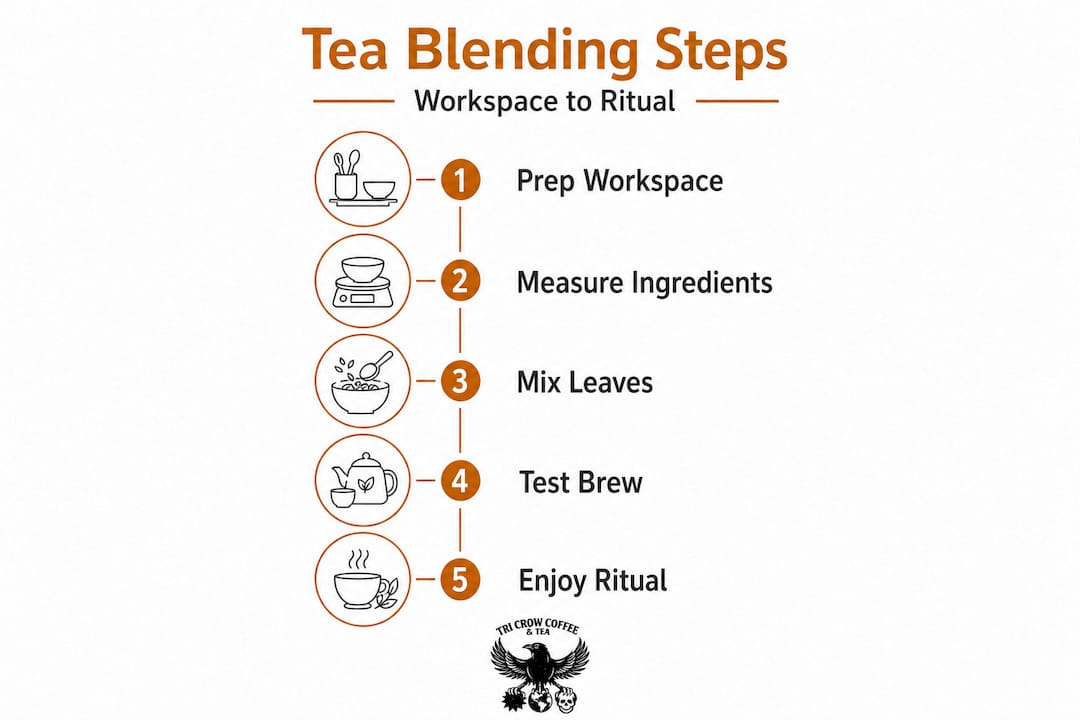
The right tools make a real difference when you’re starting out. You don’t need a professional setup, but a few essentials will help you measure accurately and keep your blends consistent from batch to batch.
Essential tools to have on hand:
-
A digital scale (accurate to 0.1 grams)
-
Airtight glass jars or tins for storage
-
Small mixing bowls or a clean ceramic plate
-
Measuring spoons in multiple sizes
-
Labels and a notebook or index cards for recording ratios
-
A fine mesh strainer or tea infuser for sampling
Workspace matters more than people realize. Even a small amount of moisture or residual scent from cleaning products can throw off your blend. Use a clean, dry surface and rinse all tools with hot water before you start. Let everything dry completely. Scent contamination is a subtle but common problem for beginners.
When it comes to ingredients, variety is your strength. Loose leaf teas are preferred for blending because they retain more flavor and aroma than pre-ground or bagged versions, giving you far better results in the final cup. You’ll also want to build a small pantry of botanicals, spices, and dried fruits to work with.
A good starting pantry might include:
-
Base teas: loose leaf black, green, white, oolong, and rooibos
-
Herbs and botanicals: chamomile, peppermint, lavender, lemongrass, hibiscus
-
Spices: cinnamon chips, whole cardamom, dried ginger, cloves
-
Dried fruits: apple pieces, orange peel, rose hips, dried berries
-
Specialty powders: organic green tea matcha for color and earthiness
The table below compares common tea bases so you can understand what each brings to a blend before committing to ratios.
| Tea Base | Flavor Profile | Caffeine Level | Best Paired With |
|---|---|---|---|
| Black tea | Bold, malty, robust | High | Spices, citrus, vanilla |
| Green tea | Grassy, light, vegetal | Medium | Mint, lemon, jasmine |
| Oolong | Floral, toasty, complex | Medium | Stone fruit, honey notes |
| Rooibos | Sweet, earthy, nutty | None | Vanilla, cinnamon, berries |
| White tea | Delicate, floral, subtle | Low | Rose, peach, elderflower |
| Herbal (chamomile, etc.) | Variable, caffeine-free | None | Lavender, lemon, honey |
Keeping this reference nearby while you blend helps you predict how ingredients will interact before you even steep the first test batch.
Choosing flavor profiles and blend foundations
With your ingredients and tools ready, next comes the fun part: deciding what flavors you want to craft.
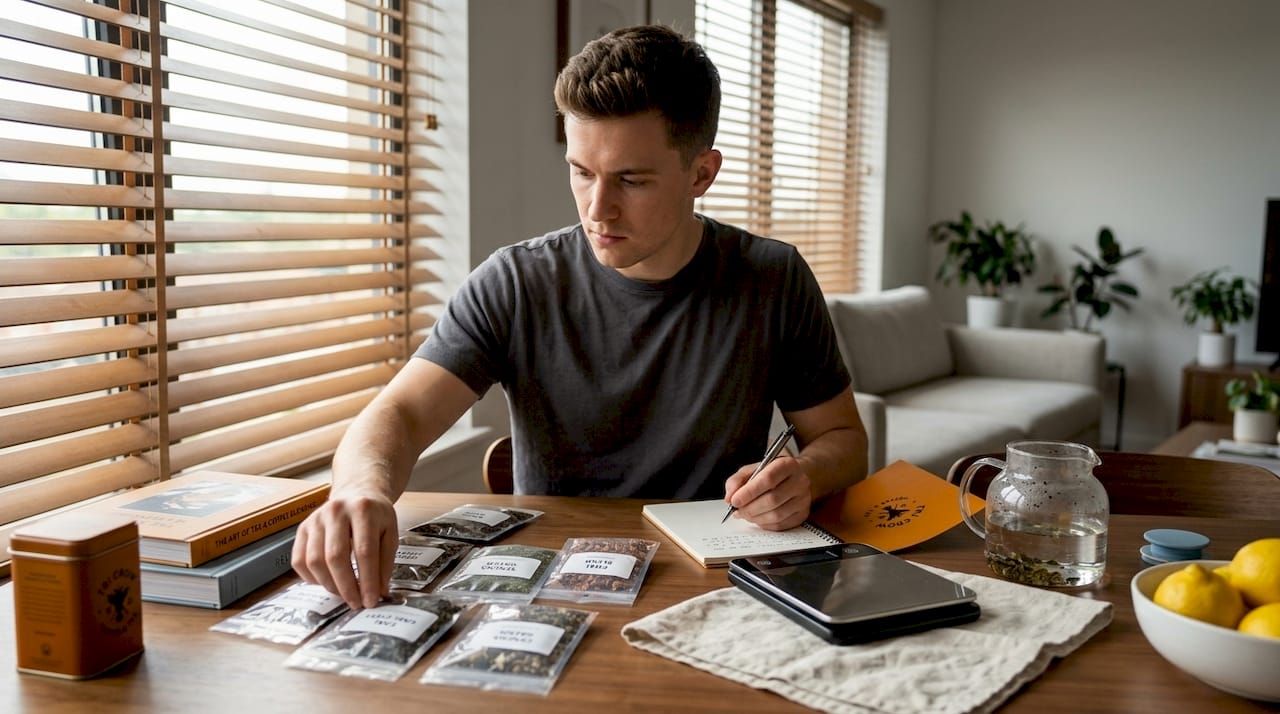
This is where blending becomes genuinely expressive. Flavor profile blending is a creative process that lets you adjust the ratio and type of ingredients to fit your desired outcome, whether that’s a deeply calming cup before bed or a bright, invigorating morning ritual.
Start by asking yourself what the blend is for. That purpose usually points directly toward a flavor direction.
Popular flavor directions and what achieves them:
-
Relaxation blends: Rooibos or chamomile base, lavender, passionflower, a touch of vanilla
-
Morning energy blends: Strong black or oolong base, ginger, orange peel, cinnamon
-
Digestive blends: Peppermint, fennel seed, ginger, licorice root, green tea base
-
Floral and delicate blends: White tea base, rose petals, hibiscus, dried peach
-
Warming spice blends: Black tea base, cardamom, cinnamon, cloves, dried ginger
If you want inspiration from a well-built spice blend, look at what makes a masala chai blend so satisfying: it’s the layering of warming spices against a bold black tea base that creates its deep, complex character.
A reliable starting framework is the 70/20/10 ratio. Use 70% base tea, 20% secondary flavor (an herb or fruit), and 10% accent (a spice or floral). This keeps your base strong while leaving room for complexity. As you get comfortable, you’ll push these percentages around freely.
Pro Tip: Every time you create a blend, write down the exact grams of each ingredient and what you thought of the result after tasting. This log becomes your personal recipe book. Without it, recreating your best blends is nearly impossible, and your worst mistakes become lessons you risk repeating.
The ritual dimension of blending is worth honoring here, too. Some blends are made to be drunk slowly, in silence, during early morning light. Others are made to share at a table with people you care about. Letting that intent shape your ingredient choices makes the final cup feel like more than just a drink.
Step-by-step guide to blending teas at home
Once you’ve designed your flavor plan, it’s time to put it into practice with these blending steps.
Following a consistent process keeps your results repeatable and your frustration low. Careful measurement ensures consistency in tea blends, allowing you to replicate and refine recipes as your tastes evolve. Skipping the scale is one of the most common beginner mistakes, and it almost always leads to batches you can’t recreate.
Step-by-step blending process:
-
Weigh each ingredient separately before combining anything. Use your digital scale and record every measurement in your notebook.
-
Start with your base tea in the mixing bowl. Add it first so everything else blends into it rather than getting buried.
-
Layer in secondary ingredients gently. Use a spoon or your hands to fold them in without crushing the leaves.
-
Add accent ingredients last. Spices and powders can settle to the bottom if added too early, so incorporating them last gives a more even distribution.
-
Mix by gently tumbling the bowl or using a wide, flat spoon. Do not stir aggressively. Broken leaf pieces lead to an over-extracted, bitter brew.
-
Brew a small test batch before scaling up. Use 2 to 3 grams in a cup of hot water at the appropriate temperature for your base tea and steep for the standard time.
-
Taste and evaluate. Note what’s working and what isn’t. Is the blend too sharp? Too flat? Does it smell the way you intended?
-
Adjust your ratios based on what the test brew reveals. Make small changes, no more than 10% at a time, to avoid overcompensating.
-
Blend your full batch once satisfied with the test, and transfer to a labeled airtight container immediately.
If you’re drawn to energy and ritual blends, consider how a blend’s timing in your day affects which flavors feel most satisfying.
| Step | Action | Common mistake to avoid |
|---|---|---|
| Measuring | Use digital scale for all ingredients | Estimating by eye, creating inconsistency |
| Mixing | Gentle folding motion | Aggressive stirring that crushes leaves |
| Test brewing | Brew small sample first | Blending a full batch without tasting |
| Adjusting | Change one variable at a time | Changing multiple ratios simultaneously |
| Storing | Airtight container, labeled with date | Leaving blend exposed to light or humidity |
Pro Tip: When test brewing, use filtered or spring water. Tap water with heavy chlorine or mineral content can distort your tasting results and make a good blend taste off. The water you use for testing should be the water you use for drinking.
Patience during this step is not optional. Rushing through the test brew stage is the single most common reason people end up with large batches of a blend they don’t enjoy.
Troubleshooting and perfecting your tea blends
Even seasoned home brewers face challenges; here’s how to overcome and refine your blends.
Problems will happen. That’s not failure. It’s data. Refining blends is an iterative process that requires careful attention to ingredient quality and freshness at every stage. The good news is that most problems have clear, fixable causes.
Common issues and how to fix them:
-
Bitterness: Usually caused by too much black or green tea, or by steeping too long. Reduce the percentage of your base tea, or add softening ingredients like rooibos, chamomile, or licorice root to round out the edges.
-
Weak aroma: Often a sign that your herbs or botanicals have lost their potency. Use fresher leaves and dried botanicals, and consider adding a small amount of high-aromatic ingredients like dried lavender, lemon verbena, or whole spices to revive the scent.
-
Clumping or uneven distribution: Heavier ingredients like cinnamon chips or dried fruit pieces sink while lighter dried herbs float. Mix lighter ingredients into the base first, then fold in heavier elements at the end. A wide, shallow bowl helps significantly.
-
Flat flavor: The blend lacks complexity. Try adding a small accent ingredient you haven’t used yet, like a pinch of vanilla powder or a small measure of dried citrus peel, to open up the flavor.
-
Overpowering spice: You added too much of a dominant spice like clove or black pepper. Increase the base tea and herbal portions proportionally to dilute the spice without discarding the batch.
If you’re looking for interesting ingredients to experiment with, hibiscus tea blend ideas offer a sharp, tart brightness that works beautifully in fruity or floral directions. For something unexpected, flavored tea inspiration can open up new directions you might not have considered on your own.
“The best blend you’ll ever make isn’t the one that followed the recipe perfectly. It’s the one you made after the third failed attempt, when you finally understood what the ingredients actually needed.”
That mindset is worth keeping close. Every blend that doesn’t work teaches you something specific about proportions, freshness, or flavor interaction that no recipe can fully explain in advance.
Why personal experimentation is key to mastering tea blending
Here’s something that most blending guides won’t tell you: the recipes aren’t the destination. They’re just a starting point.
We’ve seen it repeatedly. Someone follows a precise formula, measures everything perfectly, and produces a technically correct blend that doesn’t move them at all. Then, while improvising one afternoon with leftover ingredients, they create something they drink every single day for the next three months. The formula was right but the intuition was missing.
The mechanics of blending matter, and you should learn them well. But once you have them, the most powerful tool you own is your own palate and your willingness to trust it. That means experimenting with proportions that feel risky, using ingredients outside your comfort zone, and being willing to produce batches that don’t work.
Building a daily ritual variety is part of what makes a personal practice sustainable. When your tea changes with your mood, your season, and your intention, it never becomes boring.
The most unique blends we’ve encountered came from people who stopped asking “what is this supposed to taste like?” and started asking “what do I actually want from this cup right now?” That shift, from following to creating, is where the real mastery lives. No commercial brand can make a blend that answers that second question for you. Only you can.
Discover unique teas for your blending journey
If you’re ready to take your blending practice further, having access to high-quality, flavorful base teas and specialty ingredients makes the whole process more rewarding and more delicious.
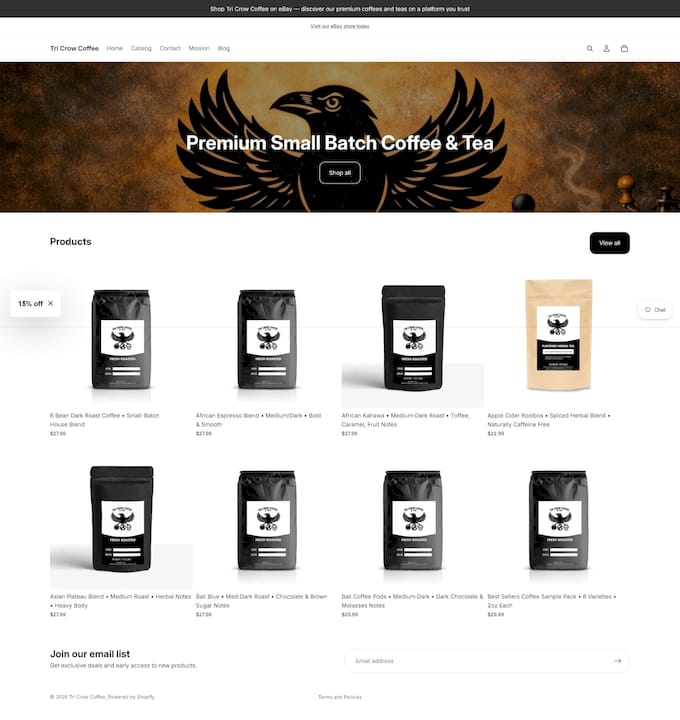
At Tri Crow Coffee, we curate teas with intention, designed for those who brew with purpose. Whether you’re building your first custom blend or expanding a serious collection, our selections give you real ingredients worth working with. Start with our tart and vivid hibiscus berry tea for a fruity blending foundation, explore the warming sweetness of apple cider rooibos as a caffeine-free base, or work with the deep, roasted complexity of hojicha for earthier creations. Each one is a starting point and an invitation.
Frequently asked questions
Can I blend teas from tea bags or should I use loose leaf?
Loose leaf teas are preferred for blending since they retain more flavor and aroma, but you can experiment with tea bags if loose leaf isn’t available.
How do I prevent bitter tea blends?
Lower the proportion of black or green tea in your blend, or add herbal ingredients like rooibos or chamomile to soften and balance the bitterness.
What is the best way to store blended teas?
Store blends in airtight containers away from light, moisture, and strong odors to maintain freshness and preserve the quality of your botanicals.
Can I add spices or fruits to my tea blends?
Yes, spices and dried fruits are excellent additions that enhance both flavor and aroma, and they are among the most versatile ingredients in any home blending pantry.
How long can I keep homemade tea blends?
Most blends will keep for six months to a year if stored properly, but use the freshest ingredients possible for the most vibrant results.