
White tea is a minimally processed tea made from the young buds and leaves of Camellia sinensis, the same plant behind every true tea. What sets it apart is what doesn’t happen to it: no rolling, no enzyme-killing heat, no intentional oxidation. The buds are covered in fine silvery hairs called trichomes, and that’s where the name comes from. The brewed cup is pale yellow, almost translucent, but the “white” refers to the bud’s appearance before drying, not the color in your mug.
A few quick identifiers before you go further: look for visible silvery buds, an early-spring harvest date, and a processing description that mentions only withering and drying. ISO/TR 12591:2013 provides the internationally recognized trade reference for white tea based on plant source and production method. For brewing, start at 170–185°F (77–85°C) and steep for 2–3 minutes. That’s enough to get you started.
- Silvery, hairy buds = true white tea raw material
- Minimal processing: withering and drying only
- Pale yellow liquor, low astringency
- Brew cooler and shorter than black tea
Pro Tip: If a vendor can’t tell you the harvest flush or the withering method, treat that as a red flag. Transparency about processing is the single clearest signal of quality in white tea.
Key Takeaways
White tea is the least processed true tea, made from silvery-budded Camellia sinensis material through withering and drying only, which preserves catechins and produces a delicate, low-astringency cup.
| Point | Details |
|---|---|
| Minimal processing defines it | White tea undergoes only withering and drying, preserving catechins better than green or black tea. |
| Caffeine varies more than expected | Chromatographic study samples showed that white tea caffeine levels vary depending on cultivar and brewing conditions. |
| Brew cooler and shorter | Use 160–185°F water and steep 2–3 minutes; too-hot water flattens the floral notes and adds bitterness. |
| Health evidence is preliminary | Animal studies show metabolic benefits; human clinical trials remain small and limited in scope. |
| Tri Crow Coffee artisan teas | The artisan tea collection applies small-batch sourcing standards to curated tea selections. |
Table of Contents
- What is white tea, and how is it made?
- Where does white tea come from?
- What are the main types and grades of white tea?
- What does white tea taste like?
- How do you brew white tea properly?
- What’s actually in white tea? Caffeine and key compounds
- What does the research actually say about white tea’s health effects?
- How to buy and store white tea well
- How does white tea compare to green, oolong, and black tea?
- An editor’s note on what white tea actually rewards
- Tri Crow Coffee’s small-batch teas are worth trying
- Sources
- FAQ
What is white tea, and how is it made?
White tea’s defining characteristic is what producers choose not to do. Where green tea uses heat (steaming or pan-firing) to stop enzymatic oxidation immediately after harvest, and black tea goes through full rolling and oxidation, white tea takes a gentler path: pluck, wither, dry. That’s the whole process.
Plucking stage. Grade starts at the garden. The highest-grade white teas use only the unopened bud, sometimes called “bud-only” or “single bud.” Lower grades include one or two additional leaves. The bud-to-leaf ratio directly determines the final grade and flavor intensity.
Withering. Freshly plucked material loses moisture slowly, either under natural sunlight or in a controlled indoor environment. This stage can last 24–72 hours. During withering, polyphenol oxidase (PPO) and peroxidase (POD) enzymes remain active, allowing very limited, natural oxidation. This is not a flaw; it’s part of what gives white tea its subtle complexity.
Drying. Once the moisture level drops to the target range, the leaf is dried by air, solar exposure, or low-heat mechanical dryers. No rolling, no shaping, no high-heat kill-green step.
The result is that sensitive bioactives, particularly catechins and dimeric catechins, are preserved at higher levels than in teas that undergo more aggressive processing. A 2025 review of white tea processing and constituents identifies catechins and other flavonoids as the dominant phenolic compounds and notes that minimal processing is a deliberate strategy to protect these compounds from oxidative degradation.
What to ask a vendor about processing:
- What is the harvest flush (first flush, second flush)?
- Was withering done outdoors (solar) or indoors (controlled)?
- What drying method was used?
- Is the processing date or packaging date listed?
- Does the description mention rolling or shaping? (It shouldn’t for true white tea.)
Pro Tip: “White-style” teas made from older, larger leaves without the characteristic silvery buds are a common marketing shortcut. Ask specifically whether the product contains unopened buds with visible trichomes.
Where does white tea come from?
Fujian Province in southeastern China is the classic home of white tea, and specifically the counties of Fuding and Zhenghe. These areas developed the processing traditions and the cultivars (notably Fuding Dabai and Zhenghe Dabai) that define what most tea drinkers think of as authentic white tea. The spring flush, typically harvested in late March through April, produces the most prized material.
White tea is a relatively recent category in global tea commerce. While Fujian producers have made versions of it for centuries, international recognition and standardized definitions came much later. Wikipedia notes there is still no single international definition, which is part of why ISO/TR 12591:2013 matters as a trade reference.
Other producing regions have entered the market:
- India (Darjeeling and Assam): produces white teas using local cultivars, often with slightly different flavor profiles
- Sri Lanka (Ceylon): growing white tea production, particularly in higher-elevation gardens
- Türkiye (East Black Sea Region): a newer producing area; a 2026 MDPI study examined white tea from this region specifically for its metabolic properties
- Nepal and Taiwan: smaller but notable producers
Spring harvest timing matters enormously for top grades. The earliest buds of the year carry the highest concentration of amino acids and the most pronounced silvery trichomes. Later harvests produce usable tea but at lower grades.
What are the main types and grades of white tea?
The grade hierarchy in white tea is straightforward once you understand the logic: more buds, higher grade.
Baihao Yinzhen (Silver Needle). The top of the hierarchy. Made exclusively from unopened buds, densely covered in silver-white hairs. The flavor is delicate, subtly sweet, and faintly floral, with almost no astringency. This is the tea that defines the category’s reputation. Expect to pay more for it.
Bai Mudan (White Peony). One bud plus one or two young leaves. Fuller-bodied than Silver Needle, with a slightly fruitier, more rounded flavor. This is where many experienced drinkers land because it offers more complexity without losing the characteristic lightness.
Gong Mei. Fewer buds, more leaves, harvested slightly later in the season. The flavor is earthier and more robust. Often used in compressed white tea cakes.
Shou Mei. The lowest grade in the traditional hierarchy, made from the most mature leaves with the fewest buds. Earthier still, sometimes with a woody or dried-fruit character. It ages well and is often the base for intentionally aged white teas.
How to judge grade from a photo or description:
- High bud-to-leaf ratio = higher grade
- Dense silver-white hairs visible on buds = good sign
- Uniform appearance (no broken or yellowed leaves) = careful processing
- “Spring harvest” or “first flush” = premium timing
- Avoid products labeled “white tea blend” without specifying cultivar or origin
Pro Tip: When buying online, zoom into product photos. If you can’t see individual silvery buds, you’re likely looking at a lower-grade product regardless of what the label says. For a broader look at how different tea types compare by flavor and grade, Tri Crow Coffee’s tea blend varieties guide is a useful reference.
What does white tea taste like?
Delicate is the right word, but it undersells the range. Silver Needle at its best has a clean sweetness, a faint honeysuckle or melon note, and a silky mouthfeel that lingers without any bitterness. White Peony opens that up: you get more body, sometimes a hint of dried apricot or light stone fruit, still gentle but more present on the palate. Shou Mei goes earthier, occasionally picking up notes of hay or dried leaves.
Astringency is low across all grades, which makes white tea forgiving for people who find green or black tea too sharp. The liquor color ranges from very pale yellow to a warm gold depending on grade and steep time.
A simple tasting checklist:
- Look: Is the liquor clear and pale yellow? Cloudiness can indicate over-steeping or poor storage.
- Smell (dry leaf): Floral, hay, or faintly sweet? Musty or stale smells suggest age or moisture damage.
- Smell (wet leaf): The aroma opens up after steeping. Floral and fresh is a good sign.
- Sip: Note sweetness first, then body (thin vs. silky), then any lingering finish.
- Astringency check: White tea should have very little. If it’s noticeably drying, the water was too hot or the steep too long.
For pairing ideas that complement white tea’s delicate profile, the top tea pairings guide at Tri Crow Coffee covers practical combinations worth trying.
How do you brew white tea properly?
Water temperature is the single most important variable. Too hot and you extract bitterness and flatten the floral notes. Too cool and the tea tastes thin and watery.
Recommended parameters:
- Temperature: 160–185°F (70–85°C). Start at 175°F for most white teas.
- First steep: 2–3 minutes for loose leaf; 1.5–2 minutes if you prefer a lighter cup.
- Leaf-to-water ratio: Roughly 2 grams per 8 oz (240 mL), or about 1.5–2 teaspoons of loose leaf. White tea leaves are bulky, so volume measurements can mislead; weigh when possible.
- Re-steeps: White tea handles multiple infusions well. Add 30–60 seconds per subsequent steep. Quality loose-leaf Silver Needle can yield 4–5 good infusions.
Bag vs. loose leaf. Bagged white tea works and is convenient, but the minimal processing that makes white tea special also means the whole-leaf experience matters more here than with, say, a robust black tea. Loose leaf gives the buds room to unfurl and release their full aroma.
Brewing conditions also affect what you extract chemically. Chromatographic analysis found that serving method had no significant effect on caffeine and L-theanine levels in white tea samples tested, though temperature and time still influence overall extraction. Practically, this means you have some flexibility in how you brew without dramatically shifting the caffeine profile.
Troubleshooting:
- Weak, watery cup: Increase leaf quantity or extend steep time by 30 seconds.
- Bitter or astringent cup: Lower water temperature or shorten steep time.
- No aroma: Water may be too cool, or the tea may be old.
Pro Tip: Preheat your vessel. White tea’s subtle aromatics dissipate fast in a cold cup. A quick rinse with hot water before steeping makes a noticeable difference.
What’s actually in white tea? Caffeine and key compounds
White tea contains four main categories of bioactive compounds: flavonoids (primarily catechins, including EGCG), phenolic acids, amino acids (notably L-theanine), and methylxanthines (caffeine). The minimal processing preserves catechins at relatively high levels compared to more oxidized teas.
Caffeine ranges. This is where expectations often diverge from reality. White tea is frequently marketed as low-caffeine, but the picture is more nuanced. Reversed-phase HPLC measurements reported white tea caffeine in the range of 5.8–30.6 mg per 200 mL across study samples, with brewing conditions affecting extraction. That range overlaps with many green teas and sits below typical black tea levels, but the low end is not guaranteed.
Caffeine context: The same chromatographic study found white tea infusions generally showed lower average caffeine than black and yellow teas in the sample set, though individual samples varied considerably based on cultivar, harvest, and brewing parameters.
What affects compound levels:
- Cultivar: Different Camellia sinensis varieties accumulate caffeine and catechins differently.
- Harvest season: Spring buds tend to be higher in amino acids (including L-theanine) and caffeine than later-season leaves.
- Processing: Withering duration and drying temperature alter catechin profiles.
- Brewing: Higher temperature and longer steep time extract more caffeine and more tannins.
L-theanine, the amino acid associated with calm alertness, is present in white tea and tends to be higher in bud-heavy grades like Silver Needle. The combination of moderate caffeine and L-theanine is part of why tea drinkers describe a different quality of alertness compared to coffee.
What does the research actually say about white tea’s health effects?
The honest answer: promising preclinical findings, limited human evidence.
Animal model findings. A 2026 preclinical study on white tea from the East Black Sea Region found antioxidant and anti-obesity effects in a high-fat diet rat model, with changes in GREM1 expression linked to metabolic regulation. The study explicitly cautions that effects depend on cultivar, season, and dose, and are not necessarily linear. Separately, a 2026 murine study on Hangzhou white tea reported up to 14.41% body-weight reduction alongside improved lipid profiles and lowered fasting glucose in obese and diabetic models. That same study found aged samples (2020 harvest) performed differently from fresh samples (2023 harvest), suggesting storage and aging alter bioactivity in ways that matter for research interpretation.
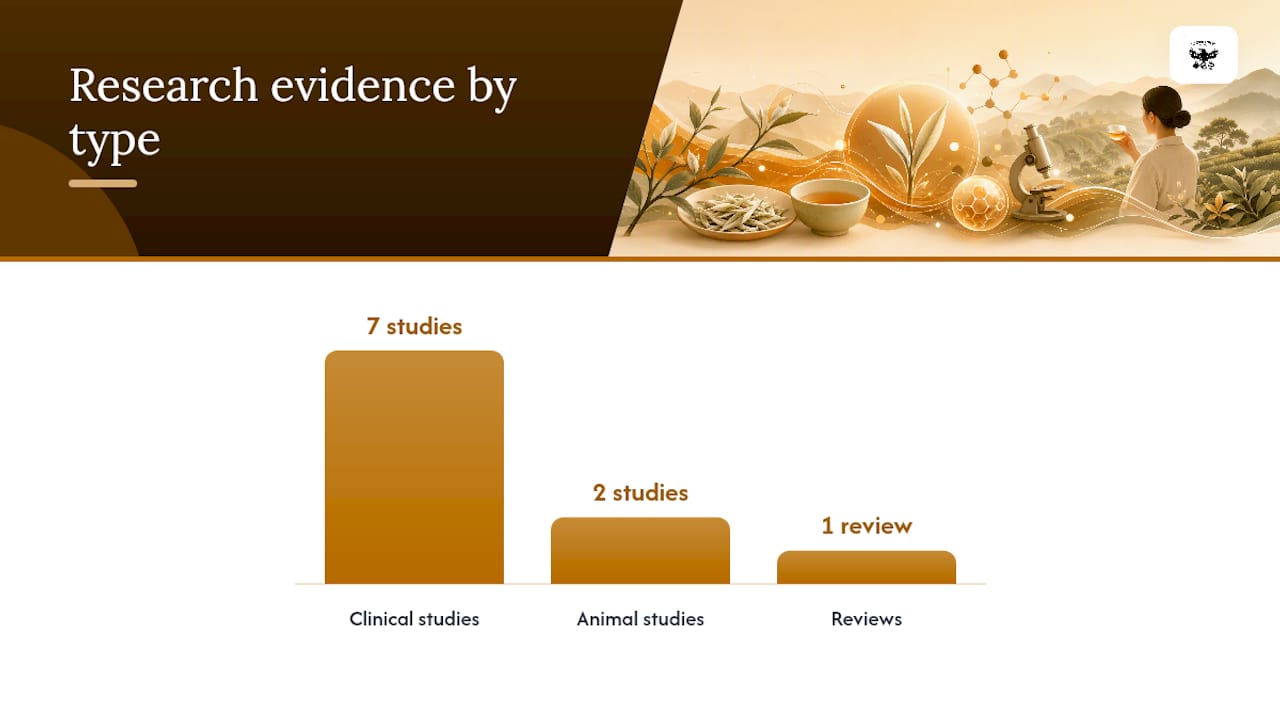
Human evidence. A 2013 pilot human intervention study and several small trials have examined antioxidant endpoints. The 2025 review identifies seven small clinical studies exploring therapeutic uses of white tea. These trials exist, but they are small, use different cultivars and doses, and measure different outcomes.
Research caveat: Animal studies on white tea report metabolic improvements including weight reduction and improved lipid markers. Human clinical evidence remains limited in scale and scope, and no large randomized controlled trial has established these effects in people.
Selected study overview:
| Study type | Intervention | Main outcomes | Key limitation |
|---|---|---|---|
| HFD rat model (2026, MDPI) | East Black Sea white tea | Improved metabolic markers, GREM1 changes | Animal model; cultivar-specific |
| Murine obesity/diabetes model (2026) | Hangzhou white tea | Up to 14.41% weight reduction, improved lipids/glucose | Animal model; aged vs. fresh samples differed |
| Small human pilot (2013, PubMed) | White tea extract | Antioxidant endpoint changes | Small sample, pilot design |
| Review of clinical studies (2025) | Various white tea preparations | Seven small trials noted; therapeutic potential identified | Heterogeneous designs, limited scale |
Practical interpretation. Drinking white tea as part of a balanced diet is a reasonable choice. The catechin content is real, the antioxidant activity is measurable, and the low astringency makes it easy to drink regularly. Treating it as a therapeutic intervention based on current evidence would be premature. The comparative antioxidant research confirms that minimal processing preserves phenolic content, which is a meaningful quality signal even if the clinical translation is still being worked out.
How to buy and store white tea well
Buying checklist. A quality vendor should be able to answer all of these:
- Harvest flush (spring first flush for top grades)
- Origin and cultivar (Fuding, Zhenghe, or other named region)
- Processing description (withering method, drying method)
- Packaging or harvest date
- Visible buds in product photos
Prefer opaque, airtight packaging over clear bags. Light degrades catechins and fades aroma faster than most people realize. Small-batch packaging is a practical advantage: you’re less likely to be buying tea that’s been sitting in a warehouse.
Storage. Keep white tea in an airtight container, away from light, heat, and strong odors. A cool, dry pantry works well. Avoid the refrigerator unless the tea is sealed perfectly; condensation is a bigger enemy than temperature.
Shelf life note: For optimal flavor, consume white tea within 12–18 months of the harvest date. Beyond that, the delicate floral notes fade, though the tea remains safe to drink.
On aging white tea. Some drinkers intentionally age white tea, particularly compressed Shou Mei cakes. The 2026 Hangzhou study found that aged samples showed different metabolic effects than fresh ones in animal models, suggesting aging genuinely alters bioactivity, not just flavor. Treat aging as a deliberate choice, not a default outcome of forgetting about your tea.
Pro Tip: When buying online, check whether the product page lists a harvest date or packaging date. A page that only says “fresh” without a date is telling you something.
For a deeper look at how to evaluate tea before buying, Tri Crow Coffee’s flavor-first selection guide walks through the key criteria in practical terms.
How does white tea compare to green, oolong, and black tea?
All four come from Camellia sinensis. The differences are entirely about what happens after harvest.
Processing contrasts:
- White tea: Withering and drying only. Minimal oxidation, enzymes partially active during withering.
- Green tea: Immediate heat application (steaming in Japanese styles, pan-firing in Chinese styles) to stop enzymatic activity. No oxidation.
- Oolong tea: Partial oxidation, ranging from 15% to 85% depending on style. Rolling and shaping involved.
- Black tea: Full rolling and oxidation. Catechins largely converted to theaflavins and thearubigins.
Flavor and use cases:
- White tea: delicate, floral, low astringency. Best enjoyed straight, without milk.
- Green tea: grassy, vegetal, or umami-forward depending on origin. Versatile.
- Oolong: ranges from light and floral to dark and roasted. Works well for multiple infusions.
- Black tea: bold, malty, high tannins. The base for milk teas and most blended breakfast teas.
Caffeine tendencies. Black tea generally runs highest, green tea sits in the middle, and white tea tends toward the lower end, though ranges overlap considerably across all types. Oolong varies widely based on oxidation level.
When to choose white tea. Pick it when you want something delicate and low-astringency, when you’re brewing in the afternoon and want less caffeine than a black tea, or when you’re curious about the flavor of the tea plant in its most unaltered form. For a broader map of how processing creates flavor differences across types, the different tea flavors guide at Tri Crow Coffee is worth a read. If you’re comparing white tea to matcha specifically, note that matcha is a powdered green tea with a much higher caffeine concentration and a very different flavor profile.
An editor’s note on what white tea actually rewards
Most tea writing treats white tea as the “gentle option,” the one you recommend to people who find green tea too grassy or black tea too strong. That framing isn’t wrong, but it misses what makes the category genuinely interesting.
White tea rewards attention in a way that bolder teas don’t require. A Silver Needle brewed at the right temperature in a preheated vessel, from a spring harvest with a known origin, tastes like something specific. It has a place and a moment behind it. Brew it carelessly in boiling water and it tastes like warm water with a faint tea suggestion. The gap between those two outcomes is larger than with almost any other tea type, which means quality sourcing and brewing discipline matter more here, not less.
What I look for when evaluating white tea for a small-batch context: visible bud density, a named origin and harvest flush, a processing description that mentions withering method, and packaging that protects the leaf from light. Those four criteria filter out most of the commodity product that gets labeled “white tea” without the raw material to back it up.
The health conversation around white tea is worth having honestly. The catechin content is real and measurable. The preclinical findings on metabolic effects are genuinely interesting. But the human evidence is thin, and anyone selling white tea primarily as a wellness product rather than as a well-made tea is leading with the wrong thing. Drink it because it tastes good and because the ritual of brewing something this delicate carefully is its own reward.
Tri Crow Coffee’s small-batch teas are worth trying
Small-batch sourcing is the difference between white tea that tastes like something and white tea that tastes like nothing. Tri Crow Coffee’s artisan tea collection is built around the same sourcing principles this article covers: transparent origins, careful processing, and packaging that protects what’s inside.
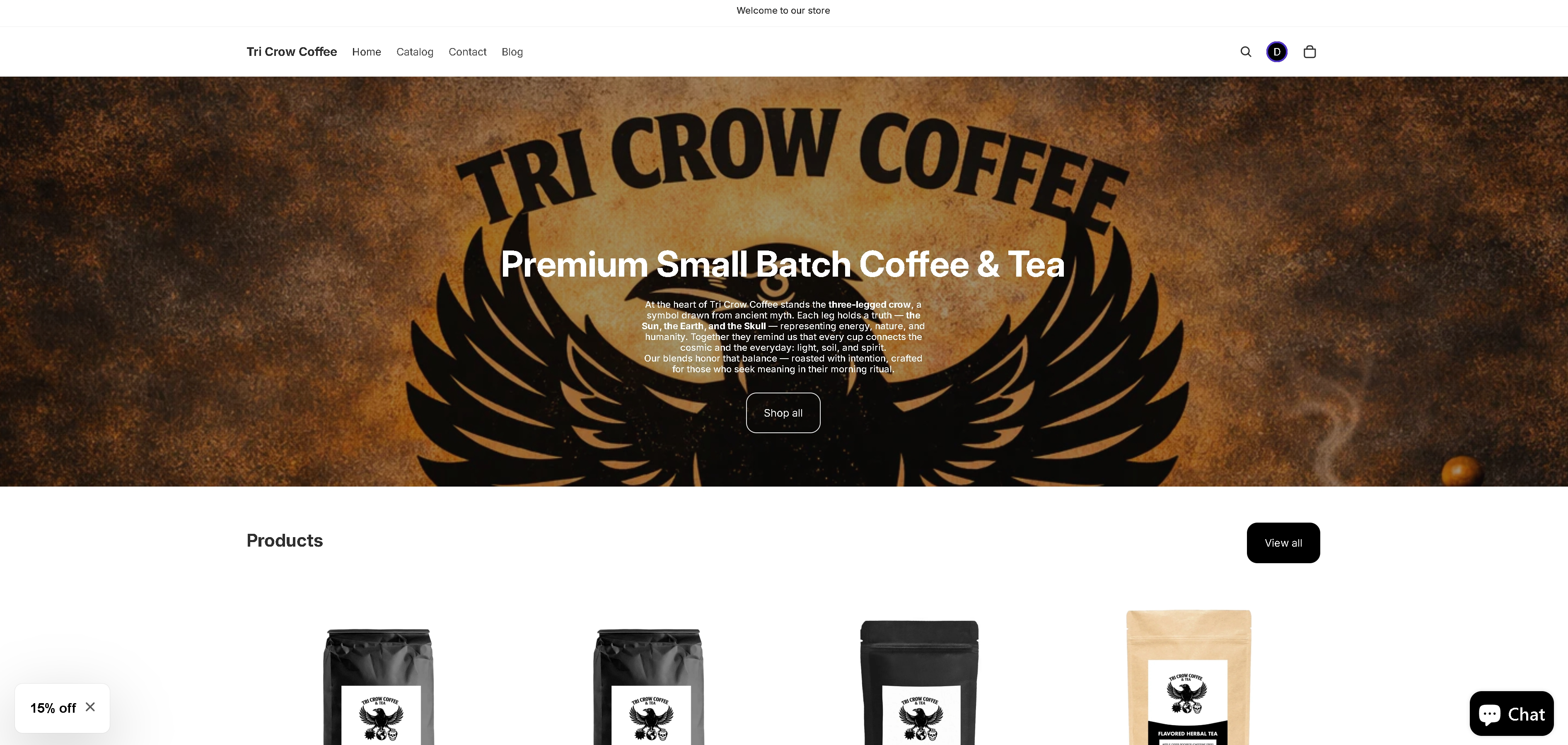
Beyond tea, the lineup includes the Max Caf Blend for high-caffeine mornings (Tanzania and India Robusta), the Cowboy Blend for dark and medium roast drinkers who want cocoa, caramel, and vanilla notes, and the House Blend as a reliable medium-roast everyday option from Central and South American beans. For green tea drinkers, the Matcha Loose Leaf is a small-batch premium option that pairs well with the flavor comparison in this article. Browse the full artisan tea collection and find the right starting point for your cup.
Sources
The sources below are the primary references used in this article. For readers who want to go deeper, start with the 2025 review for a comprehensive overview, then the chromatography study for compound data.
- An overview of the processing, chemical constituents, pharmacological properties, and clinical studies of white tea
- Determination of L-Theanine and Caffeine Contents in Tea Infusions with Different Fermentation Degrees and Brewing Conditions Using the Chromatographic Method - PMC
- Hangzhou white tea effects on metabolic dysregulation (2026 DOI)
- ISO/TR 12591:2013
- White tea - Wikipedia
Primary studies and reviews differ in what they prove. A review summarizes existing evidence; a single animal study generates a hypothesis. Neither is a clinical recommendation.
This article is general information, not a substitute for advice from a qualified doctor. Consult a qualified healthcare professional about your own circumstances before acting on anything here.
FAQ
What makes white tea different from green tea?
White tea skips the heat step that green tea uses to stop oxidation. The result is a more delicate flavor, slightly different catechin profile, and generally lower astringency. Both come from Camellia sinensis.
How much caffeine does white tea have?
Caffeine levels in white tea infusions vary and are generally lower than in black tea, depending on cultivar, harvest, and brewing conditions.
Is white tea healthy?
White tea contains catechins and other flavonoids linked to antioxidant activity. It’s a reasonable daily drink, not a proven therapeutic.
What is the best grade of white tea to buy?
Baihao Yinzhen (Silver Needle) is the highest grade, made from bud-only material with dense silvery hairs. Bai Mudan (White Peony) offers more flavor complexity at a lower price and is where many experienced drinkers prefer to start.
How should I store white tea?
Keep it in an airtight, opaque container away from light, heat, and strong odors. For best flavor, drink it within 12–18 months of the harvest date.