
Tasting tea comes down to four moves, done in order: look, smell, taste, feel. Skip straight to sipping and you miss half the information the leaf is giving you.
Here’s the routine:
- Look at the dry leaf, then the wet leaf, then the liquor color.
- Smell the dry leaf, the wet leaf, and finally the cup itself.
- Taste in three windows: front, mid, and finish.
- Feel the mouthfeel and track how long the aftertaste lingers.
Your first practice assignment: brew one tea two ways (different steep times), then run the four steps on each cup. Fifteen minutes, no more.
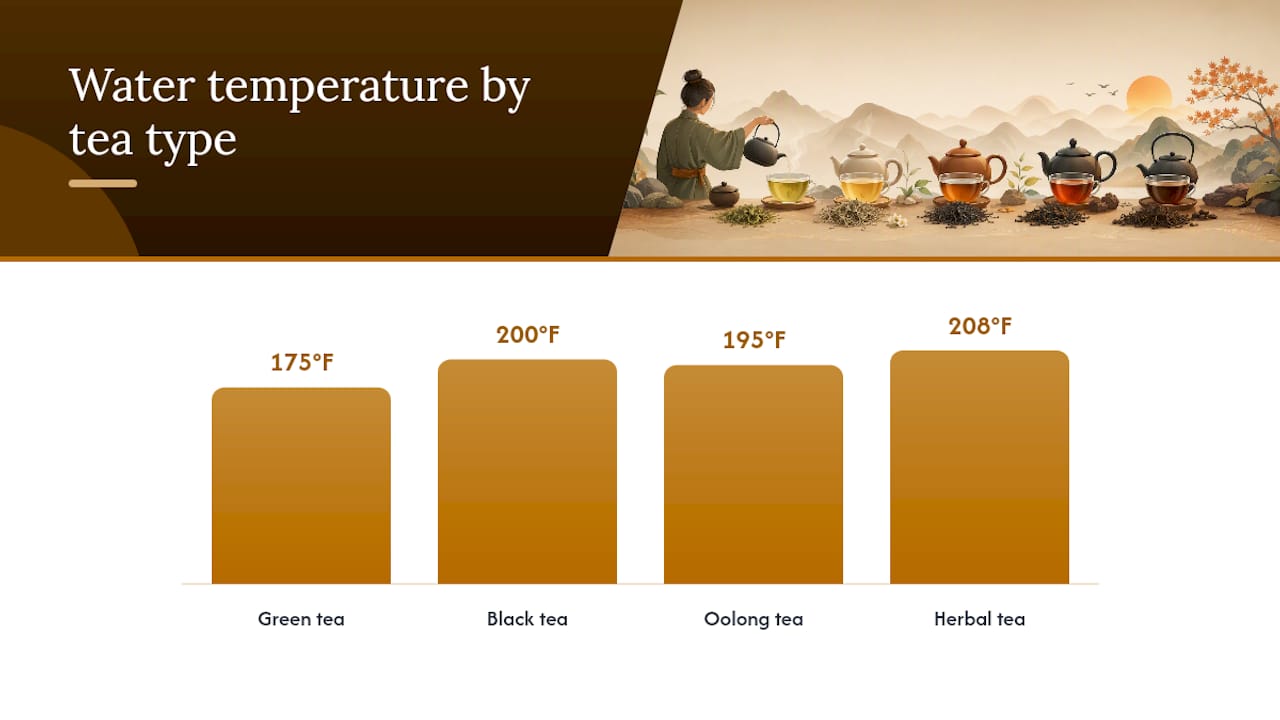
Quick cheat sheet: green tea, 175°F, 2g per 6oz, 90 seconds; black tea, 200°F, 2g per 6oz, 3 minutes; oolong, 195°F, 3g per 4oz, 45 seconds per steep; herbal, 208°F, 2g per 8oz, 5 minutes.
Key Takeaways
Reliable tea tasting comes down to a repeatable four-step sequence run under consistent brewing conditions, not expensive equipment or natural talent.
| Point | Details |
|---|---|
| Follow the four-step sequence | Look, smell, taste, and feel/finish, in that order, every single session. |
| Control your brewing variables | Same water, cup, temperature, and ratio isolate the tea as the only variable that changes. |
| Judge later steeps, not just the first | Steeps three through five often reveal more than the initial infusion. |
| Track finish and huigan separately | A long, evolving aftertaste is a stronger quality signal than the first sip. |
| Limit sessions to two or three teas | Palate fatigue sets in fast; a sample pack from Tri Crow Coffee gives you a controlled way to practice without overloading a session. |
Table of Contents
- How to Taste Tea, Step 1: What to Look For
- How to Smell Tea at Every Stage of Brewing
- How to Taste Tea: Sipping Technique and Flavor Windows
- Mouthfeel, Astringency, and the Long Finish (Huigan)
- What Brewing Parameters Should You Use for Tasting?
- What Tools Actually Help You Taste Tea Better?
- Practice Drills to Train Your Palate Faster
- Common Mistakes That Ruin a Tasting Session
- Tasting as a Habit, Not an Exam
- Practice What You’ve Learned With a Ready-Made Tasting Sample
- Sources
- FAQ
How to Taste Tea, Step 1: What to Look For
Before the leaf ever touches water, look at it. Dry leaf tells you about processing quality: whole leaves versus broken fragments, uniformity of size and color, and whether you’re looking at tight rolled pellets (common in oolong) or open, wiry strands (typical of black tea). Broken bits and dusty fragments usually mean lower grade material, even if the flavor still turns out fine.
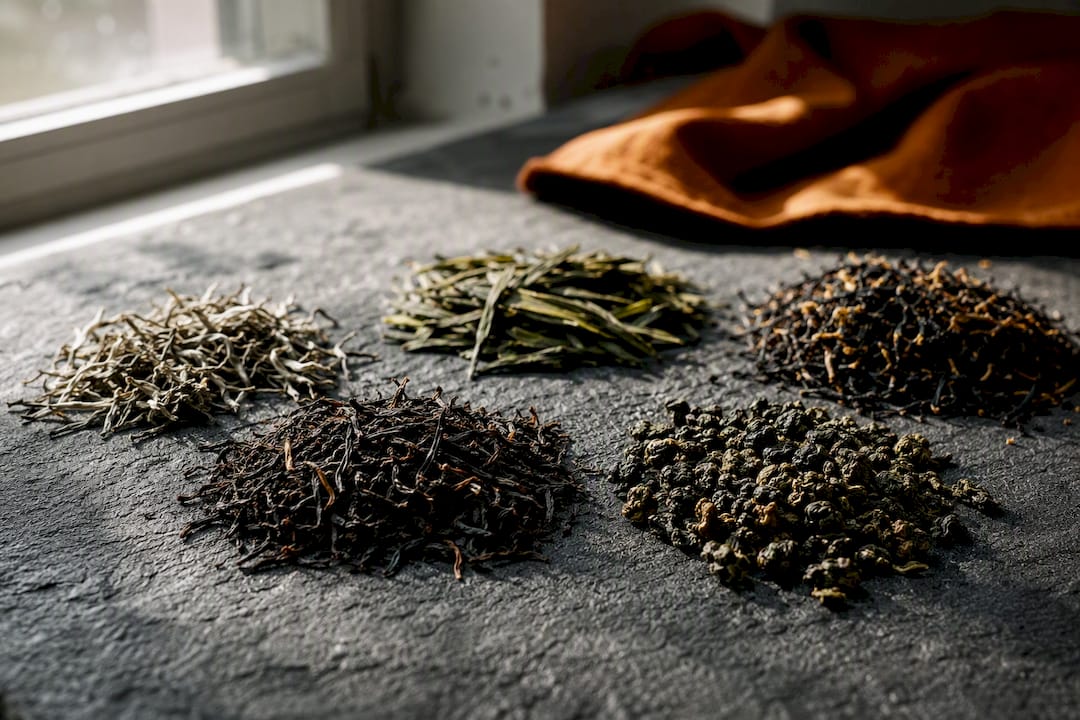
Once the leaves steep, check two things: the wet leaf and the liquor. Wet leaves should look intact and pliable, not shredded or stem-heavy. Liquor color should match the tea type: pale gold for green tea, amber for oolong, coppery red for black tea. Cloudiness in a liquor that’s supposed to run clear often signals over-extraction or lower quality material.
Run this checklist every session:
- Dry leaf: whole or broken? Uniform color or mixed?
- Wet leaf: intact after steeping, or falling apart?
- Liquor: clear or cloudy? Color consistent with the tea category?
- Any visible stems, dust, or off-color fragments?
Pro Tip: Use the same white cup or bowl every time, and check color under consistent lighting (daylight or a neutral white bulb). A yellow-tinted kitchen light will make every liquor look warmer than it actually is.
How to Smell Tea at Every Stage of Brewing
Aroma carries more information than most beginners give it credit for. According to a review of tea sensory chemistry, the volatile compounds responsible for tea’s fragrance shift dramatically depending on how the leaf was processed, which is why smelling at multiple stages reveals more than smelling just once.
Smell the dry leaf first, cupping a small handful and inhaling briefly. Then smell the wet leaf after a short steep. Finally, smell the cup itself, both at the rim and under the lid if you’re using a gaiwan. Each stage exposes different aromatic compounds.
Don’t hunt for exotic descriptors right away. Start broad: floral, fruity, vegetal, roasted, mineral, or sweet. Precision comes later, once the broad categories feel automatic.
A simple process for smelling without bias:
- Close your eyes or look away from the cup to remove visual cues.
- Take two or three short inhalations, not one long sniff.
- Note your first impression before you second-guess it.
- Compare dry leaf aroma to wet leaf aroma. They’re often different.
Pro Tip: Warm an empty gaiwan or cup with hot water first, then discard it before brewing. The residual heat releases volatile aromatics from the leaf faster, giving you a stronger read on the dry aroma.
How to Taste Tea: Sipping Technique and Flavor Windows
Take a small sip, roughly a teaspoon’s worth, and let it coat your entire tongue rather than swallowing immediately. Some tasters slurp audibly to aerate the liquid, which pulls more aroma up into the nasal passage and sharpens flavor perception. If slurping feels awkward in public, a slow roll across the palate does most of the same work.
Break the tasting window into three parts:
- Front: the first impression as the tea hits your tongue. Sweetness and acidity usually show up here.
- Mid: the sustained flavor once the tea sits on your palate. Body, umami, and deeper flavor notes emerge in this window.
- Finish: what remains after you swallow. Bitterness, astringency, and lingering sweetness live here.
Record these taste dimensions each time: sweet, bitter, astringent, umami, savory, fruity, floral. You don’t need all seven to show up in every cup. Most teas lean on two or three.
If you’re stuck for words, borrow from familiar references instead of guessing: honey or brown sugar for sweetness, green vegetables or hay for vegetal notes, stone fruit or dried fruit for fruitiness, and roasted nuts or toast for darker roasted teas. The Serious Eats guide to tea tasting makes a strong case for this approach: build your vocabulary from things you already know, then refine it as your palate develops.
Mouthfeel, Astringency, and the Long Finish (Huigan)
Mouthfeel is texture, not flavor. Sort what you feel into rough categories: thin and clean, coating, velvety, or drying.
Astringency and bitterness get confused constantly, but they’re different senses entirely. Astringency is tactile, a drying, puckering sensation caused by tannins binding to proteins in your saliva. Bitterness is a taste, registered on your tongue the same way sweetness or sourness is. A tea can be astringent without being bitter, and vice versa.
Score the finish on three tiers:
- Short: the flavor disappears within a few seconds of swallowing.
- Medium: flavor lingers for 15 to 30 seconds.
- Long: flavor persists past 30 seconds, sometimes evolving into new notes.
Watch specifically for huigan, the returning sweetness that develops in the throat minutes after swallowing, often associated with higher quality oolongs and pu-erh. It’s a background insight worth remembering: a long, evolving aftertaste tends to be a more reliable marker of quality than the first impression in the cup.
Pro Tip: Exhale slowly through your nose right after swallowing. That’s when huigan is easiest to catch, and most people miss it because they’re already reaching for the next sip.
What Brewing Parameters Should You Use for Tasting?
Tasting accuracy depends on eliminating brewing as a variable. If your ratio or steep time changes cup to cup, you can’t tell whether a flavor difference came from the tea or the water.
The Steep Atlas tasting protocol recommends a white porcelain gaiwan and filtered water as fixed constants, then treats steeps three through five as the most revealing window for judging actual quality, since the first steep or two often just rinses surface compounds.
Keep your water source, kettle, and cup identical across a session. Filtered water in the 50 to 150 ppm TDS range works well for most tea categories; anything heavily mineralized or chlorinated will distort delicate aromatics. Copy this table into a notebook or phone note and treat it as your baseline every time you sit down to taste.
Pro Tip: Neutral vessels matter more than expensive ones." A plain porcelain or glass cup won’t absorb or contribute flavor the way an unglazed clay pot can.
What Tools Actually Help You Taste Tea Better?
A tasting wheel organizes flavor and aroma into categories, radiating from broad groups like “floral” or “roasted” out to specific descriptors like “jasmine” or “toasted grain.” Use it loosely. Pick two or three words that feel closest to what you’re experiencing rather than forcing an exact match.
A one-page scorecard keeps your notes consistent session to session. Include these fields: tea name, date, water source, temperature, steep time, front/mid/finish notes, mouthfeel, and an overall score out of ten.
What actually moves the needle isn’t gear, it’s consistency. The same cup, a kitchen scale, a timer, and clean water will teach your palate more than a shelf of specialty equipment. If you want a deeper look at building out flavor vocabulary before your next session, Tri Crow Coffee’s flavor-first guide is a useful companion read.
Practice Drills to Train Your Palate Faster
Structured repetition beats random sipping. Try these three drills:
- Blind pair comparison. Brew two cups of the same tea with one variable changed (temperature or steep time). Taste both blind and record which differences you can actually detect.
- Steep progression. Track steeps one through six of the same leaf. Note where body thickens, where huigan first appears, and where flavor starts to fade.
- Temperature comparison. Taste the same tea hot, warm, and cooled to room temperature. Sweetness and aroma often shift noticeably as the liquid cools.
Run one drill per week rather than all three at once. According to home tasting guidance from Teazenway, controlling variables like cup, water, and leaf weight matters more than any piece of equipment, and limiting sessions to two or three teas keeps your palate from fatiguing.
Pro Tip: Stop after three teas, even if you feel fine. Palate fatigue sets in quietly, and your fourth and fifth cups will taste flatter regardless of quality.
Common Mistakes That Ruin a Tasting Session
Inconsistent water is the most common saboteur. Switching between tap and filtered water mid-session introduces a variable you can’t account for. Eating strongly flavored food beforehand (coffee, mint, citrus) coats your palate and masks subtle notes for the next hour or more.
Tasting too many teas in one sitting is another frequent error. Ignoring steep progression, judging a tea only on its first infusion, also misses the fuller picture most teas reveal by steep three.
Quick fixes:
- Use the same water source every session, filtered if possible.
- Reset your palate with plain room temperature water between teas.
- Cap sessions at two or three teas.
- If a tea tastes off, retest another day before writing it off. A single bad steep isn’t a verdict.
- If something feels wrong, swap the cup or water source first. That isolates whether the problem is the tea or your setup.
Tasting as a Habit, Not an Exam
The biggest shift in my own tasting came from treating it as ongoing practice instead of a test I had to pass. Repeated, low-pressure sessions build recognition faster than any single “serious” tasting ever will. Consistency in water and vessel does more for your palate than trying to taste perfectly on the first attempt.
Your notes aren’t a scorecard for other people. They’re a personal reference for deciding what to brew again and what to skip. Curiosity beats precision every time. If you want another practical framework to compare against, Tri Crow Coffee’s coffee tasting guide walks through a parallel process worth reading.
Practice What You’ve Learned With a Ready-Made Tasting Sample
Running these drills requires teas worth tasting slowly, not just teas you already know by heart. Tri Crow Coffee’s small-batch sample packs give you a consistent, limited-quantity leaf to work through the four-step routine without committing to a full bag before you know if a tea fits your palate.
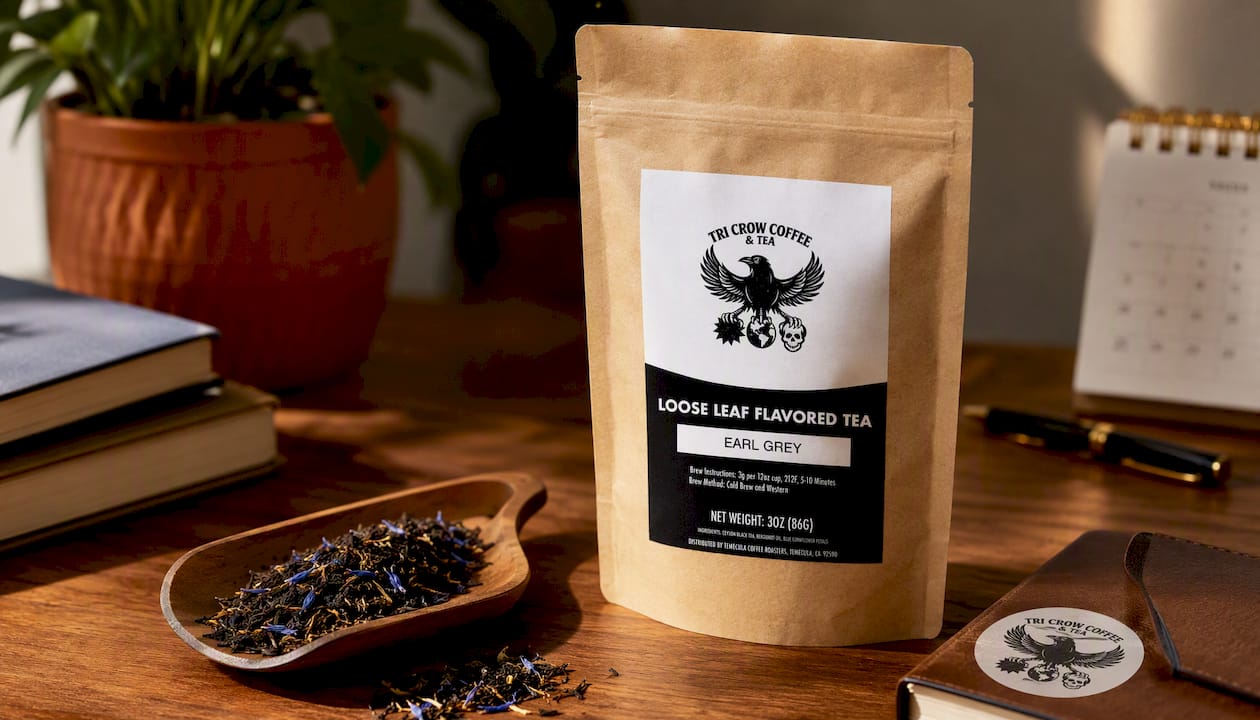
One tea worth starting with is the Earl Grey Tea made with Ceylon OP, bergamot oil, and blue cornflowers. It’s a good candidate for the blind pair comparison drill: brew it at two different steep times and see how the bergamot’s floral top notes shift against the base Ceylon character underneath. Because it’s a flavored blend, it also gives you practice separating added aromatics from the tea’s own body and finish, a skill that transfers directly to tasting straight, unflavored teas later.
Pick up a sample pack, run the four-step routine on it this week, and compare your notes against a black tea you already know well.
Sources
- How to Taste Tea
- Review of chemical and sensory characteristics of tea infusions (PMCID)
- The Steep Atlas Tasting Protocol
- How to Taste Loose Leaf Tea at Home
FAQ
How Do I Get My Tea to Taste Good?
Start with fresh, quality leaf and match your brewing parameters (temperature, ratio, steep time) to the specific tea category, since over-steeping and water that’s too hot are the two most common causes of a bitter or flat cup.
What Is the Unhealthiest Tea to Drink?
This depends more on additives than the tea itself. Heavily sweetened bottled teas or blends loaded with artificial flavoring concentrates raise more health concerns than plain loose-leaf tea does, since the base leaf itself carries minimal risk for most people.
How Do I Acquire a Taste for Tea?
Repetition and controlled practice sessions build appreciation faster than random sipping. Run the same tea multiple ways (different steep times, temperatures) so you start noticing subtle shifts instead of judging tea as simply “good” or “not good.”
How Can I Flavor My Tea?
Blended teas like Earl Grey use natural additions such as bergamot oil and dried flowers to layer flavor onto a base tea without masking its structure. If you’re tasting for practice rather than daily drinking, stick to naturally flavored blends so you can still separate the base tea’s character from the added notes.