
Pu-erh is a microbially post-fermented tea from Yunnan, China, made from large-leaf Camellia sinensis var. assamica. Unlike any other tea category, it undergoes genuine microbial fermentation after drying, which means it can be aged for years or even decades and actually improve.
Three things worth knowing before you read further:
- Two main styles exist: sheng (raw) ages slowly and naturally; shou (ripe) is accelerated through a wet-piling process called wòduī and is drinkable young.
- It ages like wine. Properly stored pu-erh changes flavor over time, which is why cakes from specific harvests are collected and traded.
- Caffeine is real, health claims are not proven. Pu-erh delivers roughly 30–70 mg of caffeine per 8-oz cup depending on brewing method, and while research is active, no therapeutic claims are approved for beverages in the U.S.
Prized for its sensory depth and the ritual it invites, pu-erh rewards patience and attention more than most teas.
Key Takeaways
Pu-erh is a microbially post-fermented Yunnan tea with two distinct styles, real caffeine, and health claims that remain unproven in large human trials.
| Point | Details |
|---|---|
| Two production styles | Sheng (raw) ages naturally over years; shou (ripe) uses wòduī pile fermentation and is drinkable young. |
| Caffeine is comparable to black tea | Expect roughly 30–70 mg per 8-oz cup; brewing temperature and time significantly affect extraction. |
| Rinse before brewing | A 5–10 second rinse opens compressed leaves and removes storage off-notes before the first real infusion. |
| Store with airflow, not airtight | Pu-erh needs ventilation to age properly; airtight containers and strong odors damage flavor. |
| Tri Crow Coffee’s tea collection | Tri Crow Coffee offers small-batch artisan teas for drinkers who approach each cup with intention. |
This article is general information, not a substitute for advice from a qualified doctor. Consult a qualified healthcare professional about your own circumstances before acting on anything here.
Table of Contents
- What is pu-erh tea, exactly?
- How pu-erh moved from trade route staple to collector’s item
- Sheng vs. shou: which style is right for you?
- How pu-erh is made, step by step
- What does pu-erh taste like?
- How to brew pu-erh at home
- Caffeine and key compounds in pu-erh
- Storing pu-erh for freshness and aging
- Health claims vs. what the evidence actually shows
- How to choose your first pu-erh
- Run your own at-home pu-erh tasting session
- Why pu-erh deserves more attention from mindful drinkers
- Tri Crow Coffee’s small-batch teas for intentional drinkers
- Sources
- FAQ
What is pu-erh tea, exactly?
Pu-erh (also written pu’er or puer) takes its name from Pu’er City in Yunnan Province, the southwestern Chinese region where it originated. The plant material is Camellia sinensis var. assamica, sometimes called Dayeh (“large leaf” in Chinese). Those large leaves carry more polyphenols and a different enzyme profile than the smaller-leaf varieties used for most green or white teas, and that biochemical difference matters for what happens next.
What separates pu-erh from every other tea is the word “post-fermented.” Most teas are oxidized enzymatically during processing, a reaction that stops when heat is applied. Pu-erh goes further: after the leaves are sun-dried into a base material called máochá, microbial communities (bacteria, fungi, and yeasts) continue transforming the leaf chemistry. That process, not oxidation, is what creates pu-erh’s characteristic mellow color, earthy depth, and aged complexity. A processing review on ScienceDirect identifies theabrownins as the key compounds produced during this microbial solid-state fermentation, responsible for the brown-red infusion color and smooth flavor.
Taxonomically, pu-erh belongs to the Chinese dark tea category (hēichá), not the same thing as English “black tea,” which refers to fully oxidized tea. That distinction trips up a lot of first-time buyers.
How pu-erh moved from trade route staple to collector’s item
Yunnan’s large-leaf tea trees were harvested and traded long before pu-erh became a named category. A rough timeline:
- Pre-Tang dynasty: Large-leaf tea from Yunnan traded locally and along early routes into Tibet and Southeast Asia.
- Tang–Song dynasties (618–1279): Compressed tea cakes and bricks developed specifically for transport on horseback and yak caravans. Compression reduced volume, protected leaves, and, crucially, allowed slow natural fermentation during months-long journeys.
- Ming–Qing dynasties (1368–1912): Pu’er City became a formal trading hub. The tea’s name solidified. Compressed forms (cakes, bricks, tuocha bowl shapes) became standardized for the Ancient Tea Horse Road.
- 20th century: The wòduī pile-fermentation method was developed commercially in the 1970s, creating what we now call shou (ripe) pu-erh. This innovation made aged-style pu-erh accessible without the decades of waiting that sheng requires.
- Modern era: China established national geographic-indication standards defining the production area (Yunnan), approved plant varieties, and processing methods that qualify as authentic pu-erh. These standards protect the designation and explain why pu-erh from outside Yunnan cannot legally carry the name.
The compressed shapes were never just aesthetic. They were a practical solution to long-distance trade, and the slow fermentation that happened in transit turned out to produce something drinkers actively sought.
Sheng vs. shou: which style is right for you?
These two production paths produce teas so different in character that many collectors treat them as separate categories.
| Feature | Sheng (Raw) | Shou (Ripe) |
|---|---|---|
| Processing | Sun-dried máochá, no pile fermentation | Máochá undergoes wòduī wet-piling (weeks) |
| Young flavor | Bright, floral, grassy, often astringent | Earthy, woody, smooth, low astringency |
| Aged flavor | Mellow, sweet, complex, camphor notes | Deepens slightly; already “aged” in character |
| Drinkability young | Variable — some are harsh | Yes, drinkable immediately |
| Aging potential | High — improves over years to decades | Limited additional gain after a few years |
| Storage sensitivity | High | Moderate |
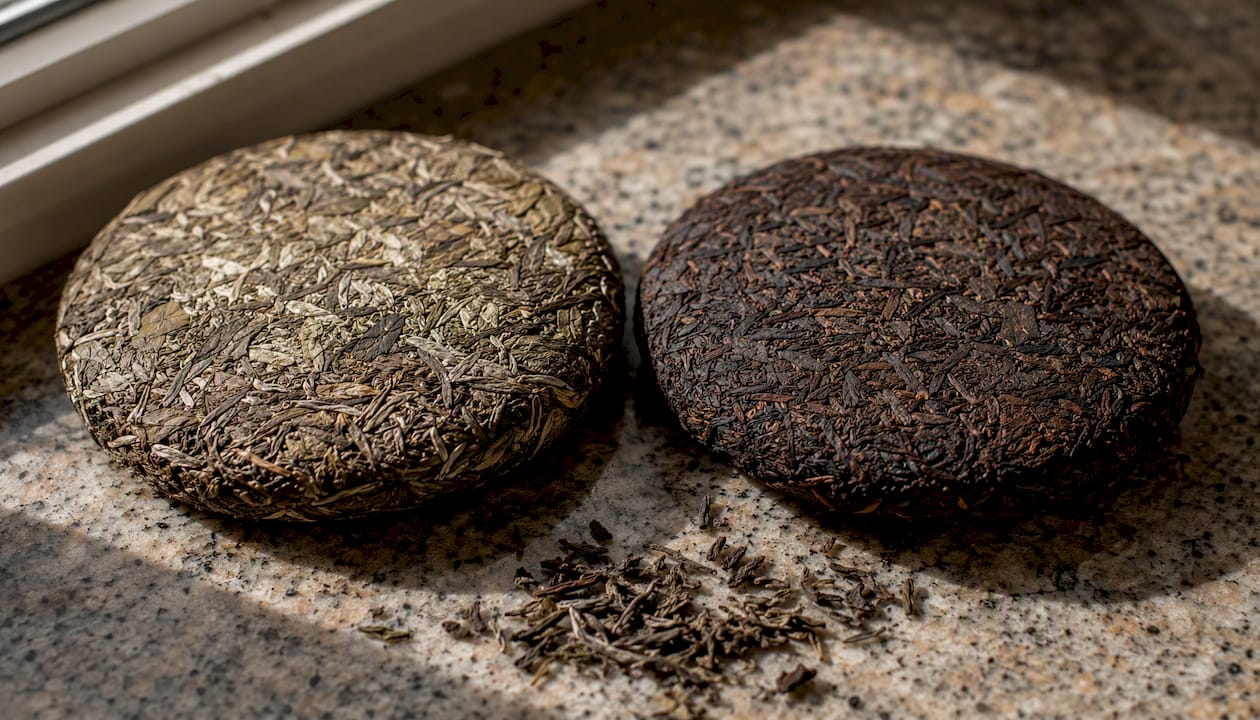
Young sheng can be challenging. Its bitterness and astringency are features, not flaws, but they surprise drinkers expecting something smooth. Aged sheng, by contrast, develops a sweetness and depth that collectors pay serious money for. Shou was invented precisely to give drinkers that mellow, aged character without the wait.
Pro Tip: If you’re new to pu-erh, start with a shou cake or a loose-leaf shou. The flavor is approachable, the price is low, and it brews forgivingly. Once you understand what you like, move to a young sheng and taste the contrast.
How pu-erh is made, step by step
Understanding the production sequence explains why pu-erh tastes the way it does and why pressing and aging are part of the process rather than just tradition.
- Harvest: Large leaves from Yunnan’s assamica cultivars are hand-picked, typically in spring or autumn. Old-growth trees (gushu) are prized for their complexity.
- Withering: Fresh leaves are spread and allowed to wilt slightly, reducing moisture and beginning enzymatic activity.
- Kill-green (shāqīng): Unlike green tea, pu-erh uses a lighter, lower-temperature heat application (often wok-firing or tumbling) that partially halts oxidation but leaves microbial-friendly enzymes active. This is a deliberate difference from green tea processing.
- Rolling: Leaves are rolled to break cell walls, releasing juices and shaping the leaf.
- Sun-drying: The rolled leaves are spread outdoors to dry in sunlight. This step is critical. Sun-drying preserves the microbial community and enzyme activity that make post-fermentation possible. Oven-drying would kill it. The result is máochá, the raw input for all pu-erh.
- Wòduī pile fermentation (shou only): Máochá is piled in a humid environment, moistened, and covered. Microbial activity heats the pile and transforms the leaf chemistry over several weeks. According to research on pu-erh’s chemical constituents, this process generates theabrownins and other compounds that give shou its characteristic mellow, earthy profile.
- Steaming and pressing: Leaves are steamed to soften them, then pressed into molds. Stone-pressing is traditional and slower; hydraulic presses are faster and more common commercially. Common forms include 357g cakes (bingcha), rectangular bricks, and bowl-shaped tuocha. Loose-leaf pu-erh skips this step.
- Drying: Pressed cakes are dried in controlled conditions to stabilize moisture before storage.
- Resting and aging: Sheng cakes are stored for months to decades. Even shou benefits from a few months of rest after pressing to let any pile-fermentation off-notes dissipate.
The sun-drying step is what makes pu-erh irreproducible outside its traditional context. Yunnan’s specific climate, altitude, and microbial environment during that drying phase are part of what processing shapes in flavor across fermented and aged beverages generally.
What does pu-erh taste like?
Pu-erh’s flavor range is wider than almost any other tea category, and where a specific tea lands depends on style, age, and storage conditions.
Young sheng (under 5 years): Expect brightness, sometimes sharp bitterness, floral and fruity notes (stone fruit, orchid), and a lingering astringency that coats the mouth. The aftertaste, called huigan, often turns sweet after the initial bite.
Aged sheng (10+ years): Bitterness softens considerably. Camphor, dried fruit, leather, and a deep mineral sweetness emerge. The mouthfeel becomes silkier. Well-stored aged sheng is genuinely complex in a way that surprises people who only know younger versions.
Shou: Earthy, woody, sometimes mushroom or forest floor. Cocoa and dark dried fruit notes are common in quality shou. The infusion is dark red-brown and the mouthfeel is smooth and full. Off-notes from poor pile fermentation smell like fish or compost; those fade with rest but signal lower-quality production.
Storage matters enormously. Dry storage (low humidity, good ventilation) produces cleaner, slower-aging pu-erh with brighter notes. Wet storage (higher humidity, traditional in Hong Kong) accelerates aging and produces more pronounced earthy and musty notes that some drinkers love and others find overwhelming.
A quick tasting checklist when sampling any pu-erh:
- Appearance: Infusion color (pale gold for young sheng, deep amber for aged sheng, dark red-brown for shou)
- Aroma: Dry leaf, wet leaf after rinse, and brewed cup (these should all be pleasant and consistent)
- First sip: Initial flavor, bitterness level, astringency
- Aftertaste: Does sweetness return? How long does the finish last?
- Body: Thin and watery, or full and coating?
For a broader map of how pu-erh compares to other tea flavor families, Tri Crow Coffee’s guide to different tea flavors is a useful reference.
How to brew pu-erh at home
Pu-erh is forgiving in some ways (it handles multiple infusions well) and unforgiving in others (bad water temperature or skipping the rinse can ruin a cup). Here are two reliable methods.
Gongfu method (recommended for cakes and serious tasting)
- Preheat your vessel. Fill a small gaiwan or teapot (100–150 mL) with boiling water, swirl, and discard.
- Measure your leaf. Use 5–8g of pu-erh per 100 mL of water. For compressed cakes, break off a chunk with a pu-erh pick; try to keep leaves intact rather than crumbling them.
- Rinse the leaf. Pour boiling water (95–100°C / 203–212°F for shou; 85–90°C / 185–194°F for young sheng) over the leaves, swirl briefly, and discard after 5–10 seconds. This rinse opens the leaves and removes any surface dust or storage off-notes.
- First steep: 15–20 seconds. Pour and drink immediately.
- Subsequent steeps: Add 5–10 seconds per infusion. Quality pu-erh yields 8–15 infusions before flavor fades.
Western method (everyday cup)
- Use 3–4g per 250 mL (8 oz) of water.
- Water temperature: 95°C (203°F) for shou; 85°C (185°F) for young sheng.
- Steep 2–3 minutes. Taste and adjust.
- A brief 10-second rinse before the main steep is still worth doing.
Troubleshooting:
- Too bitter: Lower water temperature, shorten steep time, or use fewer leaves. Young sheng is especially sensitive to high heat.
- Too flat or watery: Increase leaf quantity or steep time. Shou can handle near-boiling water without turning harsh.
- Off-putting earthy smell: Normal for new shou cakes. Rinse twice and let the tea “air” for a few minutes after breaking the cake.
Pro Tip: The rinse is not optional. Beyond cleaning the leaf, it rehydrates compressed material so the first real infusion extracts evenly. Skip it and your first cup will be weak and uneven.
Caffeine and key compounds in pu-erh
Pu-erh is not a low-caffeine tea. Practical analyses put brewed pu-erh at roughly 30–70 mg of caffeine per 8-oz cup, depending on leaf grade, brewing temperature, and infusion number. A laboratory study measuring caffeine and L-theanine across tea types found pu-erh infusions with caffeine values overlapping black and yellow tea, and confirmed that higher temperatures and longer steeping times substantially increase caffeine extraction.
| Compound | Typical range per 8-oz cup | Notes |
|---|---|---|
| Caffeine | 30–70 mg | Varies with brew temp, time, leaf grade |
| L-theanine | Present; reduced by fermentation | Moderates caffeine’s stimulant effect |
| Theabrownins | Formed during fermentation | Responsible for mellow color and flavor |
| Polyphenols | Reduced vs. green tea | Transformed by microbial activity |
L-theanine is the amino acid that gives tea its characteristic calm-alert quality. Fermentation and aging reduce L-theanine content compared to green tea, but enough remains in most pu-erh to soften the caffeine edge. Aged sheng in particular, consumed across multiple short gongfu steeps, tends to feel gentler than its caffeine content would suggest, partly because the dose is spread over time.
Practical guidance for caffeine-sensitive drinkers:
- Use cooler water (80–85°C) and shorter steeps to reduce caffeine extraction.
- The first infusion carries the most caffeine; later steeps are progressively lighter.
- Loose-leaf shou tends to extract caffeine faster than compressed sheng because the leaf is already broken.
- Afternoon pu-erh sessions are manageable for most people; late-evening sessions are not recommended for caffeine-sensitive individuals.
Storing pu-erh for freshness and aging
Storage is where most beginners make mistakes, and where serious collectors spend real attention.
Do:
- Store at 60–75% relative humidity for aging; lower for long-term dry storage.
- Keep in a well-ventilated space with gentle airflow. Stagnant air encourages mold.
- Wrap cakes in their original paper or breathable paper; avoid plastic wrap, which traps moisture and off-gases.
- Store away from strong odors (spices, coffee, cleaning products). Pu-erh absorbs aromas aggressively.
- Keep at stable, moderate temperatures. Extreme heat accelerates fermentation unpredictably.
Don’t:
- Seal in airtight containers. Pu-erh needs to breathe to age properly.
- Store in direct sunlight or near heat sources.
- Let humidity exceed 80% without monitoring. Above that threshold, mold risk increases sharply.
- Mix aged and new cakes in the same storage space without separation.
What good aging does: Bitterness and astringency in sheng gradually soften. Floral and fruity notes give way to deeper sweetness, camphor, and mineral complexity. The infusion color deepens. This is a real transformation, not marketing language.
What bad storage does: Mold contamination produces musty, unpleasant off-notes that do not age out. Wet-stored pu-erh from uncontrolled environments can carry contamination risks. A scientific review of pu-erh’s chemical constituents notes that heavy metals and mycotoxins are potential concerns depending on production and storage conditions, and recommends sourcing from reputable producers with quality controls.
Storage callout: Always source pu-erh from vendors who can describe storage conditions and provenance. A cake with no harvest year, no producer information, and an unusually low price is a risk, not a deal.
Health claims vs. what the evidence actually shows
Pu-erh is frequently marketed for weight management, cholesterol reduction, and digestive support. The honest picture is more complicated.
- Theabrownins and polyphenols in pu-erh show activity in cell and animal models related to lipid metabolism and gut microbiome composition.
- Some small human studies report modest effects on cholesterol markers, but sample sizes are limited and study designs vary widely.
- Fermented foods generally show associations with digestive health; for context on fermentation and gut health broadly, research on fermented foods and digestion provides useful background.
What the evidence does not support:
- No large, well-controlled human clinical trials establish pu-erh as a treatment for any disease.
- WebMD’s overview states plainly that pu-erh’s health benefits are not well defined in humans, and that common side effects are caffeine-related: insomnia, anxiety, increased heart rate, and headache at high intake.
The U.S. regulatory position:
The FDA treats pu-erh as a beverage. Sellers who market it with disease-prevention or therapeutic claims risk enforcement action. The FDA warning letter to Teataze LLC is a concrete example: the agency cited unauthorized claims about pu-erh products and required corrective action. Beverages cannot be marketed as drugs without clinical evidence and regulatory approval.
Evidence summary:
- Promising but inconclusive: lipid metabolism, gut microbiome effects, antioxidant activity
- Limited human data: weight management, cholesterol
- Real and documented: caffeine-related side effects at high intake
- Safety note: if you are taking medications or managing a health condition, talk to a clinician before using pu-erh therapeutically. This is general information, not medical advice.
How to choose your first pu-erh
The format you buy affects how you brew, store, and age the tea.
Formats explained:
- Loose-leaf: Easiest to brew, no tools needed beyond a strainer. Good for sampling before committing to a cake. Less suitable for long-term aging.
- Cake (bingcha): The classic 357g compressed disc. Requires a pu-erh pick to break off portions. Best format for aging; the compression slows oxidation and allows gradual transformation.
- Brick: Rectangular compressed form, often denser than cakes. Common in older traditional production.
- Tuocha: Bowl-shaped compressed tea, typically 5–100g. Convenient single-serving sizes; popular for beginners.
Buying checklist:
- Origin: Yunnan province is non-negotiable for authentic pu-erh. Specific sub-regions (Menghai, Yiwu, Bulang) signal terroir and flavor style.
- Harvest year: Listed on reputable cakes. Older sheng commands higher prices; verify through trusted vendors.
- Style: Sheng or shou, clearly labeled.
- Producer or factory: Established producers have consistent quality controls. Unknown origin with no producer information is a red flag.
- Vendor notes: Reputable vendors describe storage conditions and can answer sourcing questions.
Price expectations:
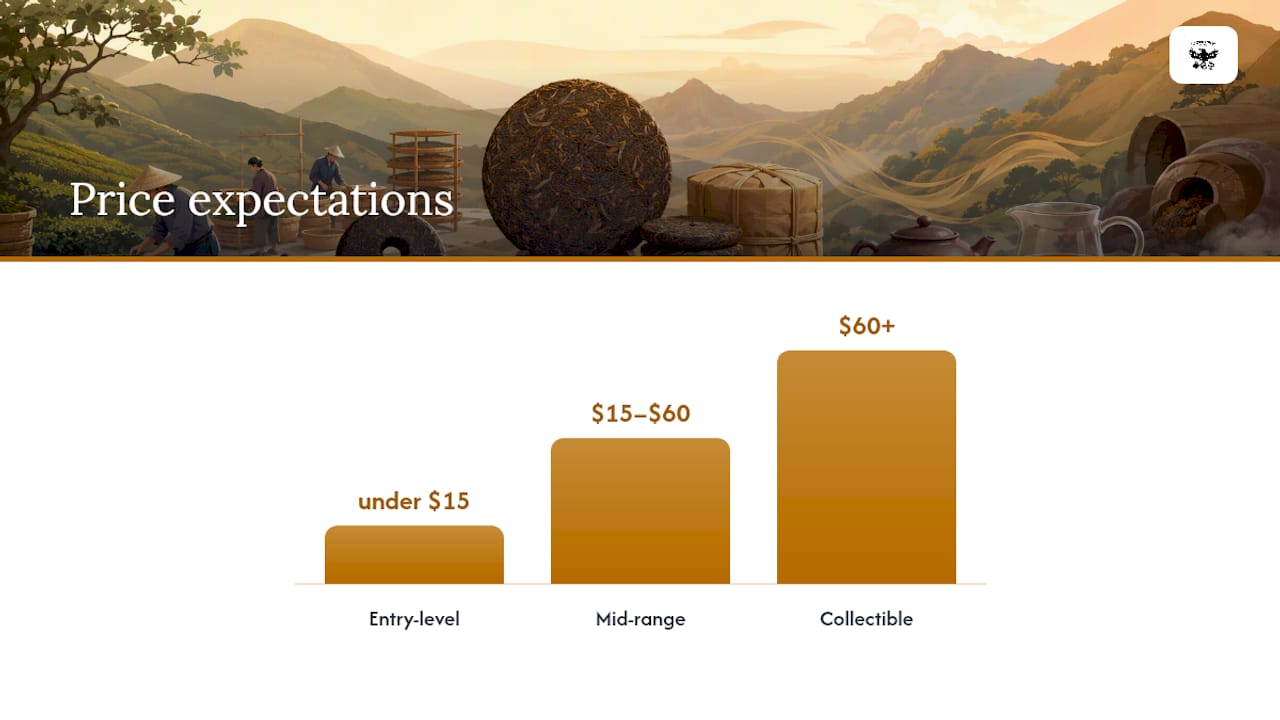
- Entry-level (under $15 for a tuocha or small cake): Shou from established factories. Reliable, approachable, good for learning.
- Mid-range ($15–$60 per cake): Better-sourced sheng or aged shou. More complexity, more variation.
- Collectible ($60+): Aged sheng from named mountains or specific harvests. For enthusiasts who have already developed a palate.
Beginner-friendly starting points:
- A shou tuocha from a reputable Yunnan factory (smooth, low-risk, forgiving to brew)
- A young sheng from Menghai or Yiwu (bright, educational, shows the raw style clearly)
- A loose-leaf shou blend (easiest entry, no special tools)
For more guidance on selecting teas by flavor profile, Tri Crow Coffee’s how to select tea guide walks through the decision process clearly.
Run your own at-home pu-erh tasting session
You don’t need a formal tearoom to taste pu-erh seriously. A gaiwan, a small pitcher, two or three sample teas, and focused attention are enough.
Step-by-step micro-cupping session
- Gather equipment: A 100–150 mL gaiwan or small teapot, a pitcher (fairness cup), two or three small tasting cups, a scale, a timer, and a pu-erh pick if using compressed cakes.
- Prepare samples: Break or measure 5g of each tea. Keep samples separate and labeled.
- Rinse each tea: 5-second rinse with appropriate-temperature water. Discard. Note the wet-leaf aroma immediately after the rinse; it tells you a lot.
- First infusion (15–20 seconds): Pour into the pitcher, then distribute evenly into tasting cups. Evaluate color, clarity, and aroma before sipping.
- Taste sequentially: Sip, hold briefly, swallow. Note the initial flavor, the mid-palate, and the finish. Wait 30 seconds and note any returning sweetness (huigan).
- Repeat for 3–5 infusions: Track how the flavor evolves. Quality pu-erh opens up across steeps; flat or declining tea signals lower-grade material.
- Compare samples side by side: Taste the same infusion number from each tea in sequence.
Tasting scorecard template
Food pairings that work well with pu-erh:
- Shou with dark chocolate, aged cheese, or roasted nuts
- Young sheng with light savory foods, steamed dumplings, or fresh fruit
- Aged sheng with nothing at all; its complexity competes with food
For pairing ideas across tea types, Tri Crow Coffee’s top tea pairings guide covers the logic behind matching tea to food in practical terms.
Why pu-erh deserves more attention from mindful drinkers
Most tea conversations in North America still center on green tea and herbal blends. Pu-erh sits in a different category entirely, and not just because of its fermentation. It’s one of the few beverages that genuinely rewards patience. A sheng cake you buy today will taste different in five years, and better in ten. That relationship with time is rare.
What strikes me about pu-erh is how it reframes the act of brewing. The rinse, the sequential steeps, the attention to water temperature and leaf quantity — these aren’t fussy rituals for their own sake. They’re the mechanism by which a compressed disc of aged leaves becomes something worth drinking. Skip the steps and you get a muddy, bitter cup. Follow them and the same tea opens up across eight or ten infusions in ways that keep surprising you.
The health claims around pu-erh are worth treating skeptically. The evidence is real but preliminary, and the FDA’s enforcement record makes clear that marketing pu-erh as medicine is both legally risky and intellectually dishonest. The honest case for pu-erh is sensory and ritual: it’s complex, it ages, it rewards attention, and it connects you to a production tradition that spans centuries. That’s enough.
For anyone drawn to the intersection of tea ritual and mindful practice, pu-erh is a natural entry point. The gongfu method in particular is structured enough to pull you out of autopilot and into the cup.
Tri Crow Coffee’s small-batch teas for intentional drinkers
Pu-erh is a commitment to the craft of tea. If that sensibility resonates, Tri Crow Coffee’s artisan tea collection is built around the same principle: small-batch production, careful sourcing, and teas worth paying attention to. The collection includes premium loose-leaf options like the Matcha Green Tea, sourced and prepared with the same attention to quality that pu-erh demands. For coffee drinkers who want the same intentional approach, the Max Caf Blend brings that same craft to high-caffeine roasting. Browse the full tea collection and find your next ritual brew.
Sources
- FDA warning letter — Teataze LLC (pu‑erh marketing enforcement)
- Study: caffeine and L‑theanine levels across tea types and brewing conditions (PMC12248710)
- Processing and chemical constituents of Pu‑erh tea: A review (PubMed 35337597)
- Processing and chemical constituents of Pu‑erh tea: A review (ScienceDirect abstract)
FAQ
What are the main health benefits of pu-erh tea?
WebMD notes that pu-erh’s health benefits are not well defined for humans.
Is pu-erh tea high in caffeine?
Pu-erh contains roughly 30–70 mg of caffeine per 8-oz cup, comparable to black tea. Brewing temperature and steep time are the biggest variables; shorter, cooler steeps extract less caffeine.
What does pu-erh tea taste like?
Shou (ripe) pu-erh tastes earthy, woody, and smooth with cocoa or mushroom notes. Young sheng is brighter and more astringent with floral or fruity notes; aged sheng develops camphor, dried fruit, and deep mineral sweetness.
What is the difference between pu-erh and black tea?
Black tea (in English) is fully oxidized and not post-fermented. Pu-erh undergoes microbial post-fermentation after drying, placing it in the Chinese dark tea (hēichá) category. The fermentation process creates theabrownins and other compounds not found in standard black tea.